Perspectives
Practical insights and opinions from agriculture and natural resources experts—brought to you by the Center for Sustaining Agriculture and Natural Resources.
Soil Bio-Products are Risky; Ask Questions
So, you want to try a soil bio-product. Perhaps you’ve never heard of me and so missed my last blog post where I recommend using time-tested practices instead of unproven products. If so, read it, then come back here.
Bio-products are risky. They are risky because in using them, we move away from a “treating a specific problem” strategy to going after additional benefits—”Better X”, “Improved Y”, “Boost your Z.” They are also risky because decades of experience and research have found these products fail, or fail inconsistently, or have small benefits that don’t cover their cost. When you use a bio-product, you are looking for the exception. So, how can you make it a little less risky? By asking some hard questions.
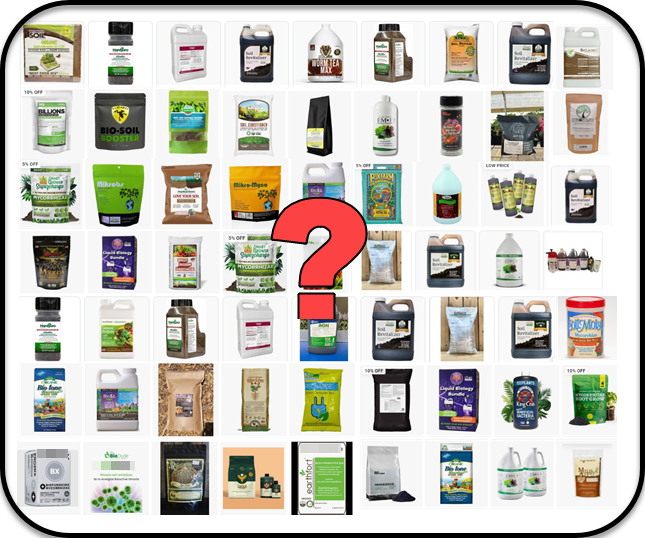
What’s your goal? What does the product do?
What a bio-product does should be aligned with your goal for using it. Then, once you know the type of product you are considering, that will determine other questions you should ask. There are four broad categories of bio-products, also called biologicals (O’Callaghan et al., 2022):
| What does the product do? | Bio-product category |
|---|---|
| Improves crop nutrient uptake | Biofertilizer |
| Improves soil conditions1 | Soil conditioners |
| Enhances crop growth | Biostimulants |
| Controls pests | Biopesticides2 |
2 Because they are highly regulated compared to other bio-products, I will not cover bio-pesticides here
These are broad, loosely defined categories that often overlap. For example, a successful biofertilizer can enhance crop growth, or a successful biostimulant can improve crop nutrient uptake.
What’s in it?
Related to “What does it do?” is “What’s in it?” Check the product label. There are two broad categories for product contents, living and dead. Living contents are usually bacterial or fungal inoculants. Dead contents can be biochemicals, dead plant materials, or mined materials such as humics. The answers to “What does it do?” and “What’s in it?” should match; a biofertilizer should have microbes that actually help make nutrients available. Biostimulants should have plant-growth promoting microbes or substances. How would you know this? Good question, you probably don’t. Besides inconsistent performance, the difficulty in getting answers to these questions is another risky part of using bio-products is. “I don’t know” is common.
Does your soil lack what the product provides? How does it work? Is the mechanism plausible?
There are a few more questions that apply to all categories of bio-products, but they are increasingly difficult to answer.
- Does your soil lack what the product provides?
- How does it work?
- Is the mechanism plausible?
Let’s look at these questions for each bio-product category.
Biofertilizers
Let’s be clear, bio-fertilizers are not really fertilizers. Biofertilizers themselves do not contain meaningful quantities of plant nutrients. They are microbial inoculants containing bacteria and/or fungi that might biologically fix nitrogen or increase the availability of soil nutrients already in the soil, but unavailable to crops (e.g., by solubilizing phosphorus). In contrast, conventional fertilizers directly add relatively large amounts of nutrients to your soil. Compare the two labels in Figure 2.
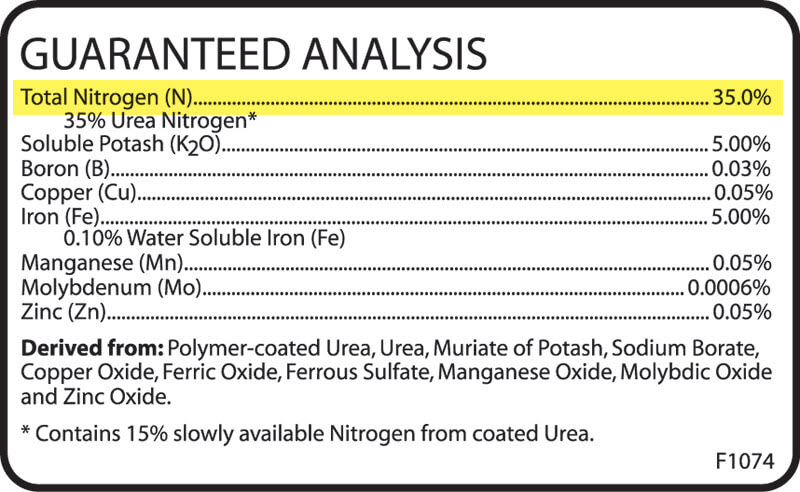
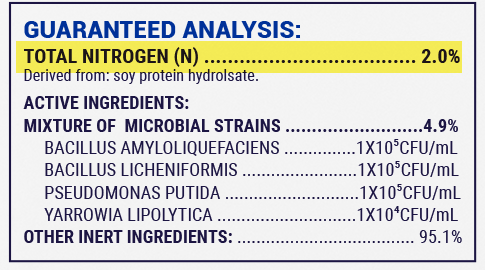
Figure 2. A fertilizer label (left) and a bio-fertilizer label (right). Note that the biofertilizer contains microbes and a small amount of plant nutrients, whereas the fertilizer contains much higher levels of plant nutrients. Bio-fertilizer is a misleading marketing term, which is unfortunately also being used by scientists (Malusá and Vassilev, 2014). Larger image (left) Larger image (right)
Sometimes fertilizers and bio-fertilizers are mixed into a single product, so it is possible that something marketed as a “bio-fertilizer” could contain meaningful amounts of plant nutrients. When in doubt, check the label.
Does your soil lack the nutrients that biofertilizer bacteria or fungi might provide? Biofertilizers are much more likely to provide a benefit when there is a severe deficiency of the nutrient in question. Even then, research finds the amounts of nutrients that biofertilizers will supply (nitrogen) or make available (all other nutrients) is much less than needed for high or even moderate crop yields. They are therefore used most often in combination with conventional fertilizers, hoping they will still supply enough to justify their cost. This tradeoff between having high levels of nutrients needed for high yields vs. having lower levels to give biofertilizers a better chance of being successful is one factor in their inconsistent performance (Mitter et al., 2021).
Does your soil lack the bacteria or fungi supplied by the bio-fertilizer? For most of us, this is impossible to determine, although some soil labs will try to tell you otherwise. In soils without other problems, these or similar organisms are likely present.
How do biofertilizers work? For nitrogen, the mechanism is biological N-fixation. This is what Rhizobia do in nodules on legume roots. Rhizobial inoculants are widely used and generally successful—they are the exception for microbial inoculants and bio-fertilizers. In contrast, N-fixation by free-living bacteria in the soil has been less successful. A recent review of N-fixation for non-legumes concludes “Despite more than 50 years of research, no robust evidence suggests that inoculation of cereals and other non-legumes with free-living and/or endophytic bacteria leads to fixation of agronomically significant quantities of nitrogen.” (Giller et al. 2024).
The mechanism for making existing phosphorus more available is the release of acids or other biochemicals from the applied organisms. Again, this has been found to add a small amount of available P to soils, and therefore crops.
Soil conditioners
Do your soils lack what the product provides? With soil conditioners, this is easier to answer. Maybe you have some issues with your soil’s physical condition. Maybe your soil is compacted, or you have poor infiltration rates, or seedlings are impeded by soil crusting. There are many conditions that these products claim to treat.
How do soil conditioners fix these problems and are the explanations plausible? The “how?” of soil conditioners is where these products struggle. For example, “liquid aerators”—usually dilute soapy solutions with some organic material in them, sprayed at the soil surface—are advertised to fix soil compaction. But is there a plausible mechanism by which a dilute solution of soap and an organic material like seaweed extract could physically push soil particles apart, which is required to fix serious compaction? While I haven’t seen any independent testing of these products for this purpose, it seems unlikely.
“It is simply wishful thinking to believe that a highly diluted solution of [liquid aerators] applied to a compacted soil will…affect soil bulk density. There is no indication that any of these products have ever been scientifically evaluated for effectiveness.”
Colorado State Extension
For products aimed at boosting decomposition of crops residues, it is likely that your soil has all the microbes needed to do this. The question then becomes whether you can increase your soil’s natural decomposition rate? And as often is the case, the factors out of your control are more important than adding a small amount of microbes. For example, if the residues are dry, no amount of microbes will increase decomposition. Same with cold conditions.
Finally, note that soil conditioner products applied by gallons per acre will never replace the beneficial effects of practices like manure or compost application where the rates are tons per acre. It takes bulk biomass—crop, manure, or compost—to affect the bulk soil organic matter levels.
Biostimulants
Are you lacking what Bio-stimulants provide? This is difficult to answer because it is such a very broad category of products, with many claimed benefits. The situation is often that there is no real lack in the soil, or in your crops, but the products claim to provide a boost above what you’d expect from your normal management.
How does the biostimulant work? There are many documented mechanisms. Microbes can stimulate crops directly, or through the biochemicals they produce: phytohormones, siderophores, antibiotics, etc. (O’Callaghan et al. 2022; Fadiji et al., 2024). Some Bio-stimulants are the beneficial microbes, others are the beneficial biochemicals. The review of free-living N fixation that I mentioned before (Giller et al. 2024) found the evidence supported the production of plant-growth promoting hormones as the mechanisms behind many of the observed crop benefits (still small) rather than an N effect. So, while the mechanism may not always be clear for specific products, there are plausible mechanisms for crop enhancement by microbes or the chemicals they produce.
Here, thinking about the 4Rs of nutrient management can help (McQuilken et al., 1998). Applying the Right bio-product, at the Right rate, in the Right location, at the Right time, may give an inoculant bio-product the best chance of surviving for long enough to produce a meaningful benefit. Many products follow this strategy; an inoculant applied early in the season to the planted seed at as high a cost-effective rate as possible. Whether the contents of a specific bio-product are Right for your specific soil conditions is always a question.
Soil bio-products, the health supplements of agriculture?
If you have used recommended practices to obtain a healthy soil, then the benefits of a successful bio-product are likely to be small. Even with reasonable answers to all these questions, even if you do everything else right (planting, nutrient, pest management etc.), the usual bio-product benefit, when it occurs, is a 5% bump, or less. A 10% increase/boost/advantage over your normal practice would be remarkable.
In this, soil bio-products are like human health supplements; when tested, many of provide no benefit, and with those that do, the benefits are much smaller than the other time-proven practices we know about: healthy eating, proper rest, regular exercise.
Unfortunately, there are other similarities:
- Both can be a quest for a silver-bullet performance boost.
- Both are looking for shortcut alternatives to time-proven body- or soil-building practices.
- Both rely heavily on testimonials and backing from scientific-looking sources, which, when investigated, offer weak evidence.
- Both are plagued with inconsistent performance because of variability between individuals or the variability inherent in cropping systems: climate, soil type, crop rotations, and management.
- Both have largely unregulated markets.
- Both are relatively cheap to produce; we face an ever-changing selection of “new and improved” products.
Asking questions can help eliminate the worst of bio-products, but with many, your questions will go unanswered. The risk remains, but also potential. Poor performance in the past does not mean it will stay that way. And large corporations with large research and development budgets are now in the market. Perhaps they will find the exception to the rule.
“The pursuit of performance in a bottle inherently undermines our attempts to get faster, stronger, and healthier…”
Alex Hutchinson
All Perspectives from Andrew McGuire
References
Fadiji, A.E., C. Xiong, E. Egidi, and B.K. Singh. 2024. Formulation challenges associated with microbial biofertilizers in sustainable agriculture and paths forward. Journal of Sustainable Agriculture and Environment 3(3): e70006. doi: 10.1002/sae2.70006.
Giller, K.E., E.K. James, J. Ardley, and M.J. Unkovich. 2024. Science losing its way: examples from the realm of microbial N2-fixation in cereals and other non-legumes. Plant Soil. doi: 10.1007/s11104-024-07001-1.
Hutchinson, A. 2024. Most Supplements Don’t Work. But That’s Not the Worst Part. Outside Online. Online Access (accessed 24 October 2024).
Malusá, E., and N. Vassilev. 2014. A contribution to set a legal framework for biofertilisers. Applied Microbiology and Biotechnology 98(15): 6599. doi: 10.1007/s00253-014-5828-y.
McQuilken, M.P., P. Halmer, and D.J. Rhodes. 1998. Application of Microorganisms to Seeds. In: Burges, H.D., editor, Formulation of Microbial Biopesticides: Beneficial microorganisms, nematodes and seed treatments. Springer Netherlands, Dordrecht. p. 255–285
Mitter, E.K., M. Tosi, D. Obregón, K.E. Dunfield, and J.J. Germida. 2021. Rethinking Crop Nutrition in Times of Modern Microbiology: Innovative Biofertilizer Technologies. Front. Sustain. Food Syst. 5. doi: 10.3389/fsufs.2021.606815.
O’Callaghan, M., R.A. Ballard, and D. Wright. 2022. Soil microbial inoculants for sustainable agriculture: Limitations and opportunities. Soil Use and Management 38(3): 1340–1369. doi: 10.1111/sum.12811.
Olk, D.C., D.L. Dinnes, J. Rene Scoresby, C.R. Callaway, and J.W. Darlington. 2018. Humic products in agriculture: potential benefits and research challenges—a review. J Soils Sediments 18(8): 2881–2891. doi: 10.1007/s11368-018-1916-4.
Comments
Hello! What is the best free-living and legume-nodule soil bacteria capable of helping to increase Nitrogen in the soil? Thanks!
Evan
Hi Evan. Good question, and I am not sure anyone could answer it. The best one is the one that thrives in your soil, but since soils are highly variable, there are probably different N-fixing bacteria that do well in each soil, which is a challenge for soil inoculants.