Perspectives
Practical insights and opinions from agriculture and natural resources experts—brought to you by the Center for Sustaining Agriculture and Natural Resources.
Why Buckwheat? A Partnership Effort of Researchers, Farmers, and Chefs
By Ali Schultheis

In the United States, very little buckwheat is grown today for human consumption, compared with a century ago. However, Washington State is a leading producer, next to North Dakota. Most of this buckwheat is used for pancakes or shipped overseas. With its nutty flavor and high protein, our team at WSU is excited to expand buckwheat in our diets, not only for healthy pancakes, but through a wide diversity of traditional and novel uses including noodles, bread, and even malted beverages.
As some of you might know, buckwheat is just one of the six grains, pseudocereals, and legumes that the SAS Soil to Society grant is working to breed and prepare into whole grain food products. Buckwheat falls into the ‘pseudocereal’ category, meaning it is used functionally as a cereal grain, though it is not one. In fact, buckwheat is more closely related to rhubarb than wheat or any of the modern grains we normally think of.
To further explore the breeding and culinary uses of buckwheat, a group of researchers from the Organic Seed Alliance out of Port Townsend, WA and Washington State University got together in 2023 to host the second annual Buckwheat Festival at Finnriver Farm and Cidery in Chimacum, WA. This festival has become an annual celebration of the ongoing research and breeding progress aimed at adapting this crop to our Northwest climate and learning about its value as a nutritious rotation crop.
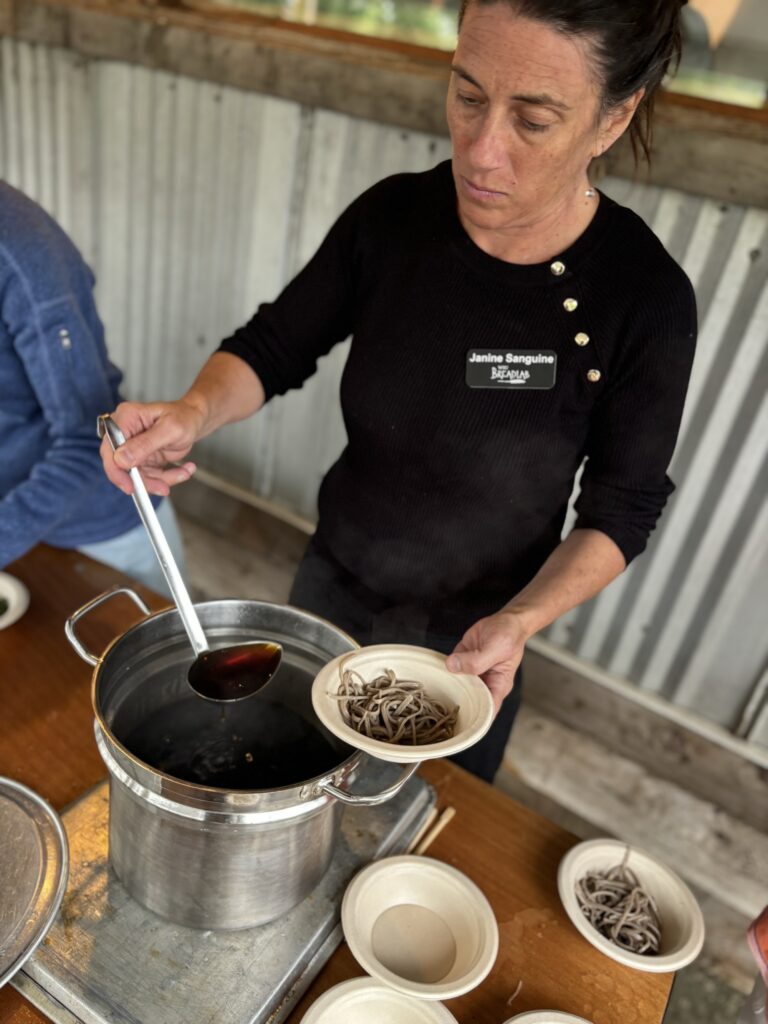
Currently, WSU researchers with Soil to Society are studying buckwheat’s relationship with the soil health and weed suppressive qualities. They are also co-learning from chefs, millers and bakers who are using whole and milled buckwheat in their traditional and novel foods and beverages. Participation in these festivals allow researchers to understand industry needs and trends to guide future goals.
The 2024 Buckwheat Festival featured the most delicious food samplings from chefs including Bonnie Morales from Kachka in Portland, OR, Gabrielle Schuenemann from Alderwood Bistro in Sequim, WA, Janine Sanguine and Robin Morgan from the WSU Breadlab in Mt. Vernon, WA, and Sonoko Sakai, who presented on how to prepare traditional Japanese buckwheat soba noodles.
Last year’s Buckwheat Festival was particularly exciting as Dr. Kevin Murphy announced the release of WSU’s first buckwheat variety, ‘Tinker.’ Tinker is named after Tinker Cavallaro, who farmed for many years on the Olympic Peninsula. She was a friend and mentor to Dr. Murphy and inspired him to begin growing buckwheat more than a decade ago.
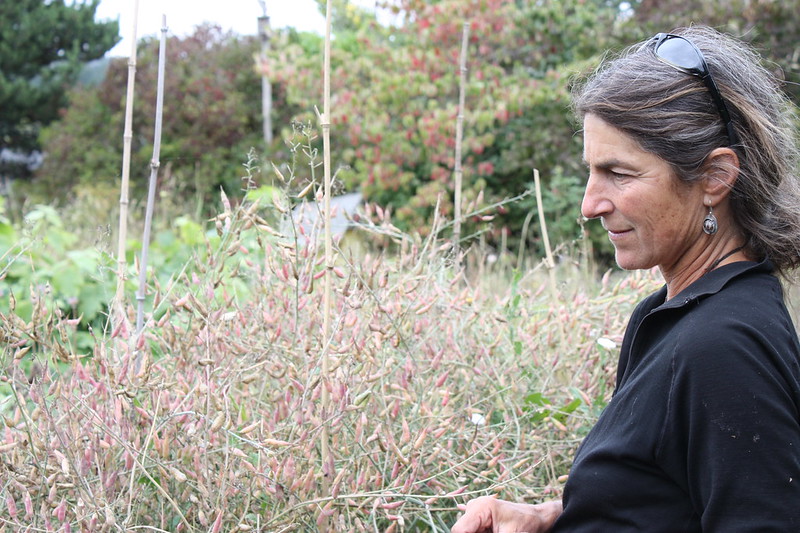

Just like the farmer Tinker, this new variety was bred to thrive in Western Washington’s climate. It is early maturing compared to other varieties and produces large seeds that are particularly flavorful and fitting for culinary applications. This variety is currently available open source through Dr. Murphy’s lab, the Sustainable Seed Systems Lab, and will soon be submitted to the USDA GRIN collection.
Another incredible success that was shared at this year’s Buckwheat Festival was from Dr. Stephen Bramwell, from WSU’s Thurston County Extension program, and Rachel Breslauer from WSDA’s Farm to School program. The last several years, Dr. Bramwell has been working to integrate more regionally grown, whole grain foods into area school lunch and breakfast programs.
By working with Cascade Milling out of Royal City, WA to make a buckwheat pancake mix that meets federal and state school meal standards, and is approachable to school kitchen staff, Bramwell and Breslauer have introduced buckwheat pancakes into schools throughout the state. Throughout the recipe development process, they took their buckwheat pancakes on the road, providing taste tests at local and state fairs and in schools to gain feedback and get as many people trying buckwheat as possible.
The Buckwheat Festival was created by individuals with personal and career interests in seeing buckwheat thrive in our local and regional food economies — providing more money-making opportunities for farmers that are often using buckwheat as a cover crop already, and more diverse whole grain food options for eaters. Through the community gathering and networking that has occurred at the Buckwheat Festivals the last two years, momentum has grown for buckwheat as a promising crop both agronomically and in the culinary world.
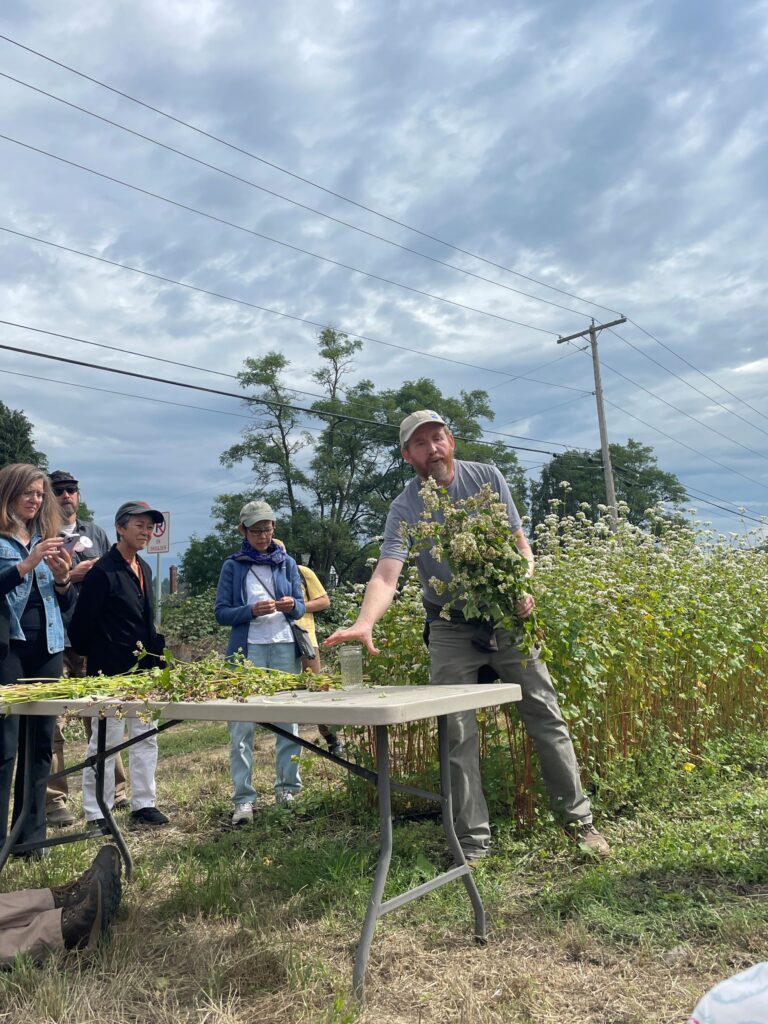
For this reason, researchers from WSU, Colorado State University, Cornell University, University of New Hampshire, and the Organic Seed Alliance gathered in the Spring of 2024 to submit a grant application that focused solely on further exploring the soil health, breeding, product development, and human nutrition opportunities in both common and tartary buckwheat. OREI announced the funding of this project this September, and work has already begun! The project is titled, “More Bang for your Buckwheat” echoing the excitement to expand buckwheat in our regional fields and on our plates. We are so excited to continue sharing updates on our work with buckwheat at future Buckwheat Festivals.
To learn more about the current state of buckwheat, we recommend reading Buckwheat Production and Value-Added Processing: A Review of Potential Western Washington Cropping and Food System Applications. To be the first to hear about the date of next year’s Buckwheat Festival, follow both the Organic Seed Alliance and Soil to Society on social media.
This year’s festival was sponsored by the NW and Rocky Mountain Regional Food Business Center. Tayler Reinman from the Center shared updates about the new Business Builder Grant Program for regional food enterprises. Visit the center’s website to learn more.
Soil to Society
The Soil to Society grant is funded through the U.S. Department of Agriculture’s National Institute of Food and Agriculture’s Sustainable Agricultural Systems (SAS) program. The SAS Soil to Society project involves over 20 researchers from Washington State University and Johns Hopkins University and evaluators from Kansas State University to improve the soil quality where these crops are grown, develop more nutritional varieties and products that can be brought to market, and evaluate the impact of these foods on human health. By bringing together soil scientists, plant breeders, food scientists, and health researchers, the Soil to Society grant crosses disciplines to develop holistic agricultural management strategies and healthy, affordable food products to meet the needs of individuals and communities.
Read more about Soil to Society through the CSANR Perspectives on Sustainability series.
Comments
Buckwheat flour saved my gut destroyed by American wheat. I make buckwheat tortillas I eat every day as a staple. Great stuffed with egg, ham and cheese, or just butter like it is traditionally eaten in the Bretagne region of France.
Buckwheat has been recommended to restore magnesium levels in the body, along with Swiss chard.