The Next Generation of Compost Leaders
By Margaret Griset and Doug Collins, CSANR
This story is part of the 2024–2025 CSANR Biennial Report.
WSU’s Compost Facility Operator Training equips professionals with hands-on skills and the latest science to improve organic waste management and support Washington’s composting goals.
Managing organic waste on-site, especially on farms with poultry or livestock, presents both risks to water quality and opportunities to reduce fertilizer inputs. At the same time, community and commercial composting capacity is becoming increasingly important across Washington.
In 2022, Washington’s Organics Management Law was passed to address how organic waste is reduced, managed, incentivized, and regulated. The law set a goal to cut landfill disposal of organic material by 75% by 2030 compared with 2015 levels. It also requires many local governments to offer separate organic-material collection. The Washington State Department of Ecology’s 2024 Compost Market Study estimates that Washington already composts about one million tons of organic material each year, with demand expected to triple by 2035.
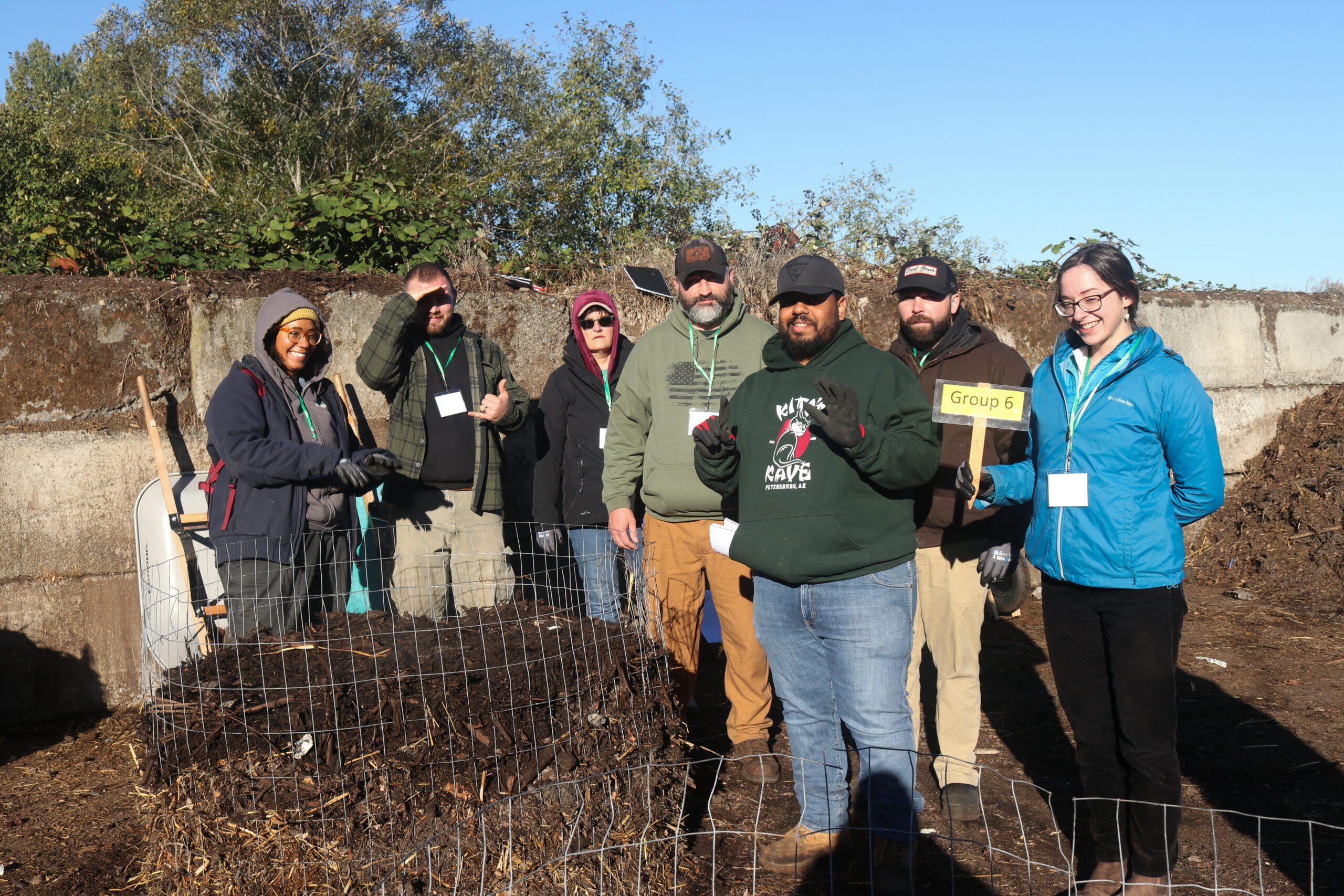
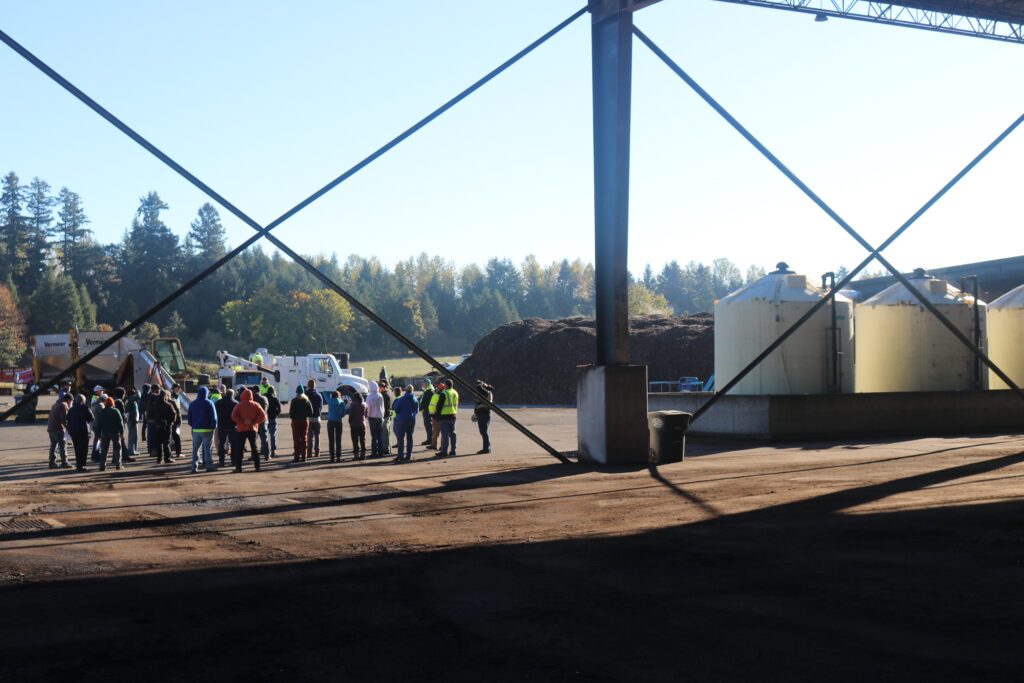
Now in its 30th year, the program annually welcomes 45 to 50 participants. Most attendees come from Washington and neighboring states, including Alaska, Idaho, and Hawaii. The curriculum covers compost biology, facility design, odor and emissions management, compost quality, and regulatory compliance. Practical field stations, compost-pile building, and tours of working facilities provide real-world learning opportunities. The goal is to equip participants with the skills needed to understand or improve compost operations.
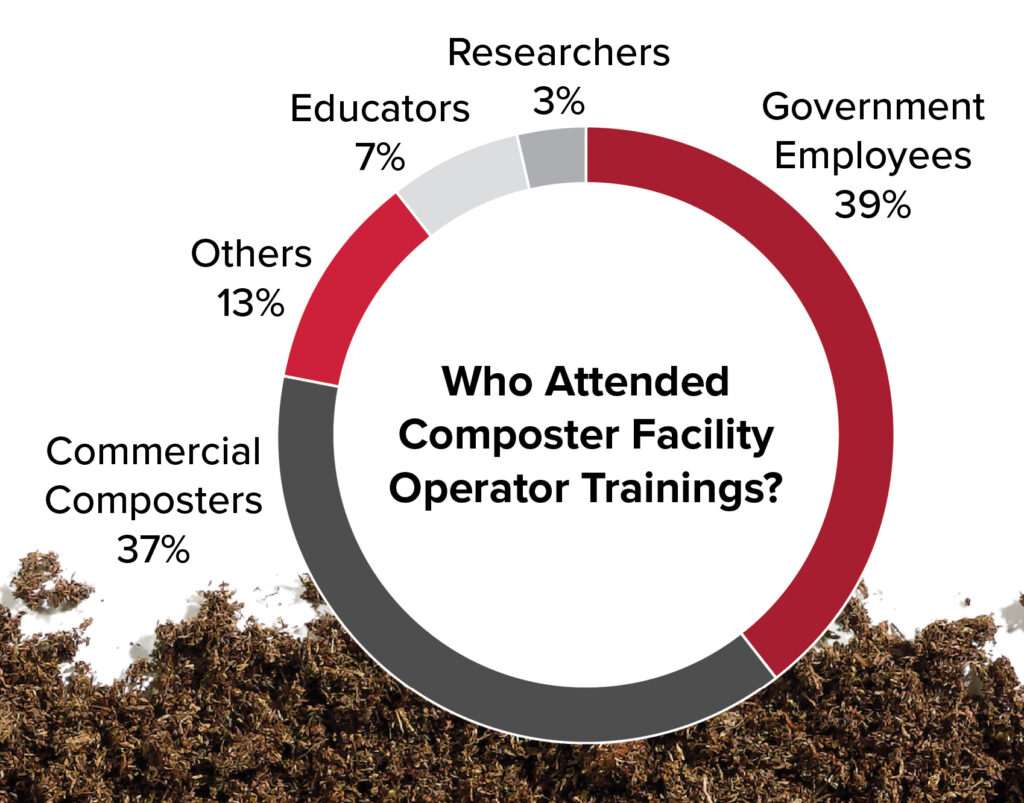
One participant reflected, “This was incredibly valuable—especially because it enrolled regulators and processors, small and large facilities, wastewater treatment plants, yard waste, and municipal solid waste sources.” Comments about the training demonstrate the program’s success in building expertise and fostering a community across sectors.
Following the course, 57% of attendees planned to implement changes in how they operate or regulate compost facilities. Nearly every participant committed to sharing their knowledge, extending the program’s impact to an estimated 1,647 additional individuals. A dozen participants were launching composting businesses.
Meanwhile, WSU completed a new compost research facility at its Puyallup Research and Extension Center in 2025. Supported by the Department of Ecology, this 100-cubic-yard site features industry-standard aeration systems and real-time emissions monitoring. In collaboration with WSU’s Civil and Environmental Engineering team, researchers are studying how different composting approaches affect emissions to inform permitting processes and best practices.
The new site expands opportunities for collaboration among researchers, regulators, and composting professionals. While the research facility operates separately from the CFOT program, it contributes to a shared goal: improving composting systems through science and practical insight. CFOT participants benefit from proximity to this work, gaining exposure to current research and observing how technologies such as aeration can influence environmental outcomes.
The CFOT program is the only comprehensive, hands-on composting training in the region. As regulatory requirements tighten and facilities scale up, the program’s blend of science, practical skills, and peer networking continues to fill a critical workforce need.