December 2025 | Allie Higginbotham, Corinne Brown, Jeff Porter, Mark Stoermann, Wendy David, Jaimie Vander Molen, Trevor Gearhart, Shannon Neibergs, Njongenhle Nyoni, Kristiana Gibson, Georgine Yorgey
PDF is provided for offline use. Some features may not be digitally accessible.
Table of Contents
- Authors
- Acknowledgements
- Executive Summary
- 1. Introduction
- 2. FAQ about Dairy Production and Climate
- 3. Statewide Roadmap Findings
- 4. Cohort-Specific Recommendations
- 5. Share Challenges and Next Steps
- 6. References
- 7. Appendix A: Detailed Recommendation Descriptions
- 8. Appendix B: Detailed Methods
- 9. Appendix C: Decision Tree
- Footnotes
Authors
Higginbotham, A.J.K.1*, Brown, C.2, Porter, J.2, Stoermann, M. 2, David, W. 2, Vander Molen, J.2, Gearhart, T.3, Neibergs, S.4, Nyoni, N.M.B.5,Gibson, K.6, Yorgey, G.G.1,7*
Affiliations
1Washington State University, Center for Sustaining Agriculture and Natural Resources; 2Newtrient, LLC; 3Whatcom Conservation District; 4Washington State University, School of Economic Sciences Extension; 5Dairy Farmers of Washington; 6 Washington State Department of Agriculture; 7Washington State University, Energy Program, * Corresponding author(s)
Suggested Citation
Higginbotham, A.J.K., Brown, C., Porter, J., Stoermann, M., David, W., Vander Molen, J., Gearhart, T., Neibergs, S., Nyoni, N.M.B., Gibson, K., Yorgey, G.G., 2025. A Climate Roadmap for Washington State Dairy. Center for Sustaining Agriculture and Natural Resources, Washington State University.






Acknowledgements
Many thanks to the 19 dairies across Washington State who generously hosted the team for in-depth visits to their farms. This project would not have been possible without your collaboration. We would also like to thank collaborators at Northwest Dairy Association, Tammy Edmonds, Antone Mickelson, and Marissa Watson, and collaborators at Darigold, Christine Van Asten and Kelly Hipchen.
The work that resulted in this roadmap was supported by funding from Washington’s Climate Commitment Act, provided through the Washington State Conservation Commission, and from Biomass Research Funds from the Washington State University Agricultural Research Center.


Executive Summary
This roadmap identifies near-term opportunities (up to 2–5 years) for Washington State dairy farmers to advance environmental stewardship by lowering the climate footprint while also supporting water and air quality outcomes. Reducing the climate footprint per unit of milk produced and lowering total greenhouse gas emissions from dairy production statewide are both important for achieving these outcomes, and both are addressed in this roadmap.
Although an important goal of this roadmap is to help identify strategies that are likely to be most impactful and cost-effective, it presents a range of approaches rather than a one-size-fits-all solution. Each farm is unique, and dairy producers are the experts best equipped to make decisions for their operations. Many of the conservation practices described in this report have been long used on farms and offer further co-benefits beyond emissions reductions, including improved water and air quality and enhanced soil fertility. By highlighting these opportunities, this roadmap looks to support dairy farmers in continuing to produce nutritious food while improving the natural resources on their farms and contributing to Washington State’s greenhouse gas emission reduction goals as established by the Climate Commitment Act.
Dairy production contributes to greenhouse gas (GHG) emissions through several primary sources, including the enteric fermentation digestion processes of cows and other ruminant livestock, manure management, field crop production, and, to a lesser extent, on-farm energy use (Fig. 1) (Rotz et al. 2021). Although U.S. dairy farms are directly responsible for only about 2% of national greenhouse gas emissions, the sector has a significant opportunity to lead in advancing reductions. In the Pacific Northwest (PNW), the largest contributor to the dairy GHG footprint is enteric fermentation (animal digestion; an estimated 44%), followed by manure management (25%), feed production (24%), energy (6%), and other minor sources (Fig. 1; Rotz et al., 2021). The breakdowns are generally consistent with dairy production systems across other regions of the United States.

While a comprehensive economic analysis was outside the scope of this effort, rough estimates of costs per unit of greenhouse gas reduction were calculated for Washington dairies where costs were available and greenhouse gas reductions could be estimated (Table 1). These estimates should be interpreted with caution, as many assumptions (outlined in the footnotes and Appendix B) were required to make the calculations possible, and where possible utilize data specific to Washington dairies. Calculations were made despite these limitations in an effort to highlight practical recommendations that are likely to be technologically and operationally workable in the near-term, using financial tools available to Washington dairy producers. However, it should not be assumed that any of these practices will be adopted without adequate support; in many cases, practices that reduce the dairy footprint require either significant upfront investments or ongoing costs — and in some cases, both. Partnerships with state agencies, cooperatives, and processors, as well as targeted cost-share and incentive programs, will be critical for adoption. Over the long run, ongoing innovation both on farms and within the research community will be essential to bringing more solutions forward.
While adoption of these practices is not guaranteed, they can bring many benefits beyond GHG reduction, including farm efficiency and productivity, improved water quality, soil health, animal well-being, and farm resilience, underscoring their value for long-term sustainability. There are many reasons to support climate-smart agricultural practices and a thriving dairy sector in the state, while avoiding actions that could shift dairy production to other states or countries. Washington is an environmentally responsible producer of food, with a mild climate that supports efficient milk production and lower emission intensity than many other regions of the United States — and much of the world. Relocating dairy production elsewhere would likely result in higher net emissions, due to higher emissions per unit of food production elsewhere (Tambet et al. 2025).
Our analysis of existing datasets from farms that have reduced their emissions intensity and total emissions over the past few years indicate that emissions reductions are already being achieved on-farm, with a variety of areas contributing to those reductions. Manure management emerged as the most frequent driver of footprint reductions, often from the installation of multiple solid-liquid separation technologies. For example, one farm had an overall footprint reduction of 20% by combining a rotating screen, roller press, and polymer-enhanced solid separation. After manure management, decreases in enteric emissions were the next most common factor contributing to lower footprints, followed by increasing productivity.
Practices that are actively being considered by farms that were visited across the state as part of this project fall within all three of these categories, though with some differences across the state (eastside versus westside) and between production types (conventional versus organic). Conventional dairies outweighed organic dairies across the state. These specific practices represent additional potential near-term opportunities:
- Most Frequent Eastside Recommendations: Add/improve coarse solids separation (relevant to all farm sizes); add/increase milk cow cooling; add fine solids separation (most relevant to farms over 1,000 cows); add hot water heat recovery (all sizes); include feed additives to reduce enteric emissions (all sizes).
- Most Frequent Westside Recommendations: Add/improve coarse solids separation (relevant to all farm sizes); cover holding pond and flare emissions (all sizes; needs to be preceded by coarse solids separation); add hot water heat recovery (all sizes); include feed additives to reduce enteric emissions (all sizes). Improving milk cow cooling may be relevant for some farms, especially in warmer areas. Improving grazing management may also be relevant to farms that utilize grazing.
- Most Frequent Organic Recommendations: Add/improve coarse solids separation, improve grazing management, and add hot water heat recovery. Improving milk cow cooling may be relevant for some farms, especially in warmer areas.
Section 4 provides detailed cohort-based recommendations. Among these options, coarse and fine solids separation have relatively lower upfront costs for the amount of greenhouse gases reduced than other options.
For those seeking additional strategies for lowering the dairy climate footprint, Table 1 provides a set of widely applicable strategies for dairy farms across Washington State, organized into four key emission categories: Feed, Production, Manure Management, and Energy. (For a more detailed list of these and other strategies, including funding pathways, see Appendix A.) Note that the cost estimates focus on initial upfront costs (largely capital) and do not include ongoing operation and maintenance costs, or potential revenues such as tipping fees, incentives, or carbon credits. We have provided estimates despite these limitations as they give some insight into which strategies may be more and less cost-effective if greenhouse gas emissions are the primary driver of new practice adoption.
Achieving the state’s GHG reduction and water quality goals while maintaining a viable dairy sector will require a coordinated set of actions, supported by sustained state investment and policy leadership. These actions include:
- Address on-farm economic constraints by developing scalable market and non-market pathways that reflect the true cost of implementing and maintaining sustainable practices.
- Accelerate the development of carbon inset markets by establishing clear standards, transparent pricing, credible aggregation platforms, and by encouraging buyers to commit to mid-term or long-term partnerships.
- Support scalable digester models through third-party ownership and long-term purchase agreements for renewable fuel and electricity.
- Clarify and align policy frameworks across state and federal agencies to de-risk investment in nutrient recovery, energy, and GHG reduction projects.
- Expand access to technical assistance through trusted local and regional partners.
- Continue on-farm research into electric tractors, farm microgrids, and feeding oils to reduce enteric fermentation, as well as emerging technologies yet to be developed.
Washington’s dairy sector is uniquely positioned to demonstrate that environmental progress and agricultural vitality can go hand in hand. And the state as a whole is well-positioned to lead in this space, building on momentum from the Clean Energy Transformation Act and Climate Commitment Act. By aligning incentives, strengthening local delivery systems, and fostering durable public-private collaboration, the state can lead the nation in deploying practical, scalable solutions that reduce emissions, improve water quality, and support rural economies.
| KEY AREAS | RECOMMENDATIONS | NRCS PRACTICE STANDARD | DESCRIPTION | COST ESTIMATE‡ | ESTIMATED GHG REDUCTION | ESTIMATED COST PER MTCO2e REDUCTION | READINESS CATEGORIES |
|---|---|---|---|---|---|---|---|
| FEED | Cover Crops | Cover Crop (340) | Sequester carbon, reduce N2O. | $84.07–$157.47/acre | 2–6 MTCO2e/year/100 acres | $1,401.17–$7,873.50/MTCO2e/year | Adoptable Now |
| Nutrient Management | Nutrient Management (590) | Soil-tested fertilizer use, improved manure utilization. | $44.54/acre | 15–32.6 MTCO2e/year/100 acres | $136.63–$296.93/MTCO2e/year | Adoptable Now, unclear what opportunity exists for improvements beyond current best practices | |
| Reduced Tillage | Residue and Tillage Management, Reduced Till (345) | Enhance soil carbon storage. | $24.42/acre | 5.4–10.2 MTCO2e/year/100 acres | $239.41–$452.22/MTCO2e/year | Adoptable Now | |
| GPS Precision Nutrient Application | Nutrient Management (590) | Apply nutrients at a variable rate and avoid overlap. | $98.76/acre | Based on fuel use decrease and nitrous oxide reduction. | – | Adoptable Now | |
| PRODUCTION | Feed Additives (e.g., 3-NOP) | Feed Management (592) | Reduce CH4 via rumen microbial changes. | $76.85/animal unit/year | 10–30% CH4 (Honan et al. 2021) | $47.15–$141.46/MTCO2e/year | Adoptable – Incentives Needed |
| Precision Feeding | Feed Management (592) | Optimize rations for efficiency. | $5.36–$46.90/animal unit/year | 2.5–15% CH4 (Knapp et al. 2014) | $150.03–$900.19/MTCO2e/year | Adoptable Now | |
| Selective Breeding | N/A | Select for low CH4, increased feed efficiency, and high milk yield. | $24–$30/straw (ST genetics, internal communication, 2025) | 7.7% CH4, 6.1% CO2 (O’Reilly et al. 2024) | – | Adoptable Now | |
| Improve Cow Comfort to Increase Productivity per Cow (including a focus on cow cooling) | Watering Facility (614), Livestock Pipeline (516), Livestock Shelter Structure (576) | Reduce risk of heat stress to support cow health and increase milk production. |
$655.65/36″ panel fan (fans) $6.25/nozzle (misters) $98.35/100′ roll (misters pipeline) (above costs, adjusted for inflation; Cornell University 2022) $4.77/gallon (waterers) $3.57/ft (waterers pipeline) $7.27–$8.17/ft² (shade structures) | Decreased emission intensities through potential 8.6–15.8% increase in milk production (Pretz 2020). | – | Adoptable Now | |
| MANURE MANAGEMENT | Coarse Solids Separation | Waste Separation (632) | Reduce CH4 from liquid storage. | $70,000–$130,000 | 146–1,020 MTCO2e/year | $4.58–$59.36/MTCO2e/year | Adoptable Now |
| Fine Solids Separation | Waste Separation (632) | Reduce CH4 from liquid storage. | $350,000–$750,000 | 298–2,064 MTCO2e/year | $11.30–$167.79/MTCO2e/year2 | Adoptable – Incentives Needed | |
| Anaerobic Digesters | Anaerobic Digester (366) | Capture CH4 for energy. | $485,000–$16.5M | 4,301–7,427 MTCO2e/year | $138.15–$143.14/MTCO2e/year | Adoptable for larger dairies (>3,000 cows) – Incentives Needed | |
| Covered Manure Storage with Flare | Roofs and Covers (367) & Anaerobic Digester (366) | Capture and flare CH4, reduce N2O. |
$1.56–$6.52/ft² (cover) $484.25/animal unit (system controls, gas collection, flaring system) |
772–5,238 MTCO2e/year4 58.1–79.8% (Wright and Gooch 2022) | $25.89–$29.27/MTCO2e/year | Adoptable – Incentives Needed | |
| ENERGY | Hot Water Heat Recovery | Energy Efficient Agricultural Operation (374) | Recover milking system heat. | $6,355.82/unit | 9.7 MTCO2e/unit/year (Newtrient, LLC 2025) | $65.52/MTCO2e/year8 | Adoptable Now |
| Convert to LED Lighting | Energy Efficient Lighting System (670) | Reduce on-farm energy use. | $14.64–$52.92/lamp | – | – | Adoptable Now | |
| Add Variable Frequency Drives (VFDs) | Energy Efficient Agricultural Operation (374) | Optimize energy usage. | $142.94–$147.11/horsepower | – | – | Adoptable Now | |
| Switching to More Energy-Efficient Animal Cooling | Energy Efficient Agricultural Operation (374) | Optimize fans/soakers. | $700–$24,500 | – | – | Adoptable Now | |
| Electric Tractors | Combustion System Improvement (372) | Reduce on-farm CO2. |
$25.79/horsepower (NRCS) $1,360.88/horsepower ($34,022; Solectrac CET) $2,249.97/horsepower ($89,999; Monarch MK-V Tractor) | 17–53 MTCO2e/year (Eldeeb and Tawfik 2023) | $103–$9,000/MTCO2e/year8 | Limited Commercial Availability, Further Research Needed |
‡ Unless otherwise specified, all estimated costs are derived using the United States Department of Agriculture (USDA) Natural Resources Conservation Service (NRCS) Practice Scenarios for Washington State for Fiscal Year 2025.
1. Introduction
Agriculture is a vital part of Washington State’s economy, producing a wide range of nutrient-dense foods while supporting rural communities and local employment. In 2023, the state’s agricultural output was valued at approximately $14 billion, with dairy ranking among the top three commodities alongside apples and beef cattle (United States Department of Agriculture National Agricultural Statistics Service 2024c). Dairy farming contributes an estimated $2.65 billion in economic contribution value to Washington’s economy and generates many indirect economic benefits while simultaneously producing high-quality milk, recycling nutrients, and stewarding agricultural land (Neibergs and Nadreau 2021). Many of the state’s dairy farmers are recognized leaders in environmental stewardship and innovation, committed to improving water quality, reducing greenhouse gas emissions, and strengthening the natural resources on their farms to ensure that future generations can carry on the important work of feeding the nation and the world.
This roadmap was a collaborative effort by individuals working at Washington State University, Newtrient, Whatcom Conservation District, the Dairy Farmers of Washington, and the Washington State Department of Agriculture, with collaborative contributions from Northwest Dairy Association and Darigold. It identifies practical, voluntary, and mutually beneficial opportunities where improved efficiency and conservation practices can support both long-term farm viability and environmental sustainability. Many of the practices outlined in this roadmap are already familiar to and practiced by dairy producers, contributing to building healthy soils and enhancing air and water quality, while simultaneously reducing climate impacts. Other practices represent newer or emerging approaches. Progress along this roadmap will help the dairy sector respond to customer expectations for sustainably produced milk products (GlobeScan 2025). It will also support dairy purchasers’ goals to reduce the climate impacts of their supply chains. Ultimately, these efforts align with the U.S. dairy industry’s broader objective: achieving climate neutrality by 2050 while optimizing water usage and improving water quality (Innovation Center for U.S. Dairy 2023).
Meanwhile, progress toward the dairy sector’s own sustainability goals will align with Washington State’s broader goals, including its commitment to reduce net emissions to 95% below 1990 levels by 2050. Achieving these targets will require collaborative public and private actions.
Many of the practices suggested in the roadmap require upfront investments – and in some cases, additional ongoing costs. Implementing some of these practices may be difficult given the sector’s current economic landscape (Neibergs and Gibson 2022). While a few high-profile dairies have successfully implemented mitigation strategies, understanding current emissions profiles and identifying appropriate, cost-effective solutions remains a significant challenge for many producers. Addressing these challenges was a primary motivation for developing this roadmap.
Supporting roadmap implementation and maintaining the economic viability of Washington’s dairy sector will help ensure that in-state emission reductions contribute to actual global decreases. If actions taken in Washington inadvertently reduce agricultural productivity and viability within the state, compensatory increases in production – and emissions – could occur in other states or countries to meet consumer demand. Relocating production would likely result in higher overall global emissions due to factors such as land-use change, increased emissions from transportation, and increased emissions per unit of food production (Tambet et al. 2025). Therefore, supporting local agriculture not only sustains the state’s economy but also advances its climate goals while dairy producers deliver nutrition and help sustain local food security.
Agricultural sustainability is recognized as having three important and interconnected pillars: social responsibility, economic viability, and environmental stewardship (Fig. 2). This report primarily emphasizes the environmental and economic aspects of sustainability, with the potential inclusion of social considerations for certain recommendations.

Dairies have long been important stewards of the environment, working to ensure healthy soils, clean air and clean water, and healthy animals. While this roadmap centers around climate, it intentionally notes where strategies can contribute to economic and environmental progress on a range of challenges. Ongoing research and innovation will continue to broaden the range of tools available to Washington dairies, including technologies that may become practical in the future. Updates to this roadmap in the future will incorporate these advancements as they are developed and proven effective.
To develop this roadmap, technical experts from Newtrient collaborated with a subset of 19 dairies across the state to assess current practices, evaluate climate footprints, and develop grounded, prioritized recommendations for individual farms (Table 1). These farms were selected to represent the full range of farm sizes, locations, and production systems found across the state. In parallel, the team analyzed a larger dataset of 191 existing anonymized climate footprint evaluations from 2019 and 2025, performed with the Farmers Assuring Responsible Management Environmental Stewardship (FARM ES) tool to statistically analyze emissions profiles. Finally, information gathered from individual farm visits was used to develop detailed recommendations tailored to specific cohorts by size, location, and type. For more information, see Appendix B: Detailed Methods.
| Region & Type | Small (S) (< 1,000 cows) | Medium (M) (1,000–3,000 cows) | Large (L) (> 3,000 cows) | Total |
|---|---|---|---|---|
| Conventional – East | 3 | 4 | 3 | 10 |
| Conventional – West | 4 | 3 | – | 7 |
| Organic – Statewide | 2 | – | – | 2 |
| Total | 9 | 7 | 3 | 19 |
Roadmap recommendations for specific types of dairies are presented in section 4, for both organic farms (one category statewide) and conventional farms of varying sizes on the Eastside and Westside of Washington State. A full detailed description for each recommendation is provided in Appendix A.
2. FAQ about Dairy Production and Climate
Below is a compilation of short answers to frequent questions related to dairy sustainability and climate, as connected to this report. For a more detailed background on agriculture and climate in Washington State, see the recently completed Organic and Climate-Smart Agriculture Report (Tambet et al. 2025).
2.1 What greenhouse gas (GHG) emissions are common from a dairy?
Dairy production contributes to GHG emissions through several key sources, including the digestion of ruminant livestock (i.e., enteric fermentation), manure management, field crop production, and to a lesser extent through on-farm energy use (Rotz et al. 2021). Based on data from representative farms, the largest categories of emissions are enteric fermentation and manure management. The two primary GHGs associated with these sources are methane (CH4) and nitrous oxide (N2O), both of which are more potent than carbon dioxide (CO2) by weight. For a more detailed breakdown of emissions from Pacific Northwest dairy farms, see Figure 1.
2.2 What does carbon dioxide equivalent (CO2e) mean?
Carbon dioxide equivalent (CO2e) is a standard unit used to express the combined impact of all greenhouse gases in terms of the amount of carbon dioxide that would have the same global warming potential over a 100-year period. This allows all greenhouse gases to be compared on an equivalent basis. Gaseous emissions are typically expressed in million metric tons (MMT) of carbon dioxide equivalents. For example, methane has a global warming potential (GWP) of 25, which means that 1 million metric tons of methane has the same warming effect as 25 million metric tons of carbon dioxide over a 100-year period.
2.3 How is a dairy’s GHG footprint calculated and reported?
Computer models, which are built and improved over time utilizing information from many scientific studies, are often used to estimate greenhouse gas emissions from complex agricultural systems. For dairy, the FARM ES platform provides farm-level environmental assessments of GHG emissions on individual dairy farms (National Milk Producers Federation 2025). FARM ES Version 3.0, released in late 2024, uses the Ruminant Farm Systems (RuFaS) model, a university-developed farm simulation model that simulates the flow of nutrients and water through a dairy system with four integrated biophysical models (Hansen et al. 2021; Kebreab et al. 2019; Reed 2022). The underlying model between FARM ES Version 2.0 and 3.0 is significantly different and results should not be directly compared between the two versions (National Dairy FARM Program 2025).
The FARM ES tool reports each farm’s GHG footprint across four categories, consistent with those shown in Figure 1: enteric fermentation, manure management, feed production, and energy use. The total emissions in carbon dioxide equivalent from the farm are normalized by milk production and corrected to a standard composition of 4% milk fat and 3.3% protein. The total footprint will be reported as the carbon dioxide equivalent per pound of fat and protein corrected milk (FPCM). This type of report gives a measure of GHG intensity whereas the total amount of GHG emissions that originate from the dairy farm can be calculated by multiplying the GHG intensity by the amount of milk produced.
Beyond the Farm ES platform which may be most familiar to dairy producers, two other computer tools were used within this roadmap for estimating the greenhouse gas emissions reductions achievable through implementation of particular practices in Washington. The Dairy Gas Emissions Model (DairyGEM) is another software tool that estimates GHG emissions, ammonia, hydrogen sulfide, and volatile organic compounds (VOC) of a dairy production system (Rotz et al. 2016). The simple tool provides an estimate for net emissions from a dairy farm, including the production of feeds and recycling of nutrients from manure. Meanwhile, COMET-Planner is a web-based tool based on USDA’s methods for quantifying greenhouse gas emissions in agriculture (Hanson et al. 2024) that utilizes a fixed baseline comprised of typical regional management scenarios, to help farmers and ranchers estimate their greenhouse gas (GHG) emissions and carbon sequestration potential.
2.4 What does a typical dairy’s GHG footprint look like?
Studies show substantial variation in dairy GHG emissions both among U.S. regions and across individual farms (Thoma 2013; Naranjo et al. 2020; Rotz et al. 2021; Naranjo et al. 2023; Pelton et al. 2025). Reported footprints range from approximately 0.80 to 3.20 lb. CO2e per lb. of fat-and protein-corrected milk (FPCM). Methodological differences and uncertainties, and the specifics of the data used and assumptions made can make direct comparisons between studies difficult. It is generally more meaningful to evaluate changes within the same system using a consistent method over time. In the rest of this section, most of the data shared is derived from a single modeling effort, for which the range in GHG emission intensities found align well with the values reported in other studies. While some uncertainty remains around specific estimates, the agreement among many independent analyses about both the main drivers of greenhouse gas emissions and the overall range of intensities increase confidence in these values.
In the Pacific Northwest (PNW; Washington, Oregon, Idaho, Montana), the average footprint was estimated to be approximately 1.0 lbs. CO₂e/lb. FPCM – slightly lower than the national average of 1.04 lb. CO2e/lb. FPCM (Rotz et al., 2021). Another estimate from the Pacific Northwest (Washington, Oregon) reports the average footprint to be 1.31 lbs. CO2e/lb. FPCM (Pelton et al. 2025). Organic dairies, which rely more heavily on pasture and store less liquid manure, may achieve even lower footprints, around 0.76 to 1.08 lb. CO₂e/lb. FPCM (Aguirre-Villegas 2022).
Regional advantages that help keep PNW emissions lower include a relatively cooler climate, higher milk yields per cow (24,124 lbs. per cow) (United States Department of Agriculture National Agricultural Statistics Service 2024b), and access to a clean energy grid. At the same time, challenges such as reliance on long-term liquid manure storage and the need to import some feed for cows contribute to emissions.
Baseline data from working dairy farms in Washington provides a realistic picture of the current GHG footprint and can help identify strategies most likely to yield cost-effective emission reductions. Within this roadmap effort, analysis of 160 anonymized dairy farms (FARM ES v 2.0) and 31 anonymized dairy farms (FARM ES v 3.0) in Washington confirms that enteric fermentation is the largest contributor to current emissions, followed by manure, feed, and finally energy. The most recent FARM ES v 3.0 data from Washington State has an average farm footprint of 1.2 ± 0.3 lbs. CO2e/lb. FPCM, which overlaps the modeled estimates calculated for the PNW region (i.e., Rotz et al., 2021; Pelton et al., 2025).
Finally, an exceptionally low footprint has been documented for a Washington dairy recognized for its environmental stewardship, reporting 0.82 kg CO2e/kg FPCM using FARM ES v 2.0 (Olthof et al. 2025). Although this number may not be directly comparable to the numbers presented above, it shows that highly motivated producers can achieve quite low footprints.
2.5 What contributes to my dairy farm’s footprint?
The FARM Environmental Stewardship (FARM ES) tool categorizes an individual dairy’s GHG footprint into four categories: feed production, manure management, energy use, and enteric fermentation (i.e., production). In the PNW, the highest percentage of GHG is attributed to production, making up nearly 44% of a farm’s footprint (Rotz et al., 2021). Manure management and feed production are both roughly 25% while energy consumption makes up a small portion of the footprint at 6% (see Fig. 1).
2.6 How can I lower my dairy farm’s footprint?
A dairy farm can take two complementary approaches to reduce its carbon footprint:
- Reduce total farm emissions while maintaining or increasing milk production.
- Increase production efficiency—that is, produce more milk with the same level of greenhouse gas emissions.
This roadmap outlines recommendations you can use to target both opportunities. A particular emphasis is placed on reducing overall farm greenhouse gas emissions, both because current economics often favor efficiency improvements and because reducing total emissions aligns with Washington State’s greenhouse gas reduction goals as established by the Climate Commitment Act.
3. Statewide Roadmap Findings
3.1 Progress to Date Towards Reducing Climate Footprint
Existing data from FARM ES v 2.0 indicate that approximately 80% of farms that had more than one evaluation over time reduced their total climate footprint from the initial assessment. When the project team analyzed which emissions categories had changed, manure management emerged as the most frequent driver of recent footprint reductions. In most cases, farms that achieved reductions had combined more than one solid-liquid separation technology. For example, one farm had an overall footprint reduction of 20% by combining a rotating screen, roller press, and polymer-enhanced solid separation. After manure management, decreases in enteric emissions were the next most common factor contributing to lower footprints, followed by increasing productivity.
While each farm is different, these results suggest that near term changes can be achieved through changes in manure management. Reductions in enteric emissions through feed additives, and improvements in productivity, are likely also important avenues for reducing emission intensities, or the climate footprint per pound of milk produced. However, it is important to recognize that this dataset skewed toward larger dairies, particularly on the east side of the state (see Appendix B for more information comparing this dataset with the distribution of dairy farms in the state).
3.2 What are the biggest current opportunities for GHG reduction in Washington dairies?
Based a combination of our analysis of existing FARM ES data, farm visits, and economic analysis, the greatest immediate opportunities for reducing GHG emissions across Washington dairies lie in improving manure management and reducing emissions from enteric fermentation. Key practices include:
- Implementing coarse and/or fine solid-liquid separation.
- Covering manure storage lagoons and flaring emissions (i.e., cap and flare system).
- Incorporating feed additives such as 3-NOP (trade name: Bovaer®) to reduce methane emissions. (Note that 3-NOP is not organically certified.)
- Hot water heat recovery could lower energy costs over time while saving energy usage, albeit with smaller overall GHG reductions.
3.3 How expensive are these practices? How will these practice changes be funded?
Estimated costs for each practice are provided in Appendix A. Many practices qualify for cost-share support through programs such as NRCS’ Environmental Quality Incentives Program (EQIP). In recent years, cost share has also been available through the Washington State Conservation Commission’s Sustainable Farms & Fields program and the Washington Department of Commerce Dairy Digester Program. Some practices also have the potential to generate carbon credits or qualify a producer for supply-chain based incentives.
3.4 Will adopting these practices improve farm profitability?
Some practices could improve farm profitability. For example, practices that improve cow comfort often increase milk productivity, leading to higher revenues. Many recommended practices can also improve operational efficiency, reduce operating costs, or open opportunities in carbon markets. However, other practices may require significant capital investments or raise ongoing operating costs. Thus, the question of whether adopting particular practices will improve profitability is complex and should be considered carefully for individual farms.
3.5 What practices deliver the highest return on investment in terms of climate benefits?
With the number of variables involved, it is difficult to provide a definite answer. Estimates were made by calculating cost-per ton estimates for GHG-reducing practices (Table 3; see Appendix B for assumptions).
- Most cost-effective practices include coarse solid separation and fine solid separation.
- Moderately cost-effective practices include anaerobic digesters, covered lagoons or holding ponds with a flare (i.e., cap and flare), feed additives, and hot water heat recovery.
- Higher cost practices include precision feeding, reduced tillage, and cover cropping.
Please note that these estimates do not consider any cost-saving opportunities or potential carbon credits that could offset costs.
It’s also important to recognize that some practices must be implemented in sequence for the overall system to function properly. For example, before covering a holding pond and flaring the captured biogas, solid-liquid separation should be in place to reduce the accumulation of solids in the pond.
| Practice | Cost (per MTCO2e/yr) | Readiness Category |
| Coarse Solids Separation | $4.58 – $59.36 | Adoptable Now |
| Fine Solids Separation | $11.30 – $167.79 | Adoptable – Incentives Needed |
| Covered Manure Storage with Flare | $25.89-$29.27 | Adoptable – Incentives Needed |
| Feed additives (e.g., 3-NOP) | $47.15 – $141.46 | Adoptable Now – Incentives Needed |
| Hot Water Heat Recovery | $65.52 | Adoptable Now |
| Anaerobic Digesters | $138.15-$143.14 | Adoptable – Incentives Needed |
| Electric Tractors | $97.21 – $529.41 | Further Research Needed |
| Nutrient Management | $136.63 – $296.93 | Adoptable Now |
| Precision Feeding | $150.03 – $900.19 | Adoptable Now |
| Reduced Tillage | $239.41 – $452.22 | Adoptable Now |
| Cover Crops | $1,401.17 – $7,873.50 | Adoptable Now |
3.6 How much could emissions be reduced in the near term with broad adoption of key practices?
Examining a suite of practice changes on different farms can provide a general sense of how much emissions might be reduced. Using the mean footprint of Washington dairies as a baseline (1.2 lb. CO2e/lb. FPCM), we can estimate how different practices might lower that footprint. GHG reduction estimates from Table 1 (i.e., COMET-Farm) were applied to the baseline to calculate the potential percentage decreases and resulting changes to the baseline footprint (Table 4). For example:
- Adopting a combination of practices such as coarse solid separation followed by fine solid separation could reduce the overall footprint by 1.5 – 10.6% relative to the assumed baseline.
- Adding feed additives and coarse solids separation can reduce a farm’s footprint by 5 – 16%.
- Installing an anaerobic digester could decrease baseline emissions by 15 – 25%.
While not all practices may be appropriate on all farms (e.g. feed additives are not organically certified so cannot be used on organic farms), such examples demonstrate the scale of achievable reductions across Washington dairies.
| Example Farms | Practice changes | Footprint Reduction Potential | Adjusted Baseline (lbs. CO2e/lb. FPCM) |
| Farm A | Coarse solids separation + fine solids separation | 1.5 – 10.6% | 1.07 – 1.18 |
| Farm B | Feed additives + coarse solids separation | 4.7 – 16.0% | 1.01 – 1.14 |
| Farm C | Cover holding pond and flare emissions | 2.7 – 18.1% | 0.98 – 1.17 |
| Farm D | Feed additives | 4.2 – 12.5% | 1.05 – 1.15 |
| Farm E | Anaerobic digester | 14 – 25.6% | 0.89 – 1.02 |
| Farm F | Increase milk productivity (8.6 – 15.8%) | 7.9 – 13.6% | 1.10 – 1.04 |
| Farm G | Cover holding pond and flare emissions + feed additives | 6.7 – 30.6% | 0.83 – 1.12 |
4. Cohort-Specific Recommendations
4.1 How to read the cohort-specific recommendation tables in this report
The following recommendations are organized into cohort-specific summaries across the four key areas of a dairy farm’s greenhouse gas footprint: feed, production, manure, and energy. The prioritization lists depict the recommendations to start with the largest return on investment for GHG reduction and increasing productivity. This prioritization is based on the direct benefits to the producer (cost savings, carbon credits, operational efficiency) and environmental impact (GHG reduction, water reduction, water quality improvement, and soil health improvement). It focuses on technologies that offer the highest return on investment in terms of both environmental and economic benefits for dairies. In some cases, prerequisites are needed before practices can be implemented (e.g., coarse solids separation is required before adding a cover and flare).
These lists were also heavily influenced by the individual farm visits. The strategies included in the lists reflect practices that farmers identified as being of interest. As such, they are grounded in the current realities of dairy farming in Washington. However, because these lists are shaped by the priorities of farms themselves, producers are encouraged to also review the statewide recommendations in Section 3, and the broader list of greenhouse gas-reducing and carbon-building practices in Table 1 to identify additional strategies that may be relevant to their operations and specific situations.
Following the prioritization lists, the summary table for each cohort identifies the region and farm size for which each recommendation is intended, along with the estimated GHG reduction potential, associated cost scale, and timeline for implementing selected practices. These values serve as high-level benchmarks to guide regional planning, incentive program design, and sector-wide emissions reduction efforts. Many practices are already adopted on farms through programs such as EQIP or through farmer initiatives. Full details related to recommendations are listed in Appendix A, where NRCS practice standards and funding pathways can be found.
Farm Region and Size
Each recommendation is categorized according to where the dairy farm is located within Washington State:
- Eastside (E): Farms that lie east of the Cascade Range.
- Westside (W): Farms that lie west of the Cascade Range.
- Statewide: All farms within Washington State.
Farm sizes are categorized by the number of cows on each farm, following Table 4:
- Small (S): Farms that have <1,000 cows.
- Medium (M): Farms that have between 1,000 and 3,000 cows.
- Large (L): Farms that have >3,000 cows.
Organic dairies were placed into their own category and not specified by location or size:
- Organic: Organic dairies across the state of Washington.
GHG reduction selection criteria
Each recommendation was assessed on its potential for greenhouse gas (GHG) emission reductions and categorized using the following scale:
- High Reduction Potential:
The recommendation directly and effectively targets major GHG emission sources such as methane and nitrous oxide, while sometimes providing additional benefits such as renewable energy generation.
- Medium Reduction Potential:
The recommendation has direct, moderate GHG emission reductions either directly—through efficiency improvements—or indirectly by shrinking larger emission sources.
- Low Reduction Potential:
The recommendation has a minimal direct impact on GHG emission reduction, typically indirectly benefiting GHG emissions, often contributing more to improvements in animal welfare, water quality, or soil health than to significant GHG reductions.
Cost scale selection criteria
The cost scale is used to classify the financial investment required for a project, based on its complexity and the resources needed.
- $ projects typically involve minimal financial outlay, often relying on labor-intensive tasks like field trials or manual testing.
- $$ projects require moderate investment, such as purchasing new small equipment or making infrastructure upgrades.
- $$$ projects represent a significant financial commitment, usually involving major equipment upgrades or infrastructure additions.
- $$$$ projects involve large-scale investments, often requiring partnerships or external funding, such as renewable energy installations or the construction of new facilities.
4.2 Eastside Recommendations
Eastside Recommended Practice List
- Add/Improve Coarse Solids Separation*
- Producer: Can reduce handling costs, enable bedding reuse, carbon credits, and improve land application of liquid effluent.
- Environmental: Lowers CH4.
- Add/Increase Milk Cow Cooling
- Producer: Boosts milk yield, relatively inexpensive.
- Environmental: Reduces enteric CH4 footprint via efficiency, improves cow comfort
- Add fine solids separation*
- Producer: Enhances bedding, improves land application of liquid effluent.
- Environmental: Lowers CH4 and lowers risk of nutrient overapplication.
- Add Hot Water Heat Recovery*
- Producer: Saves heating costs, relatively quick payback.
- Environmental: Reduces energy CO2.
- Include feed additives to reduce enteric emissions*
- Producer: Some feed additives have the potential to slightly increase milk yield and feed efficiencies, carbon credits.
- Environmental: Lowers CH4.
- Add watering troughs for cows
- Producer: Improves milk yield, low cost.
- Environmental: Improves cow health and comfort, indirect CH4 reduction via improved efficiency.
- Implement shade structures
- Producer: Increases milk yield, low cost.
- Environmental: Improves cow health and comfort in a changing climate, indirect CH4 reduction via improved efficiency.
- Add Transfer Piping to Pivots/Irrigation System
- Producer: Saves water/energy costs, improves irrigation efficiency and yields.
- Environmental: Reduces water use, CO2, and runoff.
- Additional Wastewater Center Pivot irrigation system
- Producer: Reduces fertilizer costs, reduces diesel cost of hauling manure to land application areas.
- Environmental: Conserves water, reduces runoff, and N2O.
- Add/upgrade concrete surface for solids management
- Producer: Reduces equipment wear, labor.
- Environmental: Improves water quality and soil health.
- Covered area for waste separation and manure handling
- Producer: Lowers handling costs.
- Environmental: Reduces runoff and N2O.
- Add waste holding pond
- Producer: Centralizes storage, improves land application timing.
- Environmental: Improves water quality and soil health.
- Install concrete heavy use area around feed and silage storage
- Producer: Reduces spoilage, reduces shrink, equipment wear.
- Environmental: Minimizes runoff.
*Indicates high-impact GHG reduction recommendations
Eastside Environmental Recommendations Summary
| RECOMMENDATIONS | RECOMMENDED FOR * | ESTIMATED GHG REDUCTION ** | COSTS *** | TIMELINE **** |
| Add Transfer Piping to Pivots/Irrigation System | ES, EM, EL | Low | $$ | Midterm |
| Install Concrete Heavy Use Area Around Feed and Silage Storage | ES, EM, EL | Low | $$ | Short |
| Additional Wastewater Center Pivot Irrigation System | ES, EM, EL | Low | $$$ | Short |
| Implement Shade Structures | ES, EM, EL | Low | $$ | Midterm |
| Add Watering Troughs for Cows | ES, EM, EL | Low | $$ | Midterm |
| Add/Increase Milk Cow Cooling | ES, EM, EL | Medium | $$ | Short |
| Include Feed Additives to Reduce Enteric Emissions | ES, EM, EL | High | $$$ | Short |
| Add/Improve Coarse Solids Separation | ES, EM, EL | Medium | $$-$$$ | Short |
| Add/Upgrade Concrete Surface for Solids Management | ES, EM, EL | Low | $$ | Short |
| Covered Area for Waste Separation and Manure Handling | ES, EM, EL | Low | $$ | Short |
| Add Waste Holding Pond | ES, EM, EL | Low | $$$ | Midterm |
| Add Fine Solids Separation | EM, EL | Medium | $$$ | Midterm |
| Add Hot Water Heat Recovery | EM, EL | Medium | $$ | Short |
*ES= small conventional eastside dairies (<1,000 cows); EM= medium conventional eastside dairies (1,000-3,000 cows); EL= large conventional eastside dairies (>3,000 cows)
**Estimated GHG Reduction: Low = Low Reduction Potential; Medium = Medium Reduction Potential; High = High Reduction Potential
***Costs: $ = Minimal Investment; $$ = Moderate Investment; $$$ = Significant Investment; $$$$ = Large-Scale Investment
****Timeline: Short = <12 Months; Midterm = 12-24 Months; Long = >24 Months
4.3 Westside Recommendations
Westside Recommended Practice List
- Add/Improve Coarse Solids Separation*
- Producer: Can reduce handling costs, enable bedding reuse, carbon credits, and improve land application of liquid effluent.
- Environmental: Lowers CH4, .
- Cover holding pond and flare emissions*
- Producer: Enables carbon credits, moderate cost, reduces rainwater intake into lagoon.
- Environmental: Reduces CH4 and improves air quality .
- add hot water heat recovery*
- Producer: Saves heating costs, relatively quick payback.
- Environmental: Reduces energy CO2.
- Include feed additives to reduce enteric emissions*
- Producer: Some feed additives have the potential to slightly increase milk yield and feed efficiencies, carbon credits.
- Environmental: Lowers CH4.
- add/increase milk cow cooling
- Producer: Boosts milk yield, relatively inexpensive.
- Environmental: Reduces enteric CH4 footprint via efficiency, improves cow comfort.
- Improve grazing Management*
- Producer: Reduces feed costs, boosts milk fat.
- Environmental: Lowers N2O, improves soil health and water quality.
- add/expand freestall barn(s)
- Producer: Improves milk yield by reducing overcrowding, reduces labor.
- Environmental: Reduces runoff, improves cow health and comfort and CH4 efficiency.
- Add/upgrade concrete surface for solids management
- Producer: Reduces equipment wear, labor.
- Environmental: Improves water quality and soil health.
- covered area for waste separation and manure handling
- Producer: Lowers handling costs.
- Environmental: Reduces runoff and N2O.
- install concrete heavy use area around feed and silage storage
- Producer: Reduces spoilage, reduces shrink, equipment wear.
- Environmental: Minimizes runoff.
- computer controlled irrigation
- Producer: Optimizes water use, reduces costs.
- Environmental: Conserves water, reduces CO2.
*Indicates high-impact GHG reduction recommendations
Westside Environmental Recommendations Summary
| RECOMMENDATIONS | RECOMMENDED FOR * | ESTIMATED GHG REDUCTION ** | COSTS *** | TIMELINE **** |
| Computer Controlled Irrigation | WS | Low | $$$ | Midterm |
| Install Concrete Heavy Use Area Around Feed and Silage Storage | WS, WM | Low | $$ | Short |
| Add/Increase Milk Cow Cooling | WS, WM | Medium | $$ | Short |
| Improve Grazing Management | WS | Medium | $ | Short |
| Add/Expand Freestall Barn(s) | WS | Low-Medium | $$$$ | Long |
| Include Feed Additives to Reduce Enteric Emissions | WS | High | $$$ | Short |
| Add/Improve Coarse Solids Separation | WS, WM | Medium | $$-$$$ | Short |
| Add/Upgrade Concrete Surface for Solids Management | WS, WM | Low | $$ | Short |
| Covered Area for Waste Separation and Manure Handling | WS, WM | Low | $$ | Short |
| Cover Holding Pond and Flare Emissions | WS, WM | High | $$$$ | Long |
| Add Hot Water Heat Recovery | WS, WM | Medium | $$ | Short |
**WS= small conventional westside dairies (<1,000 cows); WM= medium conventional westside dairies (1,000-3,000 cows)
**Estimated GHG Reduction: Low = Low Reduction Potential; Medium = Medium Reduction Potential; High = High Reduction Potential
***Costs: $ = Minimal Investment; $$ = Moderate Investment; $$$ = Significant Investment; $$$$ = Large-Scale Investment
****Timeline: Short = <12 Months; Midterm = 12-24 Months; Long = >24 Months
4.4 Organic Recommendations
Organic Recommended Practice List
- Add/Improve Coarse Solids Separation*
- Producer: Can reduce handling costs, enable bedding reuse, carbon credits, and improve land application of liquid effluent.
- Environmental: Lowers CH4.
- Improve grazing management*
- Producer: Reduces feed costs, boosts milk fat.
- Environmental: Lowers N2O, improves soil health and water quality.
- Add hot water heat recovery*
- Producer: Saves heating costs, relatively quick payback.
- Environmental: Reduces energy CO2.
- Add/increase milk cow cooling
- Producer: Boosts milk yield, relatively inexpensive.
- Environmental: Reduces enteric CH4 footprint via efficiency, improves cow comfort.
- Convert to manure solids for bedding
- Producer: Eliminates bedding costs.
- Environmental: Reduces upstream emissions, reduces waste.
- Add Transfer Piping to Pivots/Irrigation System
- Producer: Saves water/energy costs, improves irrigation efficiency and yields.
- Environmental: Reduces water use, CO2, and runoff.
- Add/upgrade concrete surface for solids management
- Producer: Reduces equipment wear, labor.
- Environmental: Improves water quality and soil health.
- Covered area for waste separation and manure handling
- Producer: Lowers handling costs.
- Environmental: Reduces runoff and N2O.
- Install/expand concrete heavy use area around feed and silage storage
- Producer: Reduces spoilage, reduces shrink, equipment wear.
- Environmental: Minimizes runoff.
*Indicates high-impact GHG reduction recommendations
Organic Environmental Recommendations Summary
| RECOMMENDATIONS | RECOMMENDED FOR | ESTIMATED GHG REDUCTION * | COSTS ** | TIMELINE *** |
| Add Transfer Piping to Pivots/Irrigation System | Statewide Organic | Low | $$ | Midterm |
| Install Concrete Heavy Use Area Around Feed and Silage Storage | Statewide Organic | Low | $$ | Short |
| Add/Increase Milk Cow Cooling | Statewide Organic | Medium | $$ | Short |
| Convert to Manure Solids for Bedding | Statewide Organic | Medium | $ | Short |
| Improve Grazing Management | Statewide Organic | Medium | $ | Short |
| Add/Improve Coarse Solids Separation | Statewide Organic | Medium | $$-$$$ | Short |
| Add/Upgrade Concrete Surface for Solids | Statewide Organic | Low | $$ | Short |
| Covered Area for Waste Separation and Manure Handling | Statewide Organic | Low | $$ | Short |
| Add Hot Water Heat Recovery | Statewide Organic | Medium | $$ | Short |
*Estimated GHG Reduction: Low = Low Reduction Potential; Medium = Medium Reduction Potential; High = High Reduction Potential **Costs: $ = Minimal Investment; $$ = Moderate Investment; $$$ = Significant Investment; $$$$ = Large-Scale Investment
***Timeline: Short = <12 Months; Midterm = 12-24 Months; Long = >24 Months
5. Shared Challenges and Next Steps
5.1 Economics: The Defining Constraint
Across the dairy sector, the most significant hurdle to implementing sustainable practices remains economic viability. Washington’s producers, like many across the country, face tightening margins, increasing regulatory requirements, and uneven access to markets that reward environmental outcomes. Without sustained financial support or participation in value-added markets, most farms cannot shoulder the risk of adopting new technologies or practices, regardless of their environmental merit.
Smaller and mid-sized dairies are particularly constrained. In addition to limited operating margins, they frequently lack the financial resources, technical expertise, or dedicated staff needed to evaluate and implement new technologies or engage with emerging environmental markets. While public incentive programs like NRCS’s EQIP or Conservation Stewardship Program (CSP), the Washington State Conservation Commission’s Sustainable Farms and Fields Program, or other programs from local conservation districts can provide valuable support for practice adoption, they are not designed to generate sustained income. To scale impactful solutions—such as covering a lagoon or holding pond for cap and flare, anaerobic digestion, or feed additives like 3-NOP—producers need access to long-term, market-based revenue streams that align environmental stewardship with economic viability. For example, even a coarse solids separator, for which the upfront capital cost is the primary barrier, requires electricity to run and needs to be maintained over time to provide benefits.
Anonymized data from working dairy farms across Washington State revealed that the top current drivers to reduce GHG emissions are changes in manure management (i.e., add coarse/fine solids separation), reducing enteric emissions (i.e., feeding 3-NOP), and increasing productivity (i.e., improve cow comfort). These are areas where Washington State could provide further incentives to farmers to encourage more dairies to reduce their emissions using these proven strategies. While not currently used broadly across Washington dairies, covering manure storage lagoons and flaring emissions (when energy-generating digesters are not economically favorable) represents another promising opportunity. Future economic analysis could better prioritize where Washington State should invest money to reduce GHG emissions.
5.2 Carbon Insets and the Role of the Supply Chain
Some dairy buyers and food companies have made climate commitments that require measurable reductions in emissions throughout their supply chains. Major end users such as Nestle, Dairy Farmers of America, and Danone have committed to Science Based Target (SBTi) and net-zero goals by 2050. As these companies pursue lower emissions in the dairy products they purchase, Washington dairy producers have an opportunity to maintain market share and value by supplying milk that supports these climate targets.
Identifying end-market users willing to make long-term environmental and financial commitments is essential. Carbon insets, emission reductions generated and claimed within the supply chain, are one promising pathway forward. Through carbon insets, food and retail brands that source dairy products from Washington can invest directly in methane reduction or soil health projects, embedding sustainability into their own “Scope 3” emissions4 reduction strategies. This model aligns climate goals with the actual agricultural footprint of the supply chain.
However, participation in inset markets is still in its infancy. Many companies lack clear guidance on accounting standards or are hesitant to commit to long-term funding in the absence of established infrastructure. To move forward, there is an urgent need for:
- Standardized frameworks for measuring and verifying livestock-based carbon insets;
- Aggregation platforms that can pool and deliver creditable outcomes across farms;
- Transparent pricing signals that reflect the true cost of emissions reductions;
- Corporate partnerships willing to sign long-term purchase agreements that de-risk projects at the farm level.
These mechanisms have the potential to shift emissions reductions from being viewed primarily as a compliance requirement to a meaningful opportunity for farm-level revenue. If these markets can be more fully developed and turned into a reliable, consistent opportunity for farms, this could also assist in partnering public funding (to overcome implementation barriers), with long-term market signals to ensure that practices continue to be used, so that benefits are realized.
5.3 Unlocking Biogas Through Stable Demand
While not appropriate for all farms, anaerobic digestion continues to offer one of the most promising technology platforms for reducing livestock methane emissions while generating renewable energy – energy that could be utilized both within agricultural supply chains and beyond. Washington has just five dairy digesters currently. There is considerable untapped potential to expand dairy anaerobic digestion, particularly in Yakima, Whatcom, and neighboring regions. However, research across U.S. dairy regions shows that project viability depends heavily on achieving economies of scale, securing long-term commitments, and ensuring stable revenue streams.
Historically, programs like the federal Renewable Fuel Standard (RFS) and California’s Low Carbon Fuel Standard (LCFS) have underpinned the economics of digester development. Similar state-level programs in Oregon and Washington have the potential to provide additional opportunities. But these markets are showing signs of instability—particularly the LCFS, where credit prices have dropped significantly in recent years. This volatility poses challenges for developers and financiers, increasing the risk of stranded assets, and stalling new projects.
For many Washington dairies, owning and operating a digester independently is not financially viable. A more feasible approach involves shared or third-party-operated systems, sometimes called community digesters, where multiple farms supply manure under long-term agreements. These aggregation models help achieve economies of scale to reduce upfront capital costs and distribute operational risks. However, their success depends on two critical factors: 1) supportive regulatory frameworks for permitting, nutrient management, and grid access, and 2) long-term purchase agreements with energy buyers or fuel processors to ensure revenue stability.
From a systems perspective, uncertainty around emerging policies and markets is a growing barrier to investment. This includes questions about the implementation of federal eRINs (for dairy digesters), carbon intensity scoring, and state-level climate strategies. Producers and project developers alike need clearer, more predictable policy frameworks to justify long-term infrastructure decisions.
5.4 Scaling Through Trusted Partnerships
Nationally, technical assistance and decision support have been identified as core bottlenecks to scaling conservation programs. NRCS and other USDA programs play an essential role in delivering federal resources to producers yet staffing shortages and limited technical specialization persist across Washington. The result is a constrained ability to respond to producer demand for planning, engineering, and support services, especially in regions with high concentrations of dairies. Expanding alternative delivery models, including conservation districts, producer cooperatives, trade groups, agricultural organizations and supply chain partners, would ensure consistent and timely support and allow producers to get the support they need.
5.5 Looking Forward
Achieving the state’s GHG reduction and water quality goals while maintaining a viable dairy sector will require a coordinated set of actions, supported by sustained state investment and policy leadership. These actions include:
- Address on-farm economic constraints by developing scalable market and non-market pathways that reflect the true cost of implementing and maintaining sustainable practices.
- Accelerate the development of carbon inset markets by establishing clear standards, transparent pricing, credible aggregation platforms, and by encouraging buyers to commit to mid-term or long-term partnerships.
- Support scalable digester models through third-party ownership and long-term purchase agreements for renewable fuel and electricity.
- Clarify and align policy frameworks across state and federal agencies to de-risk investment in nutrient recovery, energy, and GHG reduction projects.
- Expand access to technical assistance through trusted local and regional partners.
- Continue on-farm research into electric tractors, farm microgrids, and feeding oils to reduce enteric fermentation, as well as emerging technologies yet to be developed.
Washington’s dairy sector is uniquely positioned to demonstrate that environmental progress and agricultural vitality can go hand in hand. And the state as a whole is well-positioned to lead in this space, building on momentum from the Clean Energy Transformation Act and Climate Commitment Act. By aligning incentives, strengthening local delivery systems, and fostering durable public-private collaboration, the state can lead the nation in deploying practical, scalable solutions that reduce emissions, improve water quality, and support rural economies. With sustained focus and partnership, Washington can ensure its dairy producers have the tools, resources, and pathways they need to meet the state’s climate and water quality goals, while maintaining the viability of this critical industry for generations to come.
6. References
- Aguirre-Villegas, Horacio A. 2022. “Farm Level Environmental Assessment of Organic Dairy Systems in the U.S.” Journal of Cleaner Production.
- Berry, Donagh P. 2013. “Breeding Strategies to Reduce Environmental Footprint in Dairy Cattle.” Advances in Animal Biosciences 4: 28–36.
- Cornell University. 2022. “Building Cost Estimates – Ag Facilities 2022.”
- Eldeeb, Mazen A., and Aly M. Tawfik. 2023. “A Well-to-Wheel Analysis to Estimate the Potential Environmental Impact of Converting Agricultural Tractors and Trucks to Electric in California and the United States.” International Conference on Transportation and Development 2023, June 13, 320–32.
- GlobeScan. 2025. Sustainability in the USA: What Consumers Think and Expect in 2025.
- Hansen, Tayler L., Manfei Li, Jinghui Li, et al. 2021. The Ruminant Farm Systems Animal Module: A Biophysical Description of Animal Management.
- Hanson, Wes L., Cortney Itle, and Kara Edquist. 2024. Quantifying Greenhouse Gas Fluxes in Agriculture and Forestry: Methods for Entity-Scale Inventory. 2nd Edition. Technical Bulletin Number 1939. Washington, DC: U.S. Department of Agriculture, Office of the Chief Economist.
- Honan, M., X. Feng, J.M. Tricarico, and E. Kebreab. 2021. “Feed Additives as a Strategic Approach to Reduce Enteric Methane Production in Cattle: Modes of Action, Effectiveness and Safety.” Animal Production Science 62 (14): 1303–17.
- Innovation Center for U.S. Dairy. 2023. U.S. Dairy Net Zero Initiative.
- Kebreab, Ermias, André Bannink, Eleanor May Pressman, et al. 2023. “A Meta-Analysis of Effects of 3-Nitrooxypropanol on Methane Production, Yield, and Intensity in Dairy Cattle.” Journal of Dairy Science 106 (2): 927–36.
- Kebreab, Ermias, Kristan F. Reed, Victor E. Cabrera, Peter A. Vadas, Greg Thoma, and Juan M. Tricarico. 2019. “A New Modeling Environment for Integrated Dairy System Management.” Animal Frontiers 9 (2).
- Knapp, J.R., G.L. Laur, P.A. Vadas, W.P. Weiss, and J.M. Tricarico. 2014. “Invited Review: Enteric Methane in Dairy Cattle Production: Quantifying the Opportunities and Impact of Reducing Emissions.” Journal of Dairy Science 97 (6): 3231–61.
- Naranjo, A., A. Johnson, H. Rossow, and E. Kebreab. 2020. “Greenhouse Gas, Water, and Land Footprint per Unit of Production of the California Dairy Industry over 50 Years.” Journal of Dairy Science 103 (4): 3760–73.
- Naranjo, Anna M., Heidi Sieverding, David Clay, and Ermias Kebreab. 2023. “Carbon Footprint of South Dakota Dairy Production System and Assessment of Mitigation Options.” PLOS ONE 18 (3): e0269076.
- National Dairy FARM Program. 2025. FARM ES Version 2.0 to Version 3.0 Comparison. August.
- National Milk Producers Federation. 2025. “Farm Environmental Stewardship User Guide Version 3.”
- Neibergs, J. Shannon, and Timothy Nadreau. 2021. The 2019 Economic Contributions of Washington Dairy Production and Processing: An Input-Output Analysis. Washington State University IMPACT Center.
- Neibergs, S., and K. Gibson. 2022. “Economic Insights in Washington’s Climate Commitment Act and Regulations.” Appendix A Seminar Series, Washington State University, October 25.
- Newtrient, LLC. 2025. Newtrient GHG Reduction Calculator – Hot Water Heat Recovery.
- Olthof, L.A., K.R. Briggs, J.R. Knapp, and B.J. Bradford. 2025. “Case Study: Assessment of Greenhouse Gas Intensities on Exemplary Small and Mid-Sized US Dairy Farms.” Applied Animal Science 41 (1): 28–38.
- O’Reilly, Keara, Gordon E. Carstens, Jocelyn R. Johnson, Nader Deeb, and Pablo Ross. 2024. “Association of Genomically Enhanced Residual Feed Intake with Performance, Feed Efficiency, Feeding Behavior, Gas Flux, and Nutrient Digestibility in Growing Holstein Heifers.” Journal of Animal Science 102 (January): skae289.
- Pelton, Rylie, Juan Tricarico, Fabian Bernal, Mary Beth De Ondarza, and Tim Kurt. 2025. “Spatially Resolved Greenhouse Gas Emissions of U.S. Milk Production in 2020.” Environmental Science & Technology 59 (19): 9552–64.
- Pretz, John. 2020. “Nutrition Management Considerations for Summer Heat.” Hubbard Feeds, May 27.
- Reed, K.F. 2022. “24. The Ruminant Farm Systems Project: Building a Next Generation Model for Interdisciplinary Research and Decision Support.” Science Proceedings.
- Rotz, Alan, Robert Stout, April Leytem, et al. 2021. “Environmental Assessment of United States Dairy Farms.” Journal of Cleaner Production.
- Rotz, C. Alan, Dawn Chianese, Felipe Montes, Sasha Hafner, and Henry Bonifacio. 2016. Dairy Gas Emissions Model Reference Manual.
- Swan, Amy, Jorge Locatelli, Crystal Toureene, et al. 2025. COMET-Planner. Version 4.0.
- Tambet, Heleene, Allie Koester Higginbotham, M.P. Brady, et al. 2025. Organic and Climate Smart Agriculture: Contribution towards Washington State Climate Response Goals. A Report to the Washington State Legislature. Washington State Conservation Commission.
- Thoma, Greg. 2013. “Greenhouse Gas Emissions from Milk Production and Consumption in the United States: A Cradle-to-Grave Life Cycle Assessment circa 2008.” International Dairy Journal.
- United States Department of Agriculture National Agricultural Statistics Service. 2024a. 2024 Washington Annual Statistical Bulletin.
- United States Department of Agriculture National Agricultural Statistics Service. 2024b. 2024 Washington State Agriculture Overview.
- United States Department of Agriculture National Agricultural Statistics Service. 2024c. Top 10 Ag Commodities & VOP, 2021–2023. Press release.
- USDA Agricultural Research Service. 2017. “Dairy Gas Emissions Model (DairyGEM).” USDA Agricultural Research Service.
- Wright, Peter, and Curt Gooch. 2022. Greenhouse Gas from Dairy Manure Management at the Farmstead, Part 9: GHG Reduction from an Impermeable Cover. Cornell University Dairy Environmental Systems Program.
- Yorgey, Georgine, Karen Hills, Chad E. Kruger, Sonia A. Hall, and Claudio O. Stockle. 2023. Carbon Sequestration Potential in Cropland Soils in the Inland Pacific Northwest: Knowledge and Gaps. Washington State University Extension.
7. Appendix A
7.1 Feed
| Recommendation | Add Transfer Piping to Pivots/Irrigation System |
| Recommended For | Eastside (small, medium, large), Organic |
| Objective | To enhance irrigation efficiency and optimize nutrient delivery to crops. |
| Overview | Installing transfer piping to pivots/irrigation system facilitates more precise water and nutrient application, leading to improved crop yields and resource use efficiency. This system is particularly effective in reducing nutrient losses through leaching and runoff, thereby enhancing overall farm sustainability. Reference: NRCS Practice Standard: Irrigation Pipeline (430) |
| Environmental Impact |
|
| GHG Reduction | Low |
| Estimated Cost | Scenario Unit: Pound Scenario Typical Size: 16,830 lbs. Total Cost/Unit: $2.45/lb. Reference: NRCS Practice Standard and Scenario: CPS 634 Waste Transfer Scenario #14 – PVC Pipe, Greater Than 8 Inch Dia.: nrcs.usda.gov/sites/default/files/2024-11/fy25-wa-scenarios.pdf, p. 1260. |
| Financial Considerations | Cost Savings: While there is an initial investment, the system provides significant long-term cost savings by reducing water and fertilizer usage, lowering energy costs, and increasing crop productivity. Additionally, improved irrigation infrastructure can increase the value of farmland by enhancing its overall productivity. However, it’s important to account for regular maintenance costs for the piping and pivot/irrigation systems as part of the ongoing expenses. |
| Timeline | Midterm: 12-24 months for implementation |
| Dependency/ Prerequisite | Prerequisite: Existing pivot/irrigation system or planned installation. |
| Recommendation | Install Concrete Heavy Use Area Around Feed and Silage Storage |
| Recommended For | Eastside, Westside (small, medium), Organic |
| Objective | To enhance vehicular traffic and minimize muddy conditions around the silage/feed area. |
| Overview | The current traffic flow into and around the silage/feed area frequently leads to rutting, which in turn creates difficult and challenging working conditions. To address these issues, it is recommended to install a concrete heavy-use protection area. This improvement would significantly enhance the management of vehicular traffic, providing a more stable and durable surface. As a result, it would effectively reduce and minimize soil erosion around the silage/feed area, improving environmental conditions and overall operational efficiency and safety. Reference: NRCS Practice Standard: Heavy Use Area Protection (561) |
| Environmental Impact |
|
| GHG Reduction | Low |
| Estimated Cost | Scenario Unit: Square Foot Scenario Typical Size: 630 ft2 Total Cost/Unit: $12.12/ ft2 Reference: NRCS Practice Standard and Scenario: CPS 561 Heavy Use Area Protection Scenario #1 – Reinforced Concrete: nrcs.usda.gov/sites/default/files/2024-11/fy25-wa-scenarios.pdf, p. 985. |
| Financial Considerations | N/A |
| Timeline | Short Term: < 12 months |
| Dependency/ Prerequisite | Prerequisite: To construct a heavy use protection area pad,create a design and plan, secure funding, obtain the necessary permits, and evaluate existing facilities for any needed modifications. |
| Recommendation | Additional Wastewater Center Pivot Irrigation System |
| Recommended For | Eastside |
| Objective | To enhance the efficiency and sustainability of water and nutrient management on a farm. |
| Overview | It is recommended to add a center pivot irrigation system to optimize water, nutrient, and energy management on the farm. Advanced irrigation systems are equipped to handle both liquid effluent and fresh water, allowing for precise, efficient nutrient delivery and water application throughout the year. Reference: NRCS Practice Standard: Sprinkler System (442) |
| Environmental Impact |
|
| GHG Reduction | Low |
| Estimated Cost | Scenario Unit: Foot Scenario Typical Size: 1,320 ft. Total Cost/Unit: $93.97/ft. Reference: NRCS Practice Standard and Scenario: CPS 442 Sprinkler System Scenario # 2 – Center Pivot System, > 600 Ft: nrcs.usda.gov/sites/default/files/2024-11/fy25-wa-scenarios.pdf, p. 753. *Note: The estimated coverage area is based on standard-sized (1,320′) center pivots, assuming they operate in full circles unless otherwise specified. If a pivot is operating in a partial circle or has unique field conditions, actual coverage may vary. |
| Financial Considerations | Cost Savings: Reduced fertilizer needs, increased crop productivity, and energy efficiency. |
| Timeline | Short Term: < 12 months for implementation |
| Dependency/ Prerequisite | Prerequisites: Manure management system should have adequate solids separation to prevent nozzle clogging. Recent soil and nutrient testing are essential. Compliance with regulatory requirements, including a Comprehensive Nutrient Management Plan (CNMP). |
| Recommendation | Computer Controlled Irrigation |
| Recommended For | Westside (small) |
| Objective | Manage and monitor precise and efficient irrigation applications through advanced computer controlled systems. |
| Overview | Computer controlled irrigation systems allow farmers to remotely track, monitor, and adjust irrigation applications remotely in real-time to ensure efficient and precise delivery of water and/or effluent to crop fields. It is recommended to integrate this system to optimize water usage, enhance crop health, and improve farm application efficiencies. |
| Environmental Impact |
|
| GHG Reduction | Low |
| Estimated Cost | Total Cost/Unit: $210,643/system (One unit can irrigate approximately 200 acres.) *Estimate has been adjusted for inflation References: |
| Financial Considerations | Cost Savings: Consistent and efficient application of water and nutrients reduces expenses linked to water supply and effluent transportation. Computer system monitoring prevents overwatering, which can cause excess moisture and crop diseases, thereby reducing fungicide expenses. Applying the right amount of effluent to crops at the right time also decreases the necessity for purchasing commercial fertilizers. Implementing automated systems reduces the amount of labor needed to manage, monitor, and adjust applications as well. |
| Timeline | Midterm: 12-24 months Ongoing: Routine maintenance, monitoring, and updates of the computer system are essential for ensuring optimal performance. While computer systems significantly reduce the labor required to manage irrigation in the field, it’s still important to conduct regular in-person checks to prevent operational disruptions and ensure the technology is properly cared for. |
| Dependency/ Prerequisite | Prerequisites: Manure management system should have adequate solids separation to prevent nozzle clogging. Recent soil and nutrient testing are essential. Compliance with regulatory requirements, including a Comprehensive Nutrient Management Plan (CNMP). |
| Recommendation | GPS Precision Nutrient Application |
| Recommended For | Statewide |
| Objective | Utilize GPS technology to precisely apply nutrients to fields based on a detailed prescription map to prevent over or underapplication. |
| Overview | As differences in soil types, topography, drainage, and other characteristics within a field can affect the nutrient needs of a crop, it is recommended to practice precision nutrient management via GPS technology. This system will apply nutrients at a variable rate, rather than uniformly, to meet the needs of the crop in specific areas of the field and prevent nutrient losses and inefficiencies. Reference: NRCS Practice Standard: Nutrient Management (590) |
| Environmental Impact |
|
| GHG Reduction | Low |
| Estimated Cost | Scenario Unit: Acres Scenario Typical Size: 40 acres Total Cost/Unit: $98.76/acre Reference: NRCS Practice Standard and Scenario: CPS 590 Nutrient Management Scenario #312 – Precision Nutrient Application: nrcs.usda.gov/sites/default/files/2024-11/fy25-wa-scenarios.pdf, p. 1105. |
| Financial Considerations | Cost Savings: By applying fertilizers only where they are needed, the potential for overuse of purchased fertilizer inputs is reduced. Revenue Potential: Precise application of nutrients optimizes crop health and growing conditions, potentially increasing yield outcomes. |
| Timeline | Short: < 12 months Ongoing: Maintain, monitor, and update data records and equipment for optimal performance. |
| Dependency/ Prerequisite | Prerequisites: Precision nutrient application is most beneficial in fields that contain varying soil characteristics. Reliable and credible soil sampling protocol and analysis to develop prescription maps. Equipment should be suitable for GPS/GIS implementation, if not already incorporated. Proper training and data maintenance for use of the GPS system is essential for optimal performance. |
| Recommendation | Reduced Tillage |
| Recommended For | Statewide |
| Objective | To improve soil health, reduce greenhouse gas emissions, and enhance water retention by minimizing soil disturbance through reduced tillage practices. |
| Overview | Reduced tillage is a farming practice that minimizes soil disturbance during crop planting, in contrast to conventional tillage, which involves extensive soil preparation. This practice helps to preserve soil structure, reduce erosion, and increase the retention of moisture and nutrients. By expanding the use of reduced tillage, the farm can improve the resilience of its soil, increase organic matter, and enhance long-term crop productivity. Reference: NRCS Practice Standard: Residue and Tillage Management, Reduced Till (345) |
| Environmental Impact |
|
| GHG Reduction | Low |
| Estimated Cost | Scenario Unit: Acres Scenario Typical Size: 100 acres Total Cost/Unit: $24.42/acre Reference: NRCS Practice Standard and Scenario: CPS 345 Residue and Tillage Management, Reduced Till Scenario #2 – Reduced Tillage: nrcs.usda.gov/sites/default/files/2024-11/fy25-wa-scenarios.pdf, p. 366. |
| Financial Considerations | Cost Savings: Reduced tillage can lead to significant cost savings by decreasing fuel, labor, and machinery wear and tear. Additionally, adopting reduced tillage practices may qualify the farm for carbon credits under various environmental markets, providing an additional revenue stream. |
| Timeline | Short Term: <12 months for initial implementation Phased Implementation: Start by transitioning into the most suitable fields first, considering soil types, topography, and existing soil health.Monitor and evaluate the results after the first year, with the possibility of expanding the no-till or reduced-till acreage in subsequent years based on the initial outcomes. |
| Dependency/ Prerequisite | Prerequisite: Ensure soil compaction is addressed, and the farm is equipped with the necessary tools for crop residue management and cover cropping before transitioning to low till or no till practices. Dependency: Implement effective weed management strategies and provide farmer training to adapt to the new tillage system, ensuring successful adoption of low till or no till methods. |
| Recommendation | Cover Crops |
| Recommended For | Statewide |
| Objective | Optimize nutrient management and enhance crop productivity. |
| Overview | Cover crops are planted primarily for the benefit of the soil rather than the crop yield. They help maintain and improve soil health by preventing soil erosion, improving soil structure, and increasing organic matter content. To aid in managing soil moisture, reducing nutrient runoff, and suppressing weed growth. Depending on the farm’s specific needs, cover crops can be planted during fallow periods or in between cash crops. Ideal options include rye, clover, forage sorghum, radishes, turnips, or buckwheat. Seed the cover crop using a drill; no additional fertilizer is needed. Additionally, cover crops can contribute to improved yields over time by enhancing soil fertility and creating a more resilient farming system. Reference: NRCS Practice Standard: Cover Crop (340) |
| Environmental Impact |
|
| GHG Reduction | Low |
| Estimated Cost | Scenario Unit: Acres Scenario Typical Size: 40 acres Total Cost/Unit: $84.07/acre Reference: NRCS Practice Standard and Scenario: CPS 340 Cover Crop Scenario #1 – Basic: nrcs.usda.gov/sites/default/files/2024-11/fy25-wa-scenarios.pdf, p. 353. |
| Financial Considerations | Cost Savings: Implementing cover crops can lead to long-term cost savings by reducing the need for synthetic fertilizers and herbicides, while also improving crop yields over time. Additionally, farms may qualify for carbon credits by sequestering carbon in the soil, providing an extra financial benefit. |
| Timeline | Short Term: < 12 months for initial implementation Phased Implementation: Start by transitioning into the most suitable fields first, considering soil types, topography, and existing soil health. Monitor and evaluate the results after the first year, with the possibility of expanding the cover cropped acreage in subsequent years based on the initial outcomes. |
| Dependency/ Prerequisite | Prerequisite: To effectively implement or increase cover crops, the farm should first ensure that it has a suitable plan for integrating these crops into its existing crop rotation and that it has the necessary equipment and resources for planting and managing cover crops. Dependency: Successful implementation of cover crops depends on having effective weed management and soil nutrient management strategies in place, as well as ongoing monitoring and adjustments to optimize the benefits of cover cropping. |
| Recommendation | Nutrient Management |
| Recommended For | Statewide |
| Objective | Optimize nutrient management and enhance crop productivity. |
| Overview | Crucial for effective manure utilization, soil and manure testing ensures the right nutrients are present, maximizing yields and minimizing costs. Reference: NRCS CEMA 217: Soil and Source Testing for Nutrient Management |
| Environmental Impact |
|
| GHG Reduction | Low to Medium |
| Estimated Cost | Scenario Unit: Acres Scenario Typical Size: 40 acres Total Cost/Unit: $44.54/acre Reference: NRCS Practice Standard and Scenario: CPS 590 Nutrient Management Scenario #353 – Nutrient Management: nrcs.usda.gov/sites/default/files/2024-11/fy25-wa-scenarios.pdf, p. 1106. |
| Financial Considerations | Cost Savings: By starting or increasing soil and manure testing, dairy farms can achieve both immediate and long-term cost savings through more efficient nutrient management and improved productivity. |
| Timeline | Short Term: < 12 months for initial setup Ongoing: Conduct soil tests annually or quarterly based on field conditions, perform manure testing periodically before application, and update your Nutrient Management Plan (NMP) with a specialist to ensure efficient nutrient application. |
| Dependencies | Prerequisite: Establish a baseline by conducting initial soil and manure tests. This data will provide insight into current nutrient levels in the soil and manure, which is critical for informed decision-making. Dependency: Soil and Manure Testing must be completed before implementing Nutrient Management Plans. |
7.2 Production
| Recommendation | Implement Shade Structures |
| Recommended For | Eastside |
| Objective | Provide shade structures to alleviate heat stress and improve the health and comfort of the cows. |
| Overview | It is recommended to implement shade structures to improve cow care and mitigate heat stress. Providing shade for the animals during hot weather can help maintain their comfort, reduce heat-related health issues, and enhance overall productivity and well-being. Reference: NRCS Practice Standard: Livestock Shelter Structure (576) |
| Environmental Impact |
|
| GHG Reduction | Low |
| Estimated Cost | Scenario Unit: Square Foot Scenario Typical Size: 200-1,000 ft2 Total Cost/Unit: $7.27-$8.17/ft2 Reference: NRCS Practice Standard and Scenario: CPS 567 Livestock Shelter Structure Scenario #1 – Prefabricated Portable Shade Structure: nrcs.usda.gov/sites/default/files/2024-11/fy25-wa-scenarios.pdf, p. 1014 or Scenario #2 – Portable Shade Structure: nrcs.usda.gov/sites/default/files/2024-11/fy25-wa-scenarios.pdf, p. 1015. |
| Financial Considerations | Cost Savings and Return on Investment: Implementing shade structures can lead to cost savings by increasing milk production, improving cow health, and reducing mortality rates. |
| Timeline | Midterm: 12-24 months |
| Dependency/ Prerequisite | Prerequisite: To add shade structures, funding must be secured, necessary permits must be obtained, a design and plan must be developed, and current facilities must be assessed for modifications. |
| Recommendation | Add Watering Troughs for Cows |
| Recommended For | Eastside |
| Objective | Alleviate heat stress and improve animal health and comfortability. |
| Overview | It is recommended to consider the installation of additional watering points strategically placed throughout the farm to reduce the distance cows have to walk for water, alleviate congestion at the water trough after milking, reduce heat stress, and promote animal health and comfortability. References: NRCS Practice Standard: Water Facility (614)NRCS Practice Standard: Livestock Pipeline (516) |
| Environmental Impact |
|
| GHG Reduction | Low |
| Estimated Cost | Waterers: Scenario Unit: Gallon Scenario Typical Size: 718 gallons Total Cost/Unit: $4.77/gallon Reference: NRCS Practice Standard and Scenario: CPS 614 Watering Facility Scenario # 7 – Stock Trough, > 600 gal: p. 1177. Pipeline to Transport Water: Scenario Unit: Foot Scenario Typical Size: 5,280 ft. Total Cost/Unit: $3.57/ft. Reference: NRCS Practice Standard and Scenario:CPS 516 Livestock Pipeline Scenario #1 – PVC (Iron Pipe Size), Pacific Region: https://www.nrcs.usda.gov/sites/default/files/2024-11/fy25-wa-scenarios.pdf, p. 867. |
| Financial Considerations | Revenue Potential: Additional watering points will improve cow health and comfort, increasing milk production and quality. |
| Timeline | Midterm: 12-24 months |
| Dependency/ Prerequisite | Prerequisite: To add waterers, a design and plan must be developed to assess current facilities for modifications. |
| Recommendation | Add/Increase Milk Cow Cooling |
| Recommended For | Eastside, Westside, Organic |
| Objective | Reduce the risk of heat stress to support the health and comfort of the cow, which in turn optimizes milk production. |
| Overview | It is recommended to implement a cooling system for the lactating cows to alleviate heat stress using shade structures, drinking water, fans, or sprinkler systems. Implementing cooling measures is crucial, as heat stress can have adverse effects on the cows’ health and overall comfort. This stress not only affects their well-being but can also lead to a decrease in milk production and quality. By providing a more temperate environment, the cooling systems will help maintain optimal conditions, thereby supporting both the cows’ health and the efficiency of milk production. Reference: Atkins et al. 2017. Dairy Cooling: The Benefits and Strategies. University of Wisconsin-Madison. |
| Environmental Impact |
|
| GHG Reduction | Medium |
| Estimated Cost | Fans: Scenario Unit: Each Total Cost/Unit: $655.65/36” panel fan *Estimate has been adjusted for inflation References: Cornell University – PRODAIRY. Building Cost Estimates – Ag Facilities 2022, dairychallenge.org/pdfs/student_resources/bldg-cost-est-2022.pdf U.S. Inflation Calculator Misting Nozzles: Scenario Unit: Each Total Cost/Unit: $6.25/nozzle Reference: High Pressure, Brass, Hex, Anti-Drip Nozzle 10/24 Piping for Misting Nozzles: Scenario Unit: Feet Total Cost/Unit: $98.35/100’ roll *Estimate has been adjusted for inflation References: Cornell University – PRO-DAIRY. Building Cost Estimates – Ag Facilities 2022, dairychallenge.org/pdfs/student_resources/bldg-cost-est-2022.pdfU.S. Inflation Calculator Shade Structures: Scenario Unit: Square Foot Scenario Typical Size: 200-1,000 ft2 Total Cost/Unit: $7.27-$8.17/ft2 Reference: NRCS Practice Standard and Scenario: CPS 567 Livestock Shelter Structure Scenario #1 – Prefabricated Portable Shade Structure: nrcs.usda.gov/sites/default/files/2024-11/fy25-wa-scenarios.pdf, p. 1014 or Scenario #2 – Portable Shade Structure: nrcs.usda.gov/sites/default/files/2024-11/fy25-wa-scenarios.pdf, p. 1015. Waterers: Scenario Unit: Gallon Scenario Typical Size: 718 gallons Total Cost/Unit: $4.77/gallon Reference: NRCS Practice Standard and Scenario: CPS 614 Watering Facility Scenario # 7 – Stock Trough, > 600 gal: nrcs.usda.gov/sites/default/files/2024-11/fy25-wa-scenarios.pdf, p. 1177. Pipeline for Waterers: Scenario Unit: Foot Scenario Typical Size: 5,280 ft. Total Cost/Unit: $3.57/ft. Reference: NRCS Practice Standard and Scenario: CPS 516 Livestock Pipeline Scenario #1 – PVC (Iron Pipe Size), Pacific Region: nrcs.usda.gov/sites/default/files/2024-11/fy25-wa-scenarios.pdf, p. 867. |
| Financial Considerations | Cost Savings: Installing cooling systems can lead to significant cost savings through improved reproductive performance, lower veterinary expenses, energy efficiency, and extended cow longevity. While there is an upfront investment in installing cooling systems, the long-term savings and potential increased milk production can make it a cost-effective strategy. Revenue Potential: Increased milk cow cooling will improve cow health and comfort, increasing milk production and quality. |
| Timeline | Short Term: < 12 months Ongoing: Closely observe and assess the health and behaviors of cows and monitor milk production to ensure cooling systems are effectively mitigating any adverse effects of heat stress. |
| Dependency/ Prerequisite | N/A |
| Recommendation | Improve Grazing Management |
| Recommended For | Westside (small), Organic |
| Objective | Implement a conservation plan for grazed lands to sustainably optimize their use. |
| Overview | It is recommended to implement a conservation plan for pasturelands to manage animals effectively, thereby maximizing profit margins, enhancing wildlife opportunities, and providing other environmental benefits. Reference: NRCS Practice Standard: Prescribed Grazing (528) |
| Environmental Impact |
|
| GHG Reduction | Medium |
| Estimated Cost | Scenario Unit: Acre Scenario Typical Size: 30 acres Total Cost/Unit: $71.10/acre Reference: NRCS Practice Standard and Scenario: CPS 528Prescribed Grazing Scenario #5 – Pasture, Basic: nrcs.usda.gov/sites/default/files/2024-11/fy25-wa-scenarios.pdf, p. 901. |
| Financial Considerations | Cost Savings: Implementing a conservation plan for pasturelands can lead to cost savings by improving grazing efficiency, reducing feed and veterinary costs, preventing land degradation, and enhancing ecosystem services. |
| Timeline | Short Term: < 12 months Ongoing: Grazing land managers should assess soils, plants, and animals, identify methods for monitoring the land and animals, and establish a resource management plan. Data collected from monitoring should be used to evaluate whether management objectives are being met or if adjustments are necessary. |
| Dependency/ Prerequisite | N/A |
| Recommendation | Add Freestall Barn(s) |
| Recommended For | Westside (small) |
| Objective | Improve cow comfort and alleviate heat stress to increase milk production. |
| Overview | Significant strides have been made in freestall barn facility design to improve cow comfort, alleviate heat stress, enhance management efficiencies, and increase production. Additional housing can also reduce overcrowding and support overall herd well-being. This recommendation is for adding a new freestall barn(s) with positive ventilation for the cows. |
| Environmental Impact |
|
| GHG Reduction | Low-Medium (depending on design and management) |
| Estimated Cost | Total Cost/Unit: $3.82K/cow *Estimate has been adjusted for inflation References: Cornell University – PRODAIRY. Building Cost Estimates – Ag Facilities 2022, dairychallenge.org/pdfs/student_resources/bldg-cost-est-2022.pdf U.S. Inflation Calculator |
| Financial Considerations | Return on Investment: By improving cow comfort and health, reducing heat stress, and enhancing operational efficiencies, the addition of a freestall barn is expected to increase milk production and improve overall milk quality. |
| Timeline | Long:> 24 months Ongoing: Freestall barn maintenance and upkeep to ensure cow health and comfortability. |
| Dependency/ Prerequisite | Prerequisites:
|
| Recommendation | Convert to Manure Solids for Bedding |
| Recommended For | Organic |
| Objective | To reduce bedding costs, improve manure management, and promote sustainable resource use. |
| Overview | Newtrient recommends converting to manure solids bedding by processing manure to extract solid material, which can then be dried and reused as bedding for the cows. This practice not only reduces the need for external bedding purchases but also supports better nutrient recycling within the farm’s manure management system. Transitioning to manure solids may initially impact cow health indicators, such as mastitis rates and somatic cell count (SCC). However, with proper planning, including sanitation protocols and adjusting herd management practices, these impacts can be minimized. Reference: dairyproducer.com/using-separated-manure-solids-for-compost-bedding/ |
| Environmental Impact |
|
| GHG Reduction | Medium |
| Estimated Cost | Minimal |
| Financial Considerations | Cost Savings: Significant cost savings from reduced bedding purchases over time. |
| Timeline | Short Term: < 12 months (installation of the separator and drying system, initial testing) Ongoing: Regular maintenance of equipment and bedding monitoring for cow comfort. |
| Dependency/ Prerequisite | Prerequisites: Installation of a manure separation system capable of extracting solids for bedding use.Proper drying and storage systems to ensure that the manure solids are suitable for bedding. |
| Recommendation | Include Feed Additives to Reduce Enteric Emissions |
| Recommended For | Eastside, Westside (small), Statewide |
| Objective | Effectively reduces emissions through the use of feed additives. |
| Overview | Include feed additives into rations to effectively reduce enteric methane emissions. Feed additives come in various forms and work by targeting and suppressing the methane-producing enzyme in the rumen. Reference: NRCS Practice Standard: Feed Management (592) |
| Environmental Impact |
|
| GHG Reduction | High |
| Estimated Cost | Scenario Unit: Animal Unit Scenario Typical Size: 1 animal unit Total Cost/Unit: $76.85/animal unit Reference: NRCS Practice Standard and Scenario: CPS 592 Feed Management Scenario #42 – Feed Additive: nrcs.usda.gov/sites/default/files/2024-11/fy25-wa-scenarios.pdf, p. 1115. |
| Financial Considerations | Carbon Credit Potential: The reduction in emissions may qualify for carbon credits, with the sales of these credits potentially covering the cost of the feed additives. Reference: Athian Protocol Library: athian.ai/methods |
| Timeline | Short Term: < 12 months for implementation Ongoing: Closely monitor and evaluate the inclusion of feed additives in the ration, as well as any corresponding changes in milk production levels, to ensure that dietary modifications are having the desired impact on overall milk yield and cow health. Feed additives must be continuously administered to the cows to maintain the resulting GHG reductions and ensure any ongoing generation of associated carbon credits. |
| Prerequisites & Dependencies | Prerequisites:
|
| Recommendation | Precision Feeding |
| Recommended For | Statewide |
| Objective | To optimize the nutritional intake of cows, ensuring that they receive the appropriate balance of nutrients to maintain health, maximize productivity (such as milk yield or weight gain), and minimize waste. |
| Overview | Adjusting dietary practices to optimize nutritional content and feeding strategies has the potential to reduce GHG emissions per unit of milk produced. References: (2018).
|
| Environmental Impact |
|
| GHG Reduction | Low to Medium |
| Estimated Cost | Large Dairy: Scenario Unit: Animal Unit Scenario Typical Size: 700 animal units Total Cost/Unit: $5.36/animal unit Reference: NRCS Practice Standard and Scenario: CPS 592 Feed Management Scenario #2 – Cow Dairy, Large: nrcs.usda.gov/sites/default/files/2024-11/fy25-wa-scenarios.pdf, p. 1112. Small Dairy: Scenario Unit: Animal Unit Scenario Typical Size: 50 animal units Total Cost/Unit: $46.90/animal unit Reference: NRCS Practice Standard and Scenario: CPS 592 Feed Management Scenario #1 – Cow Dairy, Small: www.nrcs.usda.gov/sites/default/files/2024-11/fy25-wa-scenarios.pdf, p. 1113. |
| Financial Considerations | Cost Savings: Adjusting dietary rations to reduce enteric emissions can lead to cost savings by optimizing feed efficiency and intake, reducing feed waste, and improving cow health which can consequently increase milk production. |
| Timeline | Short Term: <12 months for implementation Ongoing: Closely monitor and evaluate adjustments made to rations, as well as any corresponding changes in milk production levels, to ensure that dietary modifications are having the desired impact on overall milk yield and cow health. |
| Prerequisites & Dependencies | Prerequisites:
|
| Recommendation | Selective Breeding |
| Recommended For | Statewide |
| Objective | Selectively breed animals for reduced GHG emissions. |
| Overview | Integrate specific traits into your herd that are associated with reduced GHG emissions such as feed efficiency, low enteric emission output, body maintenance requirements, and longevity. Such traits can directly reduce enteric emissions but also lower emissions intensity by boosting milk production through improved herd health and overall productivity. |
| Environmental Impact |
|
| GHG Reduction | Low |
| Estimated Cost | Scenario Unit: Per Straw Total Cost/Unit: $24-$30/straw *Note: This is the typical cost range for higher genetic merit AI sires. There is no additional expense or management changes required for adopting a specific trait such as feed efficiency. Reference: Internal Communications with STGenetics |
| Financial Considerations | Cost Savings and Return on Investment: Cows with higher feed efficiencies will require less feed per unit of milk produced, therefore reducing feed costs. Improved fertility, health, and longevity through optimal breeding strategies lowers replacement and veterinary costs. Potential premiums or incentives may be available for practices associated with reduced emissions. |
| Timeline | Short Term: < 12 months Ongoing: Continuously monitor the health, weights, and growth rates of the cows, periodically review and adjust the breeding schedule, maintain detailed records of growth and lactation performance, and ensure the feeding program supports growth and reproductive health while providing environmental benefits. |
| Dependency/ Prerequisite | Prerequisites: Consult with a veterinarian and/or geneticist before implementing breeding strategy alterations. |
7.3 Manure Management
| Recommendation | Add/Improve Coarse Solids Separation |
| Recommended For | Easteside, Westside, Organic |
| Objective | To enhance manure management and enable further treatment processes. |
| Overview | Enhancing coarse solids separation is essential for effective manure management and optimizing overall farm operations. By adding or upgrading equipment to separate solids from liquids, farms can increase efficiency, reduce labor costs, and minimize environmental impacts. Proper separation not only improves resource recovery by repurposing solids for bedding or compost but also reduces nutrient runoff and debris in the manure, making it easier to handle. Additionally, this process enhances the quality of recycled water and reduces lagoon size and load, allowing for more strategic and efficient nutrient placement across fields. Reference: NRCS Practice Standard 632: Waste Separation Facility |
| Environmental Impact |
|
| GHG Reduction | Medium |
| Estimated Cost | Vibratory or Rotating Screen: Scenario Unit: Each Scenario Typical Size: 1 unit Total Cost/Unit: $69,604/unit Reference: NRCS Practice Standard and Scenario: CPS 632 Waste Separation Facility Scenario #1 – Separator, Vibratory or Rotating Screen: nrcs.usda.gov/sites/default/files/2024-11/fy25-wa-scenarios.pdf, p. 1237. Screw or Roller Press: Scenario Unit: Each Scenario Typical Size: 1 unit Total Cost/Unit: $62,280.67/unit Reference: NRCS Practice Standard and Scenario: CPS 632 Waste Separation Facility Scenario #2 – Separator, Screw or Roller Press: nrcs.usda.gov/sites/default/files/2024-11/fy25-wa-scenarios.pdf, p. 1238. |
| Financial Considerations | Cost Savings: Implementing or improving solid-liquid separation can result in significant cost savings by reducing the volume of manure to handle and store, lowering transportation and waste storage maintenance costs. This process also decreases equipment wear and tear by removing debris, reducing repair and replacement expenses. Separated solids can be repurposed as compost, soil amendments, or bedding, cutting down the need to buy and transport additional materials. The liquid effluent can be used as fertilizer, reducing the need to purchase commercial fertilizers. Additional Revenue: The separated solids can also be sold as compost, soil amendments, or bedding, providing a potential source of added revenue to the farm. Carbon Credit Potential: Solid-liquid separation serves as a prerequisite for many downstream manure treatments, such as cap and flare systems and nutrient recovery, which can generate carbon credits by reducing GHG emissions. Additionally, the separation of coarse solids itself can qualify for carbon credits, as it directly mitigates emissions by reducing the volume of organic material in manure that decomposes anaerobically. |
| Timeline | Short Term: < 12 months Ongoing: Maintenance, monitoring, and management of both separated solid and liquid fractions, along with regular upkeep of equipment, are essential to ensure optimal use, performance, and efficiency. |
| Dependency/ Prerequisite | Prerequisites:
|
| Recommendation | Add/Upgrade Concrete Surface for Solids Management |
| Recommended For | Eastside, Westside, Organic |
| Objective | Provide adequate storage for coarse manure solids to be managed in a safe and effective manner. |
| Overview | To accommodate coarse solids separation, it is advised to establish additional concrete storage space. This additional capacity is crucial not only to handle the volume of materials generated but also to accommodate the specific needs imposed by climatic conditions and storage requirements. By creating more storage space, the facility will be better equipped to manage these materials efficiently, ensuring that the system operates smoothly and meets all necessary operational and environmental standards. References: NRCS Practice Standard: Waste Storage Facility (313)NRCS Practice Standard: Roofs and Covers (367) |
| Environmental Impact |
|
| GHG Reduction | Low |
| Estimated Cost | Concrete Surface: Scenario Unit: Cubic Foot Scenario Typical Size: 5,700 ft3 Total Cost/Unit: $4.42/ft3 Reference: NRCS Practice Standard and Scenario: CPS 313 Waste Storage Facility Scenario #18 – Dry Stack with Concrete Floor and Walls: nrcs.usda.gov/sites/default/files/2024-11/fy25-wa-scenarios.pdf, p. 233. Roof: Scenario Unit: Square Foot Scenario Typical Size: 4,000 ft2 Total Cost/Unit: $15.31/ft2 Reference: NRCS Practice Standard and Scenario: CPS 367 Roofs and Covers Scenario #5 – Roof Structure with Siding, 30 to 60 Feet: nrcs.usda.gov/sites/default/files/2024-11/fy25-wa-scenarios.pdf, p. 411. |
| Financial Considerations | Cost Savings: Effective and sustainable management of manure solids consequently enhances the efficiency of nutrient management, allowing for precise and timely nutrient applications to croplands while reducing reliance on expensive commercial fertilizers to offset nutrient losses. |
| Timeline | Short Term: < 12 months |
| Dependency/ Prerequisite | Prerequisite: To construct a solids storage pad,create a design and plan, secure funding, obtain the necessary permits, and evaluate existing facilities for any needed modifications. |
| Recommendation | Covered Area for Waste Separation and Manure Handling |
| Recommended For | Eastside, Westside, Organic |
| Objective | Protect waste separation equipment from freezing temperatures to optimize separation performance as well as preserve environmental quality by shielding separated manure solids from adverse weather conditions and precipitation events. |
| Overview | It is recommended to construct a covered area to safeguard waste separation equipment and separated solids from cold weather protection. This protection helps shield the equipment from potential damage caused by freezing temperatures and severe climatic conditions, thereby ensuring its reliable operation and extending its lifespan. Additionally, keeping the separated solids under cover prevents contamination due to exposure to weather elements. Reference: NRCS Practice Standard: Roofs and Covers (367) |
| Environmental Impact |
|
| GHG Reduction | Low |
| Estimated Cost | Scenario Unit: Square Foot Scenario Typical Size: 4,000 ft2 Total Cost/Unit: $15.31/ft2 Reference: NRCS Practice Standard and Scenario: CPS 367 Roofs and Covers Scenario #5 – Roof Structure with Siding, 30 to 60 Feet: nrcs.usda.gov/sites/default/files/2024-11/fy25-wa-scenarios.pdf, p. 411. |
| Financial Considerations | Cost Savings: Protection of separation equipment under a covered area will help minimize repair and replacement costs associated with damage from weather and temperature conditions. |
| Timeline | Short Term: < 12 months |
| Dependency/ Prerequisite | Prerequisite: To construct a covered area for waste separation and manure handling, create a design and plan, secure funding, obtain the necessary permits, and evaluate existing facilities for any needed modifications. |
| Recommendation | Add Waste Holding Pond |
| Recommended For | Eastside |
| Objective | Obtain adequate manure storage capacity while maximizing the utilization of manure nutrients. |
| Overview | With an additional holding pond, manure could be stored and applied as needed by the crop, rather than relying on limited storage space and potentially missing key application windows. This would not only benefit the health and productivity of the crops but also reduce the risk of runoff and pollution into nearby waterways. References: NRCS Practice Standard: Waste Storage Facility (313)NRCS Practice Standard: Pond Sealing or Lining – Geomembrane or Geosynthetic Clay Liner (521) |
| Environmental Impact |
|
| GHG Reduction | Low |
| Estimated Cost | Holding Pond Construction: Scenario Unit: Cubic Foot Scenario Typical Size: 585,279 ft3 Total Cost/Unit: $0.14/ft3 Reference: NRCS Practice Standard and Scenario: CPS 313 Waste Storage Facility Scenario # 3 – Earthen Storage Facility, Greater Than or Equal to 50,000 Cubic Foot Storage: www.nrcs.usda.gov/sites/default/files/2024-11/fy25-wa-scenarios.pdf, p. 218. Geomembrane Liner: Scenario Unit: Square Yard Scenario Typical Size: 2,420 yd2 Total Cost/Unit: $22.10/yd2 Reference: NRCS Practice Standard and Scenario: CPS 521 Pond Sealing or Lining, Geomembrane or Geosynthetic Clay Liner Scenario #2 – Flexible Membrane, Uncovered, With Liner Drainage or Venting: nrcs.usda.gov/sites/default/files/2024-11/fy25-wa-scenarios.pdf, p. 893. |
| Financial Considerations | Cost Savings: With adequate storage, manure can be applied to fields at the ideal times, ensuring that nutrients are available for crop uptake rather than being lost to the environment. This approach prevents the need to compensate for lost nutrients by purchasing commercial fertilizers and instead optimizing on-farm nutrient resources. |
| Timeline | Midterm: 12-18 months Ongoing: Continuous maintenance and management of the holding pond are essential to ensure manure is stored safely and sustainably. Additionally, safety checks should be conducted routinely, to ensure that safety signage, fencing, and access areas meet established standards. Proper handling of solids prevents inefficient storage and utilization of manure, while also reducing methane emissions. |
| Dependency/ Prerequisite | Prerequisites:
|
| Recommendation | Add Fine Solids Separation |
| Recommended For | Eastside (medium, large) |
| Objective | To enhance manure separation technologies management and enable further treatment processes. |
| Overview | It is recommended to add fine solids separation to further extract manure solids from the liquid waste stream for effective manure management and optimizing overall farm operations. By separating fine solids, farms can increase efficiency, reduce labor costs, and minimize environmental impacts. Proper fine solids separation not only improves resource recovery by repurposing solids for bedding, compost, or soil amendments but also reduces nutrient runoff and debris in the manure, making it easier to handle. Additionally, this process enhances the quality of recycled water and reduces holding pond and lagoon size and load, allowing for more strategic and efficient nutrient placement across fields. References: |
| Environmental Impact |
|
| GHG Reduction | Medium |
| Estimated Cost | Total Cost: $500,000 *Note: This is an estimated cost for an LWR system; exact cost source information is unavailable at this time. |
| Financial Considerations | Cost Savings: Removing fine solids enhances the application of liquid manure by minimizing the risk of clogging in waste transfer systems. Fine solids separation also optimizes the application of liquid manure nutrients, while the solids can serve as a nutrient-rich soil amendment or compost, reducing the need for commercial fertilizers and allowing for greater use of on-farm resources. Additionally, removing fine solids decreases maintenance costs associated with waste storage, such as dredging, and reduces the overall volume of manure that needs to be handled and stored. By eliminating debris, equipment wear and tear is minimized, which can reduce repair and replacement costs. The separated fine solids can also be repurposed as bedding, decreasing the need for purchasing and transporting additional bedding materials. Additional Revenue: When not used on-farm, fine solids can be sold as compost, bedding, or soil amendments. In addition, fine solids have the potential to be used for feedstock in anaerobic digestion or biomass conversion. Carbon Credit Potential: Solid-liquid separation serves as a prerequisite for many downstream manure treatments, such as cap and flare systems and nutrient recovery, which can generate carbon credits by reducing GHG emissions. Additionally, the separation of fine solids itself can qualify for carbon credits, as it directly mitigates emissions by reducing the volume of organic material in manure that decomposes anaerobically. |
| Timeline | Midterm: 12-24 months Ongoing: Maintenance, monitoring, and management of both separated solid and liquid fractions, along with regular upkeep of equipment, are essential to ensure optimal use, performance, and efficiency. |
| Dependency/ Prerequisite | Prerequisites:
|
| Recommendation | Cover Holding Pond and Flare Emissions |
| Recommended For | Westside |
| Objective | Capture methane emissions during manure storage to improve the efficiency and effectiveness of the waste management system. |
| Overview | Capturing emissions from manure storage ponds is a proven and widely recognized strategy for significantly reducing greenhouse gas emissions. Additionally, implementing this practice not only fosters environmental sustainability but also presents an opportunity for dairies to generate valuable carbon credits. References: NRCS Practice Standard: Anaerobic Digester (366)NRCS Practice Standard: Roofs and Covers (367) – Newtrient |
| Environmental Impact |
|
| GHG Reduction | High |
| Estimated Cost | Anaerobic Digester Scenario Unit: Animal Unit Scenario Typical Size: 1,000 animal units Total Cost/Unit: $484.25/animal unit Reference: NRCS Practice Standard and Scenario: CPS 366 Anaerobic Digester Scenario #7 – Covered Lagoon/Holding Pond: nrcs.usda.gov/sites/default/files/2024-11/fy25-wa-scenarios.pdf, p. 404. (Note: This covers system controls, gas collection, and flaring system.) Roofs and Covers Scenario Unit: Square Feet (surface of membrane) Scenario Typical Size: 80,000 ft2 Total Cost/Unit: $1.56/ft2 Reference: NRCS Practice Standard and Scenario: CPS 367 Roofs and Covers Scenario #9 – Flexible Membrane Cover: nrcs.usda.gov/sites/default/files/2024-11/fy25-wa-scenarios.pdf, p. 415. *Note: The cost of covering the storage pond and purchasing a candlestick flare is calculated by multiplying the number of mature cows by a 1.4 animal unit factor and that animal unit number is then multiplied by the unit cost shown in the associated NRCS Payment Schedule. |
| Financial Considerations | Carbon Credit Potential: Cap and flare systems can qualify for carbon credits, as it directly mitigates emissions by burning off the methane that is emitted during the anaerobic decomposition of organic material in manure. |
| Timeline | Long Term: > 24 months Ongoing: Regularly and attentively monitor the cap and flare system to ensure it operates effectively in reducing emissions. Ongoing maintenance is essential to uphold its efficiency and performance, ensuring that the system consistently achieves its intended goals for emission control. |
| Dependency/ Prerequisite | Prerequisites:<
|
| Recommendation | Anaerobic Digester |
| Recommended For | Statewide |
| Objective | Consider the facilitation of biological treatment of manure under anaerobic conditions to harness the advantages of biogas production. |
| Overview | Anaerobic digestion systems convey raw or pre-treated manure into a gas tight vessel, either daily or more frequently, typically operating at 38°C. In this vessel, naturally occurring microbes work to break down organic material, such as manure solids, into energy-rich biogas. It is recommended to consider implementing anaerobic digestion on the farm to reap the benefits of biogas production either as electricity or renewable natural gas (RNG). Reference: NRCS Practice Standard: Anaerobic Digester (366) |
| Environmental Impact |
|
| GHG Reduction | High |
| Estimated Cost | Scenario Unit: Animal Unit Scenario Typical Size: 4,500 animal units Total Cost/Unit: $16.5M Reference: NRCS Practice Standard and Scenario: CPS 366 Anaerobic Digester Scenario #24 – Gas and Flare System, Greater Than or Equal to 2,000 Animal Units: nrcs.usda.gov/sites/default/files/2024-11/fy25-wa-scenarios.pdf, p. 405. *Note: The cost of an anaerobic digester is estimated by multiplying the number of mature cows by a 1.4 animal unit factor and that animal unit number is then multiplied by the unit cost shown in the associated NRCS Payment Schedule. |
| Financial Considerations | Cost Savings: Anaerobic digestion has the potential to power various operations on the farm, if not the entire farm, reducing costs associated with energy and electric supply. Additionally, some of the produced gas, or heat produced by an engine-generator set as part of the digester is used to heat the digester, making it a net energy production system. Additional Revenue: Excess energy produced from anaerobic digestion that is not utilized on the farm, whether it be electricity or RNG can be sold to the grid. Carbon Credit Potential: Anaerobic digestion systems can qualify for carbon credits, as it directly mitigates emissions by capturing the biogas from animal manure to be used for energy production. |
| Timeline | Midterm: 12-24 months Ongoing: Routine monitoring, maintenance, and cleaning of the anaerobic digester is crucial for optimal performance, energy production efficiencies, and safety compliances. |
| Dependency/ Prerequisite | Prerequisites:
|
7.4 Energy
| Recommendation | Add Hot Water Heat Recovery |
| Recommended For | Eastside, Westside, Organic |
| Objective | To improve energy efficiency and reduce operational costs. |
| Overview | It is recommended to implement a heat recovery unit (HRU) to capture and utilize the waste heat generated by milk cooling systems. This recovered heat can then be used to preheat water for other systems such as sanitizing milking equipment. Typically, heat recovery is achieved through an insulated water tank that captures heat during compressor operation, or it can occur through a continuous flow of water. Implementing an HRU not only enhances energy efficiency but also reduces operational costs by repurposing otherwise wasted heat. References: NRCS Practice Standard: Energy Efficient Agricultural Operation (374) Dairy Farm Energy Efficiency Mueller Fre-Heater® |
| Environmental Impact |
|
| GHG Reduction | Medium |
| Estimated Cost | Scenario Unit: Each Scenario Typical Size: 1 Total Cost/Unit: $6,355.82/unit Reference: NRCS Practice Standard and Scenario: CPS 374 Energy Efficient Agricultural Operation Scenario #17 – Compressor Heat Recovery: nrcs.usda.gov/sites/default/files/2024-11/fy25-wa-scenarios.pdf, p. 482. |
| Financial Considerations | Cost Savings: Implementing an HRU can lead to substantial cost savings by significantly reducing energy consumption and utility expenses through the efficient reuse of waste heat. |
| Timeline | Short Term: < 12 months |
| Dependency/ Prerequisite | Prerequisites:
|
| Recommendation | Add Variable Frequency Drives (VFDs) |
| Recommended For | Statewide |
| Objective | VFDs can help optimize energy use by controlling the speed of electric motors, reducing the amount of energy needed to run the equipment. |
| Overview | By reducing the amount of energy used, VFDs can help decrease the carbon footprint of dairy operations. Reference: NRCS Practice Standard: Energy Efficient Agricultural Operation (374) |
| Environmental Impact |
|
| GHG Reduction | Medium |
| Estimated Cost | Scenario Unit: Horsepower Scenario Typical Size: 5-50 HP Total Cost/Unit: $142.94-$147.11/HP Reference: NRCS Practice Standard and Scenario: CPS 374 Energy Efficient Agricultural Operation Scenario #5 – Variable Speed Drive, Greater than 5 Horsepower: nrcs.usda.gov/sites/default/files/2024-11/fy25-wa-scenarios.pdf, p. 474 or Scenario #117 – Variable Speed Drive, Less Than or Equal to 5 Horsepower: nrcs.usda.gov/sites/default/files/2024-11/fy25-wa-scenarios.pdf, p. 486. |
| Financial Considerations | Cost Savings: Variable speed drives can be installed on various pieces of farm operations, such as water pumps, fans and compressors, lowering the overall electric costs for the farm. |
| Timeline | Short Term: < 12 months |
| Dependency/ Prerequisite | Prerequisite: Ensure that equipment can operate with a VSD. Encouraged to have an on-farm energy audit to determine that energy use can be reduced with the use of a VSD. |
| Recommendation | Convert to LED Lighting |
| Recommended For | Statewide |
| Objective | Convert lighting system to energy-efficient LED lighting. |
| Overview | LED bulbs use significantly less energy compared to traditional incandescent bulbs, resulting in reduced emissions from electricity generation. Additionally, LED bulbs do not contain toxic elements like mercury, which can harm water quality if not disposed of properly. Reference: NRCS Practice Standard: Energy Efficient Lighting System (670) |
| Environmental Impact |
|
| GHG Reduction | Medium |
| Estimated Cost | Scenario Unit: Each Scenario Typical Size: 1 lamp Total Cost/Unit: $14.64-$52.92/lamp Reference: NRCS Practice Standard and Scenario: CPS 670 Energy Efficient Lighting System Scenario #48 – LED (using existing fixture) < 20 watts: nrcs.usda.gov/sites/default/files/2024-11/fy25-wa-scenarios.pdf, p. 1416 or Scenario #64 – LED (using an existing fixture) >= 20 watts and < 100 watts: nrcs.usda.gov/sites/default/files/2024-11/fy25-wa-scenarios.pdf, p. 1417 |
| Financial Considerations | Cost Savings: Although LED bulbs have a longer lifespan and do not require as frequent replacement or maintenance compared to average lamps, it is still necessary to monitor cleanliness and functionality to ensure optimal performance. |
| Timeline | Short Term: < 12 months |
| Dependency/ Prerequisite | Prerequisite: Ensure the lights can withstand the environmental conditions and that the light levels are suitable for the area. |
| Recommendation | Investigate Electric Tractors |
| Recommended For | Statewide |
| Objective | Transition to electric tractors to reduce the use of fossil fuels on-farm. |
| Overview | Tractors are often powered by fossil fuels via internal combustion engines (ICEs). It is recommended to investigate the transition from ICEs to electric motors in tractors, replacing fossil fuels with electricity use, therefore reducing greenhouse gas emissions and improving operational efficiencies. In addition to environmental benefits, electric tractors can also lower noise from the operation as well as labor and maintenance. Reference: Dairy Conservation Navigator – Replacing Fossil Fuel Engines with Electric Motors or Renewable Natural Gas (RNG) Engines |
| Environmental Impact |
|
| GHG Reduction | Medium |
| Estimated Cost | SolecTrac CET Total Cost: $34,022 Reference: solectrac.co Monarch MK-V Total Cost: $89,999 Reference: monarchtractor.com (no longer in business) |
| Financial Considerations | Cost Savings: The use of electric tractors reduces the need to purchase diesel fuel. Given the simple mechanic nature of electric motors, costs associated with labor and maintenance are reduced. |
| Timeline | Short: < 12 months Ongoing: Continuous maintenance and upkeep of equipment for optimal performance. Regular inspection and cleaning of electric motors in alignment with manufacturer guidelines is essential. |
| Dependency/ Prerequisite | Prerequisites:
|
8. Appendix B: Detailed Methods
8.1 On-farm assessments
Newtrient partnered with 19 dairies across the state to better understand environmental opportunities at the farm level. The cohort included 19 dairies segmented by size and type: 10 conventional farms in Eastern WA, 7 conventional farms in Western WA, and 2 organic farms statewide. Newtrient used a field-to-farm-gate evaluation approach where Newtrient’s technical experts conducted on-farm visits to evaluate feed (crop and field practices), production (enteric emissions), manure management, and energy use. These categories represent the most impactful areas where management changes can reduce greenhouse gas (GHG) emissions while also supporting environmental stewardship. This comprehensive assessment formed the foundation for identifying the most impactful and feasible practices and technologies to reduce GHG emissions while improving farm sustainability.
To complete each farm’s GHG emissions assessment using the FARM Environmental Stewardship (ES) Version 3.0 tool, Eocene Environmental Group collected a wide range of minimum required data for the 2024 evaluation period, including total annual milk production, average herd size and structure, feed rations for lactating cows, nutrient management practices, manure handling systems by housing type, and energy use across the farm. This included specifics on housing and bedding, manure storage and treatment methods, and renewable energy generation and use. Optional inputs, such as digester operations, separation efficiencies, and credit ownership, were gathered when relevant to provide more detailed results. The data was used to model each farm’s carbon footprint and energy intensity using FARM ES v 3.0’s standardized methodology, enabling consistent benchmarking across all participating farms.
The GHG emissions data for these farms was provided by Eocene Environmental Group, who calculated the ratio of kilograms of CO2e emissions per kilogram of fat and protein corrected milk (FPCM) produced. The data was sourced using the FARM ES v 3.0 tool, which calculates a farm’s carbon footprint, establishing a GHG baseline. FARM ES evaluations were summarized and shared and reviewed back to individual dairy farmers with individualized farm plans. These plans outlined prioritized technologies and practices, along with the farm’s current GHG footprint, developed in collaboration with Eocene Environmental Group using the FARM ES v 3.0.
8.2 Statewide data analysis
Anonymized footprint evaluations were utilized from the FARM ES platform, provided by project partner, Darigold. A total of 160 anonymized farms across Washington State were included in the FARM ES v 2.0 dataset and 31 anonymized farms in the FARM ES v 3.0 dataset. Descriptive statistics were calculated (mean, standard deviation) for greenhouse gas footprints and drivers (feed, manure, enteric, energy) across all farms. Farms were categorized by location (eastside vs. westside) and imposed sized bins.
Statistical tests were conducted (e.g., chi-square tests) to compare the distribution of categories across clusters and to evaluate whether imposed categories (e.g., east vs. west, farm size) aligned with patterns in the emissions data. Linear regressions were performed to evaluate the relationships between key performance indicators (e.g., heifer:cow ratio, productivity, energy intensity) and footprint outcomes (total footprint, CO2, CH4, N2O).
A longitudinal analysis was conducted for farms with multiple assessments to find practices that can affect how a farm score goes up or down over time using the FARM ES v 2.0 dataset. Percentage changes in footprint and drivers were calculated between the first and last evaluations. Overall footprint changes were decomposed into driver-level contributions (feed, manure, enteric, energy, productivity). From this analysis, top drivers of footprint reduction per farm were identified and linked to practice changes reported in the FARM ES data.
A scenario calculator was developed to test the potential GHG reduction from implementing specific practices. Practices were modeled as either absolute reductions (MTCO2e per year) or percent reductions applied to footprint categories such as manure or enteric emissions. The scenario outcomes are expressed as MTCO2e reduced per year as a percent reduction from the mean statewide baseline footprint of 1.2 ± 0.3 lb. CO2e/lb. FPCM calculated from the FARM ES v 3.0 data.
8.3 Analysis of Representativeness of Anonymized Washington State Dataset
Public data of licensed Washington Dairy Farms was used to compare the distributions of farms by size and location to assess how representative the anonymized FARM ES v 2.0 data set is (n=160). Same size cutoffs were defined for the public data set of small (<200), medium (200-699), and large (>700) to directly compare. The dataset skewed toward larger dairies, particularly on the east side of the state. The analyzed data is under representative of small farms on both the east and west sides of WA and moderately representative of medium-sized dairy farms.
| Washington Side | Facility Size1 | Public Total Count | Private Total Count | Representation (%) |
| East | Small | 23 | 1 | 4.3 |
| East | Medium | 13 | 6 | 46.2 |
| East | Large | 59 | 97 | 164.4 |
| West | Small | 72 | 6 | 8.3 |
| West | Medium | 50 | 19 | 38.0 |
| West | Large | 28 | 31 | 110.7 |
1Facility size defined as: small (<200), medium (200-699), and large (>700)
8.4 Calculations of Return on Investment for GHG reduction potential
The estimated cost per metric ton of CO2e reduced per year was calculated for each practice listed in Table 1 using the following approach and assumptions. For each practice, the cost and greenhouse gas reduction estimates listed in Table 1 were used, adjusted to a per-acre or per-animal-unit basis as appropriate.
For all practices, the cost per metric ton of CO2e reduced (CMT) was calculated as:
c MT = C practice R ghgwhere:
- Cpractice = total cost per acre (USD/acre/year) or total cost per animal unit per year
- RGHG = estimated GHG reduction potential (MT CO2e/acre/year)
Cover Crops
The GHG reduction potential of cover crops were estimated using COMET-Planner (Swan et al., 2025) for 100 acres under irrigated cropland management across western, central, and eastern Washington. Reported GHG reductions ranged from 0.02 – 0.06 MT CO2e per acre per year. The average annual costs were $84 – $157 per acre per year, based on NRCS practice estimates. The cost per metric ton of CO2e reduced was calculated by dividing the cost per acre by the reduction potential, yielding as an estimated range of $1,400 – $7,900 per MTCO2e/year.
Nutrient Management
Estimates of GHG reduction potential were derived from COMET-Planner (Swan et al., 2025) by modeling the replacement of synthetic nitrogen fertilizer with dairy manure across 500 acres. The estimated GHG reduction potential ranged from 0.15 – 0.33 MTCO2e per acre per year with an average cost of $44.54 per acre per year. We divided the cost per acre by the GHG reduction potential to estimate a cost range of $135 – $300 per MTCO2e/year.
Reduced Tillage
Estimates of GHG reduction potential were derived from COMET-Planner (Swan et al., 2025) across 500 acres converting from intensive tillage to reduced tillage on both irrigated and non-irrigated cropland for western, central, and eastern Washington. Estimated reductions ranged from 0.05 – 0.102 MT CO2e per acre per year. Implementation costs were based on NRCS scenario estimates of $24.42 per acre per year. We divided the cost per acre by the reduction range to estimate a cost range of $239-$452 per MTCO2e/year.
Feed Additives
The cost-effectiveness of two enteric methane reduction practices were estimated using literature-based methane reduction ranges and farm-level averages for milk production and herd weight. The results are reported as cost per metric ton of CO2e reduced per animal unit (AU) per year, where one AU = 1,400 lb. live animal weight for Holstein cows.
Feed additives such as 3-NOP (3-nitrooxypropanol) have been shown to reduce enteric methane emissions by 10-30% (Kebreab et al. 2023). Baseline enteric emissions were calculated using the average enteric methane intensity from the anonymized data (0.411 lb. CO2e/lb. FPCM) and the average annual milk production per farm (lb. FPCM). Costs were expressed per animal unit (AU = 1,400 lb. live weight) for Holstein cows. The total cost per AU ($76.85 per year) was divided by the reduction potential (0.1 – 0.3 x baseline) converted to MTCO2e/AU/year, resulting in an estimated range of $47 to $141 per MTCO2e per year
Precision Feeding
The cost per metric ton of CO2e per year was calculated following the same methods as Feed Additives. A 2.5 – 15% reduction in enteric methane is assumed, following the estimates from (Knapp et al. 2014). Using the same farm-level enteric emission baseline as feed additives, costs were assumed at $5.36 – $46.90 AU per year. Dividing the cost by the reduction potential yielded a range of $150 to $900 per MTCO2e per year.
Solid separations calculations
Estimates of equipment costs for solids separation systems were provided by Newtrient, LLC for either coarse solids separation (e.g., screw press, roller press, rotating screen), or for fine solids separation (e.g., LWR system). This was supplemented with an upper-end estimate from an on-farm installation provided by T. Gearhart. The equipment was assumed to have a 15-year life span via NRCS estimates. The GHG reduction potential is estimated using DairyGEM (USDA Agricultural Research Service 2017) across 500, 1,000, and 3,000 cows for coarse solids (25%) and fine solids (50%) removal for western, central, and eastern Washington.
The annualized cost per metric ton CO2e avoided was calculated by dividing the total capital cost by the equipment’s 15-year lifespan, then dividing by the estimated annual GHG reductions. This yielded a range of annualized costs per MTCO2e reduced depending on the farm size and cost scenario. For coarse solids separation, estimated costs ranged from approximately $5 to $60 per MTCO2e per year, while fine solids separation systems showed proportionally higher costs of $11 to $167 per MTCO2e per year.
Cover and flare calculations
The GHG reduction potential was estimated using DairyGEM (USDA Agricultural Research Service 2017) across 500, 1,000, and 3,000 cows for both 25% and 50% solids removal for western, central, and eastern Washington. Annual GHG reductions were 772, 1,545, and 5,238 MTCO2e per year for the three herd sizes, respectively.
Capital costs were calculated using the NRCS scenario cost of $484.25 per animal unit (AU) for lagoon covers and flare systems. A standard conversion factor of 1.4 AU per dairy cow was applied. The equipment lifetime was assumed to be 15 years, consistent with NRCS guidance. Annualized costs were computed by dividing the total capital cost by the 15-year life and then dividing by the estimated annual GHG reduction. Based on these assumptions, annualized cover-and-flare costs range from approximately $25 to $30 per MT CO₂e per year, depending on herd size and resulting system scale.
These costs represent direct manure-related methane abatement through lagoon coverage and gas flaring and do not account for potential co-benefits such as odor reduction, improved nutrient management, or carbon credit revenue.
Anaerobic digestion calculation
The GHG reduction potential estimates calculated from DairyGEM and capital cost estimates from NRCS scenario tables were used. Reported GHG reduction values (MTCO2e per year) were treated as the annual mitigation delivered by the digester for the modeled system. The one-time cost per MTCO2e reduced was calculated by dividing the capital cost by the annual reduction potential.
Capital costs were calculated using the NRCS scenario cost of $3664.56 per animal unit (AU) for lagoon covers and flare systems. A standard conversion factor of 1.4 AU per dairy cow was applied. The equipment lifetime was assumed to be 25 years, consistent with NRCS guidance. Annualized costs were computed by dividing the total capital cost by the 15-year life and then dividing by the estimated annual GHG reduction. Based on these assumptions, annualized cover-and-flare costs range from approximately $138 to $143 per MT CO₂e per year, depending on herd size and resulting system scale.
Hot Water Heat Recovery Systems
The cost-effectiveness of installing a hot water heat recovery system was estimated based on NRCS scenario cost data and GHG reduction estimates from Newtrient. The system cost was assumed to be $6,355 per unit with an estimated reduction of 9.7 MTCO2e per year. The annual cost was calculated by dividing the cost by the assumed equipment lifetime of 10 years. The annual cost was then divided by the GHG reduction potential, giving an annualized cost of $65 per MTCO2e per year.
Electric Tractors
The GHG reduction potential was based on estimates from Eldeeb & Tawfik (2023) and electric tractor manufacturer estimates from October 2025. Manufacturer cost estimates were used for a Solectrac CET ($34,022) and Monarch MK-V Tractor ($89,999). The same equation used for the Hot Water Heat Recovery systems was used, assuming an equipment lifetime of 10 years, giving an annualized cost of $97 to $130 per MTCO 2e per year
Please note this cost estimate does not account for potential cost savings from reduced diesel fuel use.
9. Appendix C: Decision Tree
Nutrient Management Infrastructure
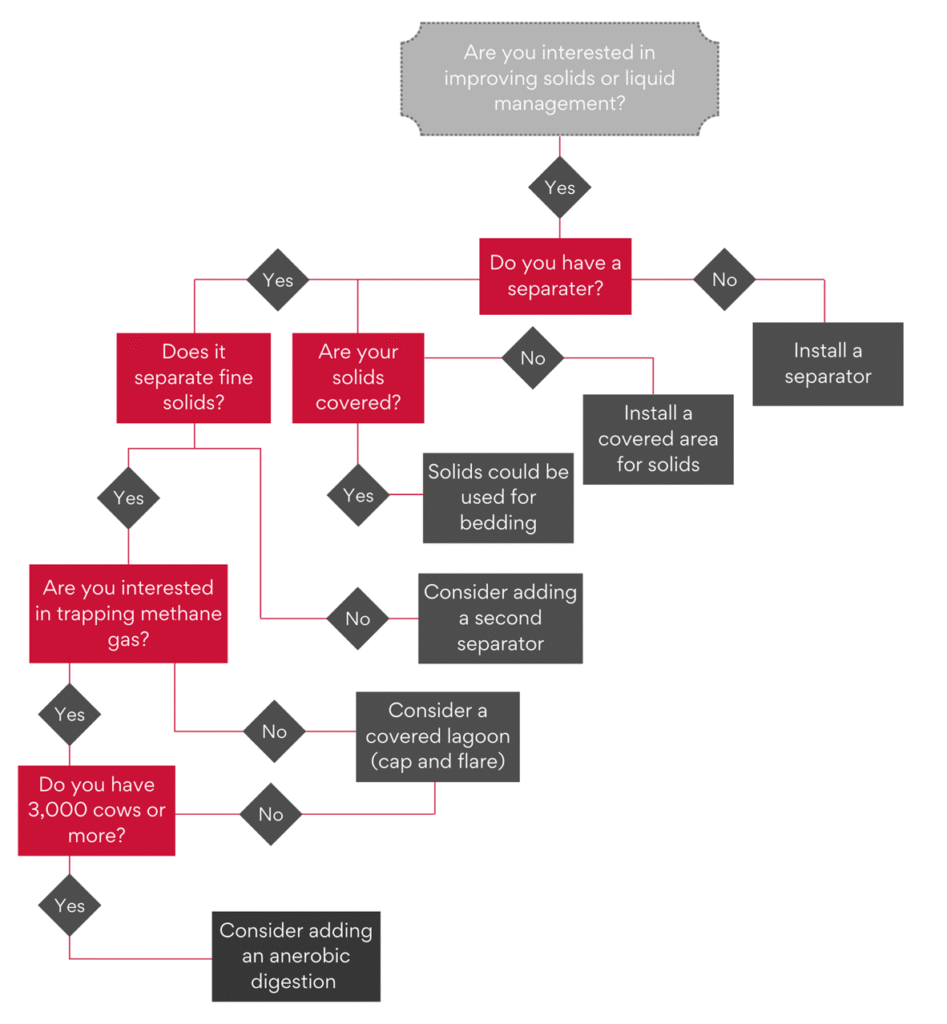
Nutrient Management Infrastructure – Text Description for Decision Tree
Question 1: Are you interested in improving solids or liquid management?
- If no: End.
- If yes: Continue.
Separator
Question 2: Do you have a separator?
- If no: Install a separator. End.
- If yes: Continue.
Fine Solids
Question 3: Does it separate fine solids?
- If yes: Continue.
- If no: End.
Solid Coverage
Question 4: Are your solids covered?
- If yes: Solids could be used for bedding. End.
- If no:
- Consider adding a second separator.
- Install a covered area for solids.
Methane Capture
Question 5: Are you interested in trapping methane gas?
- If no: Consider a covered lagoon (cap and flare). End.
- If yes: Continue.
Herd Size
Question 6: Do you have 3,000 cows or more?
- If no: Consider a covered lagoon (cap and flare). End.
- If yes: Consider adding an anaerobic digester. End.
Footnotes
- Estimated using COMET-Planner (Swan et al. 2025) across 100 acres under four scenarios in western, central, and eastern Washington: (1) Add legume seasonal cover crop to irrigated cropland (2) Add legume seasonal cover crop to non-irrigated cropland (3) Add non-legume seasonal cover crop to irrigated cropland (4) Add non-legume seasonal cover crop to non-irrigated cropland. In Washington, to get a positive benefit, legumes should be a part of the cover crop mix.
- Most climate benefits occur in the first decade or two after practice implementation; after that time, the practice would need to continue to maintain soil carbon (so costs would continue to be incurred), but new soil carbon gains would shrink, eventually approaching zero (Yorgey et al. 2023).
- Estimated using COMET-Planner (Swan et al. 2025) by replacing synthetic nitrogen fertilizer with dairy manure on both irrigated and non-irrigated cropland for western, central, and eastern Washington.
- Estimated using COMET-Planner (Swan et al. 2025) converting from intensive tillage to reduced tillage on both irrigated and non-irrigated cropland for western, central, and eastern Washington.
- Estimate assumes a 10-30% reduction in GHG intensity from 3-NOP additives (Kebreab et al. 2023), herd sizes of 1,000-3,000 cows, and average milk production per farm size assuming 12% of a herd is dry.
- Typical cost range for higher genetic merit AI sires; no additional expense or management changes required for adopting this trait.
- Heifers with higher feed efficiency produced 7.7% less CH4 and 6.1% less CO2 compared to less feed-efficient heifers.
- Estimated using DairyGEM (USDA Agricultural Research Service 2017) across 500, 1,000, and 3,000 cows for 25% solids removal for western, central, and eastern Washington.
- Estimated based on an equipment lifespan of 15 years, following NRCS estimates for Waste Separation.
- Estimated using DairyGEM (USDA Agricultural Research Service 2017) across 500, 1,000, and 3,000 cows for 50% solids removal for western, central, and eastern Washington.
- Estimated using DairyGEM (USDA Agricultural Research Service 2017) across 3,000 and 5,000 cows for western, central, and eastern Washington.
- Estimated based on equipment lifespan of 25 years, following NRCS estimates for Anaerobic Digesters, across 500, 1,000, and 3,000 cows.
- Estimate does not consider the cost of the cover itself, only the cost of the system controls, gas collection, and flaring system.
- Scope 3 emissions are from activities within a company’s value chain, both upstream and downstream. They are indirect greenhouse gas emissions that occur through a company’s value chain.
- https://geo.wa.gov/datasets/26add7da921d4aa68ccb50ce191c6182_0/about