Research assesses whether selling cover crop biomass for biofuel can support soil health and farmer profitability.
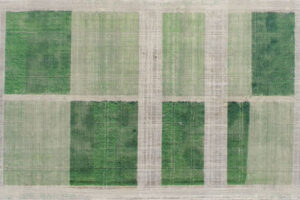
In the Pacific Northwest, cover crop adoption by farmers is limited by the uncertainty around management logistics and the added cost of establishing a crop that doesn’t contribute directly to income. Returning cover crop biomass back into the soil is important for building soil health, but would an additional income for the aboveground biomass incentivize more farmers to try cover crops? And are there short-term costs for soil health or the following cash crop yield when removing cover crops? Washington State University and the Pacific Northwest National Laboratories are partnering to answer these questions in replicated trials in three growing regions in Washington State. We are examining the agronomic consequences of cover crop removal on different cash crops, soils, and the overall economic impact for both farmers and biofuel producers. In the first three years of the trial, we learned that triticale and hairy vetch are highest yielding and are suitable feedstocks for hydrothermal liquefaction, a new and efficient conversion technology that can produce liquid hydrocarbon fuels from different wet feedstocks. If used in this conversion pathway, cover crop biomass would deliver >70% carbon intensity reductions relative to fossil fuels and is an economical option for fuel producers. Crucially, biomass removal has not reduced soil organic carbon, nitrogen, or subsequent cash crop yields. Farmer profitability is also possible, particularly for triticale and hairy vetch. We estimated farmers could get up to $60 per dry ton for selling the above-ground portion of their cover crop. These findings suggest there is potential to pursue cover crops not only for their soil health benefits, but also for direct financial benefit and renewable energy needs.
Products from this Project
Project Lead
Kruger, C.
People
Kruger, C., Potter, T., Norberg, S., Esser, A., and Santosa, D.
Project Dates
2021– 2027
Area of Focus
- Agricultural Practices
- Climate & Environment
- Value from Waste
Topic
- Climate Change
- Crops
- Energy
- Natural Resources
- Production Systems
- Waste Management
Project Status
In Progress