Explores uses and markets for fibrous solids produced during anaerobic digestion of dairy manure.
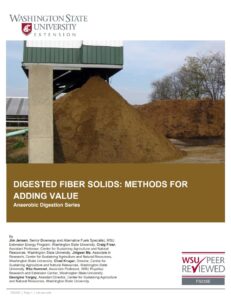
Anaerobic digestion of dairy manure produces biogas for renewable energy along with a solid fiber byproduct known as digested fiber solids. This Washington State University Extension publication examines how these fibrous solids can be separated, processed, and used in value-added applications to improve the economics of dairy digester systems. The report describes the characteristics of digested fiber derived from manure and reviews current and emerging uses for this material. Potential applications include livestock bedding, compost feedstocks, horticultural growing media, soil amendments, and industrial products such as fiberboard or other bio-based materials. Because revenue from electricity generated by biogas has declined in many regions, identifying profitable uses for digested fiber has become increasingly important for the financial viability of anaerobic digesters. The publication provides an overview of fiber composition, separation methods, and potential markets to help dairy operators, digester developers, and agricultural advisors evaluate opportunities to increase value from digester coproducts.
This publication was produced with support from Washington State University Extension and the USDA.
This publication is part of an archive and may not meet current digital accessibility standards. CSANR is working to improve digital accessibility of all materials. If you need this content in an alternative format, please contact csanr@wsu.edu.
Authors
Jensen, J., Frear, C., Ma, J., Kruger, C., Hummel, R., and Yorgey, G.
Year Published
2016
Areas of Focus
Agricultural Practices and Value from Waste
Topics
Energy, Production Systems, and Waste Management