Perspectives
Practical insights and opinions from agriculture and natural resources experts—brought to you by the Center for Sustaining Agriculture and Natural Resources.
How Pop Ecology Misleads Agriculture
By Andrew McGuire, CSANR Senior Extension Fellow
Pop ecology promises harmony in farming, but real agricultural decisions demand tradeoffs grounded in ecological reality.
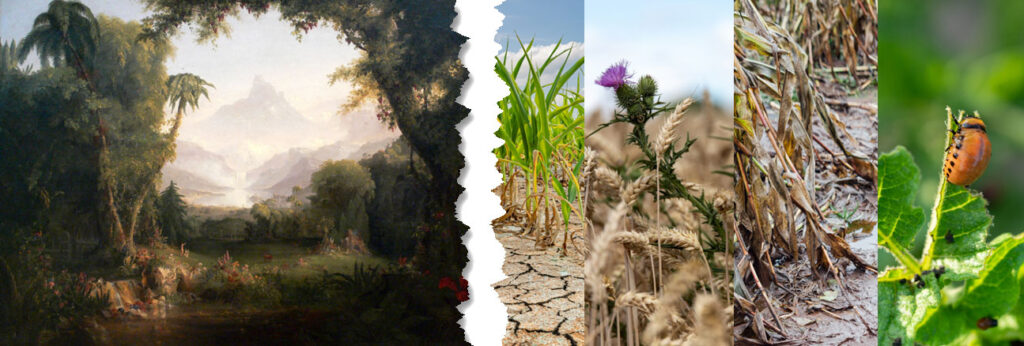
The problem with natural nutrients
Pop ecology assumes that what works in unmanaged ecosystems applies directly to crop production. The critical difference? Export of biomass. In natural systems, nutrients cycle through plants, animals, and microbes, staying largely in place. In crop production, we export grain, forage, or vegetables every season, removing large amounts of nutrients with each harvest.
There’s often a bit of truth in pop ecology ideas. Soils do contain large amounts of nutrients in their mineral fraction. But mineral weathering and natural processes rarely deliver nutrients fast enough for modern crop yields. In addition to the rate problem, high-yielding production requires nutrient replacement—through manure, legumes (nitrogen only), or synthetic fertilizers. As ecologist Charles Krebs (2016) notes: “The law of recycling is simple: input must equal output or the system decays.”

The cost of believing otherwise is real. Growers who stop replacing exported nutrients will eventually see soil test levels decline, followed inevitably by yield losses. With phosphorus, this can take a long time because of previous fertilizer applications, giving the appearance of success (Menezes-Blackburn et al., 2018). However, when reserves are depleted, recovery requires not just resuming fertilization, but often higher rates to rebuild reserves.
For more on this topic, see my article Biodiversity, Healthy Soils, and their Combination in Regenerative Agriculture Can Reduce but Not Replace Fertilizer and others.1
Overselling biodiversity
Pop ecology takes conservation ecology’s “more biodiversity is always better” message (Cardou and Vellend 2023) and applies it to farming, often promising benefits that don’t materialize in real fields. This oversimplification shows up everywhere: in recommendations for complex cover crop mixtures, soil inoculant products marketed to “increase soil biodiversity,” and claims that crop diversity automatically leads to better pest control. At its base, it’s a variation of the appeal to nature fallacy: if something is natural, it must be good.
Reality is more nuanced. Recent ecological research challenges the biodiversity-equals-function assumption that has been gospel for decades. One analysis found no causal relationship between biodiversity and ecosystem functioning, just correlations (Schoolmaster Jr. et al., 2020). Another recent study, looking at natural assemblies of species rather than the random mixes used in many studies, found that increased species biodiversity in grasslands decreased productivity (Dee et al., 2023). Whatever the case may be in nature, when biodiversity does provide benefits in agriculture, it’s not the diversity itself that’s responsible, it’s specific interactions between specific species.
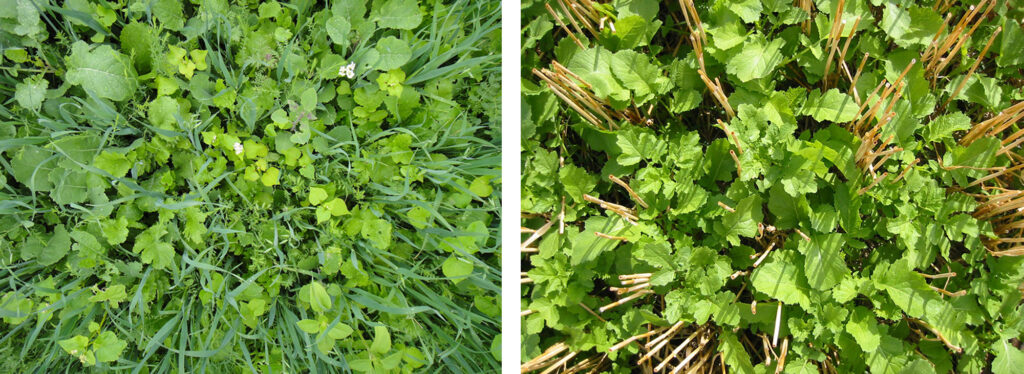
Consider cover crop mixtures. Research shows that the best mixture often performs no better than the best single species (Florence & McGuire, 2020), and the best monoculture is far easier to identify and manage. With intercropping of cash crops, only 44% of trials show consistent yield benefits (Jones et al., 2023). When we look at the actual mechanisms at work, we find that successful strategies aren’t about maximizing diversity, they’re about finding benefits from specific combinations like legumes paired with non-legumes in low-nitrogen soils. It’s not diversity that wins; it’s the right species doing the right things (MacLaren et al., 2023).
Even soil biodiversity defies pop ecology’s assumptions. Contrary to the “agriculture degrades nature” narrative, recent surveys of European soils found cropland has higher microbial diversity than forests or unmanaged grasslands (Labouyrie et al., 2023). This wasn’t just bacteria, it held true for fungi, protists, nematodes, and arthropods. But lest we fall into pop ecology’s trap, this does not mean that cropland soils are functioning better. Just as with intercropping, what matters for soil function isn’t the number of species present, but which species and what they’re doing.
For more on this, see Why Ecological Biodiversity Research Results Seldom Apply to Agriculture and others.2
The “balance of nature” problem in pest management
Pop ecology has had its deepest and longest influence in pest management. The “balance of nature” concept, that natural systems are self-regulating and tending toward harmony, powerfully shapes pest control thinking (Worster 1994). It is often an unstated assumption in agroecology and in organic and regenerative agriculture (Ergazaki & Ampatzidis 2012) and found in ag publications, both educational and academic:
“In unmanaged or natural ecosystems there is usually balance among organisms…” “Farming methods that focus on creating biologically balanced soil food webs… can reduce the need for synthetic fertilizer and pesticide inputs.”
Michigan Field Crop Pest Ecology and Management (Cavigelli et al., 2000)
“Proponents of sustainable agriculture frequently find solace in a vision of the natural world as inherently harmonious and balanced.”
Vandermeer et al. (2010)
The “balance of nature” is a comforting vision of how we think nature should be. Darwin, Rachel Carson, and Al Gore all appealed to it (Allchin 2014). Agroecologist John Vandermeer (2010) observes that the idea is “frequently felt in the heart more than known in the head.” Even with inconsistent results, belief in balance-of-nature-type control persists (Tittonell 2014). Research has found that students, even college students, will continue to believe in the balance of nature even after receiving instruction to the contrary (Zimmerman and Cuddington 2007). We believe it because we want to believe it (Cuddington 2001). And yet, we must let it go.
Despite its popularity, most ecologists abandoned “balance of nature” decades ago (Botkin 1990; Worster 1994; Cooper 2001; Kricher 2009; Simberloff 2014; McGill 2013). Rather than stable equilibrium, modern ecology emphasizes chance and change, what ecologists call contingency and disturbance (Drury 1998; White 2013). Natural systems reflect past events, unpredictable shocks, and continual shifts across time and space (Botkin 1990).
Yesterday’s ecological science is today’s ecological myth.”
J. Baird Callicott (1998).
As ecologist Douglas Allchin (2014) states: “Populations do not self-regulate their size. Ecosystems do not self-regulate the number of species… the prevalence of disturbance and environmental change means that ecosystems exhibit no ultimate stability or stasis. Nature is in perpetual flux.”
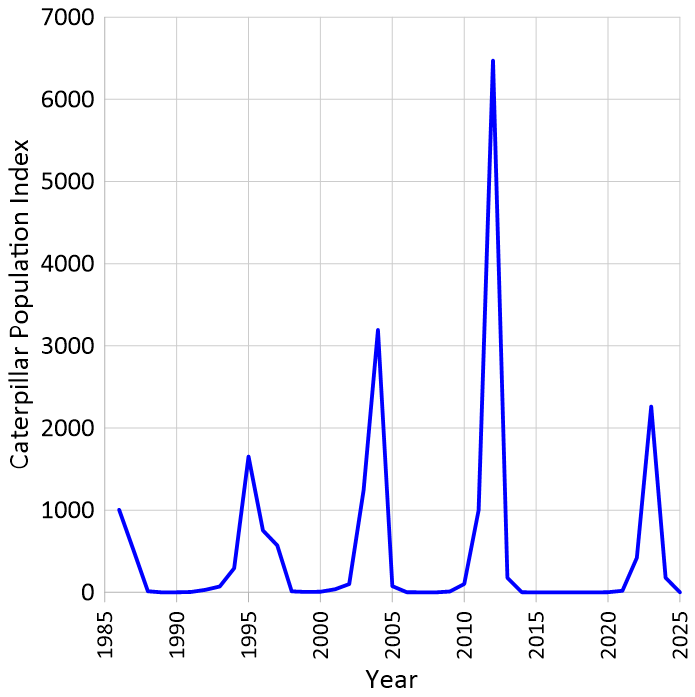
So, agricultural systems cannot simply mimic nature to achieve stability because nature itself is not stable. Pest outcomes are governed less by biological regulation than by limiting factors such as weather, temperature extremes, moisture, and resource constraints (Berryman 2004; Bjørnstad & Grenfell 2001). Research finds that stable pest populations are uncommon, even in cases considered to have successful biocontrol (Murdoch et al. 1985). While some pests have been controlled biologically, many others have proven resistant to biocontrol solutions (Walter 2005). And as with intercropping, the successful use of biodiversity for pest management is highly dependent on the specific combination of environment, crop species, and pest.
Pop ecology has saddled pest management with a false choice: either trust nature to balance itself or admit defeat and spray chemicals. This ignores the third option that many successful growers actually use: integrated pest management that deploys whatever works, drawing from biological, cultural, and chemical tools.
The unpopular ecology of reality
Pop ecology assumes a form of crop production that “works like nature” is not only possible but achievable, and that it offers a simple prescription to fix farming. Breaking free from this unfounded eco-optimism requires three fundamental shifts in how we think about farming. Call it the unpopular ecology of reality—unpopular because it trades comforting narratives for harder truths.
First, we need an accurate view of nature itself. When ecology functions as a descriptive science rather than a prescriptive one, it reveals how nature actually works in specific locations, not how it ought to work everywhere. Real ecology tells us that nature, like crop production, is stochastic and contingent; i.e., ecology-speak for messy. It’s governed by chance and change, not the stable balance that pop ecology promises. Nature is neither the harmonious ideal we imagine nor a reliable model for farming systems. Understanding this prevents us from chasing an illusion.

Second, we must acknowledge that crop production cannot work like unmanaged nature and still feed us. We invented farming precisely because nature didn’t know best when it came to producing food for human populations. Farming, by design, requires intervention and active management. We plant highly modified crops where they wouldn’t naturally thrive, concentrate them at densities nature rarely achieves, and harvest biomass that would otherwise cycle in place. While we can learn valuable things from natural systems, crop production will never function like an unmanaged ecosystem. They are fundamentally different systems with different dynamics and different endpoints. This reality may be unpopular with those seeking to “mimic nature,” but it’s the foundation of successful food production.
Finally, the best guard against pop ecology’s falsehoods is this principle: in agriculture, there are no solutions, only tradeoffs. We need to acknowledge the real tradeoffs that pop ecology overlooks. This matters because we waste enormous amounts of time, money, and effort trying to “transform agriculture” into a utopian system it can never be. The ecology of reality shows us that crop production will never be perfect. There are always tradeoffs: between crop yields and nutrient use efficiency; between concentrated, highly productive fields and pest pressure; between planting and harvest efficiency and the benefits of crop diversity. These tradeoffs involve markets, regulations, soil types, crop requirements, equipment costs, and countless other factors. Figuring out the best management while balancing these constantly shifting variables means making choices—some that won’t favor environmental ideals.
Wise farmers and consultants embrace this unpopular ecology of reality—seeing crop production clearly as a distinct system requiring informed, active management based on what actually works in their fields, not what sounds appealing in theory. Reality is messier and less generalizable than pop ecology promises, but it’s the reality we must work with.
All Perspectives from Andrew McGuire
Footnotes
1 Additional articles on nutrient needs in crop production:
- Agriculture Requires Fertilizer Inputs, and That’s Good
- How Does Regenerative Agriculture Reduce Nutrient Inputs?
- Fine-Tuning with Soil Health; Nutrients
- Why Hasn’t Biological Nitrogen Fixation Fixed Nitrogen Scarcity in the World?
2 Additional articles on biodiversity in crop production:
References
Allchin, D. (2014). Out of Balance. The American Biology Teacher, 76(4), 286–290.
Berryman, A. A. (2004). Limiting factors and population regulation. Oikos, 105(3), 667–670.
Bjørnstad, O. N., & Grenfell, B. T. (2001). Noisy Clockwork: Time Series Analysis of Population Fluctuations in Animals. Science, 293(5530), 638–643.
Botkin, D. B. (1990). Discordant harmonies: A new ecology for the twenty-first century.
Callicott, J. B. (1998). A Critical Examination of “Another Look at Leopold’s Land Ethic.” Journal of Forestry, 96(1), 20–26.
Cavigelli, M. A., Deming, S. R., Probyn, L. K., & Mutch, D. R. (2000). Michigan field crop pest ecology and management. Mich. State Univ. Bul. E-2704.
Cooper, G. (2001). Must There Be a Balance of Nature? Biology and Philosophy, 16(4), 481–506.
Cuddington, K. (2001). The “balance of nature” metaphor and equilibrium in population ecology.
Dee, L. E., Ferraro, P. J., Severen, C. N., Kimmel, K. A., Borer, E. T., Byrnes, J. E. K., Clark, A. T., Hautier, Y., Hector, A., Raynaud, X., Reich, P. B., Wright, A. J., Arnillas, C. A., Davies, K. F., MacDougall, A., Mori, A. S., Smith, M. D., Adler, P. B., Bakker, J. D., … Loreau, M. (2023). Clarifying the effect of biodiversity on productivity in natural ecosystems with longitudinal data and methods for causal inference. Nature Communications, 14(1), Article 1.
Drury, W. H. (1998). Chance and Change: Ecology for Conservationists. University of California Press.
Ergazaki, M., & Ampatzidis, G. (2011). Students’ Reasoning about the Future of Disturbed or Protected Ecosystems & the Idea of the ‘Balance of Nature.’ Research in Science Education, 42(3), 511–530.
Florence, A. M., & McGuire, A. M. (2020). Do diverse cover crop mixtures perform better than monocultures? A systematic review. Agronomy Journal, 112(5).
Jones, S. K., Sánchez, A. C., Beillouin, D., Juventia, S. D., Mosnier, A., Remans, R., & Estrada Carmona, N. (2023). Achieving win-win outcomes for biodiversity and yield through diversified farming. Basic and Applied Ecology, 67, 14–31.
Krebs, C. J. (2016). Why Ecology Matters. University of Chicago Press.
Kricher, J. (2009). The Balance of Nature: Ecology’s Enduring Myth. Princeton University Press.
Labouyrie, M., Ballabio, C., Romero, F., Panagos, P., Jones, A., Schmid, M. W., Mikryukov, V., Dulya, O., Tedersoo, L., Bahram, M., Lugato, E., van der Heijden, M. G. A., & Orgiazzi, A. (2023). Patterns in soil microbial diversity across Europe. Nature Communications, 14(1), Article 1.
MacLaren, C., Waswa, W., Aliyu, K. T., Claessens, L., Mead, A., Schöb, C., Vanlauwe, B., & Storkey, J. (2023). Predicting intercrop competition, facilitation, and productivity from simple functional traits. Field Crops Research, 297, 108926.
McGill, B. (2013). A macroecological approach to the equilibrial vs. Nonequilibrial debate using bird populations and communities. The Balance of Nature and Human Impact, 103.
Menezes-Blackburn, D., Giles, C., Darch, T., George, T. S., Blackwell, M., Stutter, M., Shand, C., Lumsdon, D., Cooper, P., Wendler, R., Brown, L., Almeida, D. S., Wearing, C., Zhang, H., & Haygarth, P. M. (2018). Opportunities for mobilizing recalcitrant phosphorus from agricultural soils: A review. Plant and Soil, 427(1), 5–16.
Murdoch, W. W., Chesson, J., & Chesson, P. L. (1985). Biological Control in Theory and Practice. The American Naturalist, 125(3), 344–366.
Myers, J. H., & Cory, J. S. (2025). Long-term population dynamics of western tent caterpillars: History, trends and causes of cycles. Journal of Animal Ecology, 94(10), 1922–1934. https://doi.org/10.1111/1365-2656.70104
Schoolmaster Jr., D. R., Zirbel, C. R., & Cronin, J. P. (2020). A graphical causal model for resolving species identity effects and biodiversity–ecosystem function correlations. Ecology, 101(8), e03070. https://doi.org/10.1002/ecy.3070
Simberloff, D. (2014). The “Balance of Nature”—Evolution of a Panchreston. PLoS Biol, 12(10), e1001963.
Tittonell, P. (2014). Ecological intensification of agriculture—Sustainable by nature. Current Opinion in Environmental Sustainability, SI: Sustainability Governance and Transformation, 8, 53–61.
Vandermeer, J., Perfecto, I., & Philpott, S. (2010). Ecological Complexity and Pest Control in Organic Coffee Production: Uncovering an Autonomous Ecosystem Service. BioScience, 60(7), 527–537.
Walter, G. H. (2005). Insect Pest Management and Ecological Research. Cambridge University Press.
White, T. C. R. (2013). Experimental and observational evidence reveals that predators in natural environments do not regulate their prey: They are passengers, not drivers. Acta Oecologica, 53, 73–87.
Worster, D. (1994). Nature’s economy: A history of ecological ideas. Cambridge University Press.
Zimmerman, C., & Cuddington, K. (2007). Ambiguous, circular and polysemous: Students’ definitions of the “balance of nature” metaphor. Public Understanding of Science, 16(4), 393–406.
Comments
Another terrific article by Andrew.
Outstanding article. Thanks Andy.