Long-term Impact of the Waste to Fuels Technology Partnership
By Margaret Griset, Georgine Yorgey, and Chad Kruger, CSANR
This story is part of the 2024–2025 CSANR Biennial Report.
Nearly two decades of collaboration have transformed Washington’s wastes into renewable energy, healthy soils, and thriving new industries.
In 2006, the Washington State Legislature established the Waste to Fuels Technology Partnership (WTFT) between the Department of Ecology and WSU. The goal: turn Washington’s organic wastes from a liability into a resource. Nearly two decades later, this partnership has delivered environmental and economic benefits statewide by creating roadmaps, building expertise, engaging communities, and supporting new technologies to derive value from organic wastes.
The partnership began with foundational work led by Mark Fuchs at Ecology, who recognized the potential in Washington’s organic residuals. The initial 2004–2005 biomass inventory revealed 16.9 million tons of organic materials annually that could potentially be converted to beneficial uses. This work was the foundation for strategic planning across multiple agencies and partners.
Research & capacity building
Ecology’s investment gave Washington access to WSU’s research capacity, engaging more than 17 faculty and dozens of graduate students in engineering, soils, economics, and policy. This approach created a pipeline of specialists now serving agencies, businesses, and communities statewide.
The partnership provided a proving ground to test ideas and reduce risk before scaling. Pilot systems for anaerobic digestion, pyrolysis, and nutrient recovery refined new processes, attracted investment, and since 2017 helped affiliated researchers leverage $6.6 million in competitive grants.
Early studies explored biofuels from crop residues, food waste, and manure, tested nutrient recovery for dairies, and cataloged 42 feedstocks to guide technology and economics. Reviews of pyrolysis technologies, supply chains, and business models charted viable pathways and laid the groundwork for the emerging regional biochar industry.
Partnership outcomes
Today, multiple advances across Washington can be traced directly to WTFT research, Extension, and policy groundwork:
- Exploratory projects: Pilot studies tested biodiesel, biohydrogen, and ethanol production from crop and food residues, and evaluated compost and biosolids for soil carbon and water storage. While some remained pilot scale, they provided key data for today’s advances.
- Mortality composting: Practical tools now enable small processors to compost animal byproducts, reducing methane emissions and recycling nutrients.
- Soil health policy: WTFT helped lay the groundwork for the Washington Soil Health Initiative, established in 2020 with the Washington Conservation Commission, WSDA, and WSU. By 2024, WaSHI invested $3.1 million to support climate-friendly practices on 188,000 acres.
- Biochar: Studies of feedstocks and soil effects supported an industry that now includes about 20 producers. Today, composters market biochar-enriched compost, and workshops build ongoing collaborations.
- AgSymbiosis: WTFT research inspired a legislative study tour of Denmark, showing how waste and energy systems can be linked. The effort informed planning by Washington ports and economic development councils, as well as WSU’s Institute for Northwest Energy Futures.
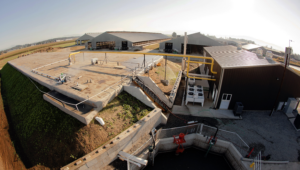
- Pasco wastewater upgrade: WTFT expertise informed a $67 million waste-reuse facility upgrade that added digesters and nutrient recovery systems, sustained 300+ jobs, helped food processors manage waste, and now serves as a model for other municipalities.
Engagement & community impact
Each biennium, the partnership reached 500 to 1,500 people through workshops, field days, and webinars, while publications and online materials reached tens of thousands more. This engagement built not just technical knowledge, but networks of people committed to turning waste into resources.
Mortality composting workshops exemplified this approach, training livestock producers, processors, regulators, and compost operators. Participants reported dramatic knowledge gains, with 88% indicating they were likely to adopt the practices.
The Northwest Bioenergy Summit (2012–2024) connected diverse stakeholders whose collaboration advanced commercialization of bioenergy solutions. In 2023, 196 participants from agencies, industry, NGOs, and academia rated information quality and networking opportunities above 4.6 out of 5.
Faculty also provided extensive technical assistance to entrepreneurs and communities by interpreting science and supporting project development. This one-on-one engagement proved crucial for translating the research achievements into real-world applications and business successes.
Through sustained investment from Ecology and WSU, Washington has moved from treating organic residuals as waste to recognizing them as resources for renewable energy, healthy soils, and sustainable communities.