By Megan Pyle, Student, Washington State University
To support the future generation of sustainable agriculture, CSANR sponsors travel for students to attend the Tilth Conference. Over the next several weeks, we will showcase student experiences at the this year’s conference held in Vancouver, WA. View this year’s and previous years’ reflections via the CSANR Tilth page.

My name is Megan Pyle, and I’m currently a junior at WSU double majoring in Organic & Sustainable Agriculture as well as Human Nutrition & Food Systems. While I don’t come from an agricultural background, the fundamental interconnectedness of our diet with our health (both physical and mental, because these don’t exist in isolation from each other!) sparked my interest as a young adult. As my education has deepened on both traditional and nontraditional paths, I’ve increasingly understood the connection between the health of our food systems, ourselves, and the planet that nourishes us.
In these days and times, you can take your pick of a vast array of turmoil, both in our country and around the world, to be distraught about. For me, going to the Tilth conference was important to remind myself that there are many like-minded people fighting the good fight to have a respectful relationship with and steward the land that sustains us while producing the kind of food I believe we all need to be well. The Tilth Alliance brings this community together and offers immersion and solidarity as we imagine and work toward a more sustainable future in agriculture.
This year’s Tilth Conference marked the 50-year anniversary of this alliance, and brought together hundreds of people to share, learn, listen, laugh, and cry. There was dancing and frivolity, but there was also commiseration over our changing climate and its far-reaching impacts. The Tilth Conference offered a beautiful opportunity for people at all levels of education and experience to actively participate, ask questions, and have a voice, including round table discussions where you could choose a subject that you were interested in, discuss, and try to problem solve issues with people you’ve never met before.
Sessions were available where speakers presented on a variety of subjects, from policy to agroecological principles, and presenters varied widely in their education and discipline, allowing you to choose subjects that interest or matter to you the most. I wish I could have gone to many more of them! Researchers and farmers often presented side by side in a wonderful display of aligned goals and missions.
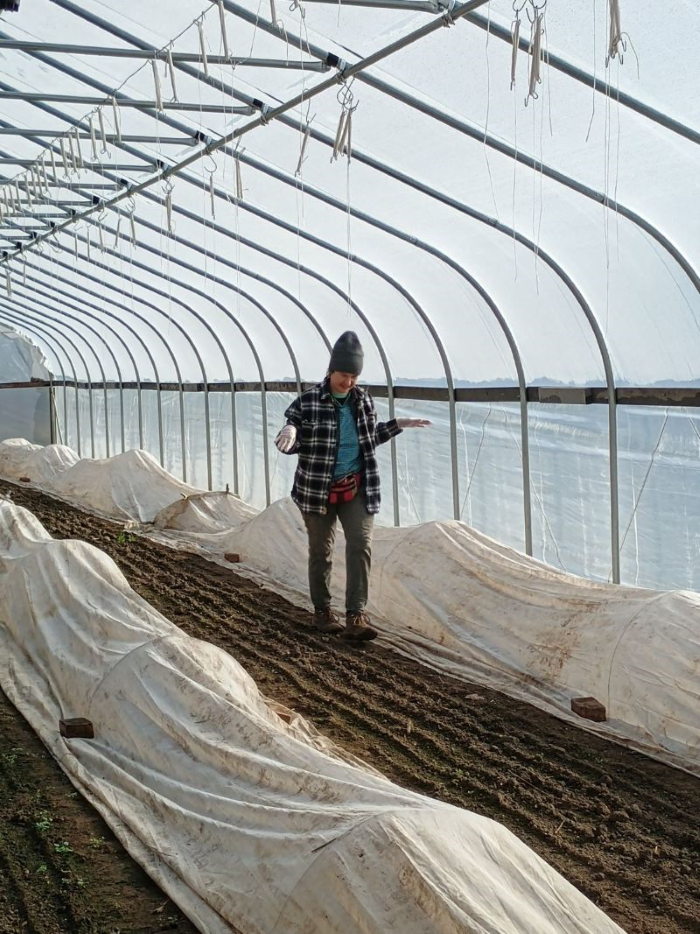
Out of all the sessions that I attended, a session on dryland farming, somewhat surprisingly, was the most informative and interesting to me. I was able to hear about four different farming approaches to dryland farming — where crops are not irrigated or only initially irrigated to support establishment — why this is done, and the challenges they faced. The reserves of water available in the soil must be considered and planned around carefully in dryland farming, changing necessary timing for cover crops. Many farmers have found that some crops that are grown this way can have better, more concentrated flavor and storage life and quality, but this is a challenging way to farm, and the cost of water can be a driving factor in choosing to practice agriculture in this way.
Overall, I greatly enjoyed my experience at the Tilth Conference, and feel that I gained a lot from it both spiritually and educationally. I am so grateful to have been included in this incredible opportunity. It was a well of hope and inspiration for someone in desperate need of it.
Comments