Coordinated grazing management balances cattle production, wildlife habitat, and energy development across mixed-ownership rangeland in Washington.
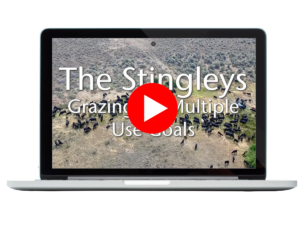
This video highlights a cow-calf operation in Kittitas County, Washington, managed under a Coordinated Resource Management (CRM) plan. The Stingley family grazes approximately 850 cattle across 25,000 acres of largely leased rangeland with mixed ownership, including public agencies and a utility company. The CRM approach brings together landowners, agencies, and stakeholders to collaboratively manage for multiple objectives, including livestock production, wildlife habitat, and wildfire risk reduction. Management practices include reduced stocking rates, short grazing periods, maintaining post-grazing residual, and improving livestock distribution through fencing, water development, and strategic placement of supplements. While the system increases labor and logistical complexity, it has improved plant diversity, vegetation resilience, and wildlife habitat, and helped sustain production during drought conditions. The partnership also enables continued grazing access on lands that might otherwise be unavailable, supporting both ranch viability and broader land management goals.
This publication is part of an archive and may not meet current digital accessibility standards. CSANR is working to improve digital accessibility of all materials. If you need this content in an alternative format, please contact csanr@wsu.edu.
Authors
Hudson, T., Hall, S. A., Neibergs, S., Yorgey, G., and Reeves, M.
Related Products
- Grazing Management that Achieves Multiple-Use Goals: Russ Stingley
- Building Resilience Through Engagement: Brenda and Tony Richards
- Building Resilience Through Engagement: Brenda and Tony Richards Video
- Building a Tradition of Adaptive Rangeland Management: Jack Southworth
- Ranching, Grass, Cattle, and Community: Jack Southworth Video
- Maximizing Water Through Holistic Management: Maurice and Beth Robinette Video
- The Benefits of Summer Calving: Maurice and Beth Robinette Video
- A Community-Based Response to Flooding: Jay Gordon
- A Community-Based Response to Flooding: Jay Gordon Video
- Deficit Irrigation of a Diverse Irrigated Rotation: Jake Madison
- Deficit Irrigation: Jake Madison Video
- Strip Tillage for Onions and Sweet Corn: Lorin Grigg
- Strip Tillage in Onions: Lorin Grigg Video
- Strip-tilled and Direct-seeded Vegetables Integrated with Cattle Grazing: Eric Williamson
- Strip Tillage of Vegetables with Livestock Integration: Eric Williamson Video
- Stripper Header and Direct Seeding: Ron and Andy Juris
- Stripper Header and Direct Seeding: Ron and Andy Juris Video
- Variable Rate Nitrogen Application: Eric Odberg
- Precision Nitrogen Application: Eric Odberg Video
- Biofumigant Cover Cropping in Potatoes: Dale Gies
- Mustard Cover Cropping in Potatoes: Dale Gies Video
- Diversifying Dryland Direct Seed Systems: Steve and Nate Riggers
- Growing Diverse Crops: Steve and Nate Riggers Video
- Grazed Cover Cropping: Drew Leitch
- Grazed Cover Cropping: Drew Leitch Video
- Enhancing Crop Diversity: Steve and Becky Camp
- Enhancing Crop Diversity: Steve and Becky Camp Video
- Flex Cropping: Bill Jepsen
- Flex Cropping: Bill Jepsen Video
- Conservation Tillage in a Winter Wheat–Fallow System: Ron Jirava
- Conservation Tillage in a Winter Wheat–Fallow System: Ron Jirava Video
Related Project
Year Published
2019
Area of Focus
Agricultural Practices
Topics
Livestock, Natural Resources, and Production Systems
Collaborators


Funding Sources
- USDA Great Plains Climate Hub