A report for the Waste to Fuels Technology Partnership 2023-2025 Biennium: Advancing Organics Management in Washington State.
June 2025 | Veronica Crow and Manuel Garcia-Perez, Department of Biological Systems Engineering, Washington State University
PDF is provided for offline use. Some features may not be digitally accessible.


Acknowledgements
The authors of this report thank the following people for their contribution to this study:
- Colleagues working on Project 3 for feedstock assessment information.
- Jonathan Lomber, Manager of Analytical Chemistry Service Center in the Department of Biological Systems Engineering at WSU.
- Biochar producers who took the time to share their experiences going through regulatory processes with their products.
Introduction
Biochar is currently mentioned in Section 43.19A.140 of Chapter 43.19A (Recycled Product Procurement) in the Revised Code of Washington (RCW).1,2 In RCW 43.19A.140, biochar is defined as a “carbon-rich material obtained from the thermochemical conversion of biomass in an oxygen-limited environment, derived from biomass waste materials including forest, agricultural, yard, urban wood, food, and biosolid residuals.”2
While this makes Washington one of the few states to codify a definition of biochar and reflects the state’s commitment to climate consciousness and organic waste management, there exists need for standard criteria for biochar to be used more frequently and maximize its climate change mitigation potential. The efforts of the Washington State Department of Ecology (Ecology) to develop certification standards for biochar for regulatory purposes are well timed with the current biochar market and a push by organizations such as the International Biochar Initiative (IBI), Carbon Standards International (CSI), U.S. Biochar Initiative, the Climate Action Reserve (CAR), and distinguished biochar researchers to develop intuitive biochar standards that can support future biochar use and legislation.
The Biomass to Biochar report published in 2022 by Ecology, the U.S. Forest Service (USFS), and Washington State University captured the current state and potential of the industry well, particularly needs for a long-term coordinated biochar research program, the development of protocols and specifications to ensure product consistency, appropriate use of biochar (taking C-sinks into account), and classification/certification system based on end-use.3 While the 2022 Biomass to Biochar report aptly characterizes many challenges and opportunities relating to biochar in the State of Washington, the call for a new standardization system and overall coordination of research and the industry to facilitate C-sink legislation and realize the environmental benefits of biochar echoes that of many biochar experts.
While there are a number of carefully crafted biochar standards and certification schemes that exist today, lack of consensus and a “central clearinghouse” on biochar poses problems for the industry and could hinder its growth, despite its recent official recognition as a negative emission technology.3,4 For example, definitions of biochar differ slightly between certification schemes and in previously proposed federal legislation, such as the BIOCHAR Act (HB2581, 2021), which defines biochar as “carbonized biomass produced from converting feedstock through reductive thermal processing for non-fuel uses,” and the Biochar Research Network Act (HB1645, 2023).5,6 Both of these bills did not move beyond legislation, despite their merit.
Both California and Colorado have codified definitions of biochar. In 2017, the state of California defined biochar as “materials derived from thermochemical conversion of biomass in an oxygen-limited environment containing at least 60 percent carbon.”7 Revised 2023 statutes in the state of Colorado define biochar as “the solid carbon-rich product made when woody biomass undergoes pyrolysis in an oxygen-depleted atmosphere at approximately eight hundred degrees Celsius.”8 According to a definition of biochar given by Lehmann et al. in 2015, biochar is a carbonaceous material produced from biomass via pyrolysis, where biomass is heated at temperatures of 250 °C or greater in the absence of air.9 Biomass used ranges from agricultural lignocellulosic wastes like wheat straw, rice husk, and forest residuals, to biological waste such as animal manure and sewage sludge.10 Slow pyrolysis is typically used to produce biochar for environmental application and can yield anywhere from 21-80% (generally 35-50%) of the original biomass by weight; however, slow pyrolysis exists on a spectrum of other subcategories of biomass thermochemical conversion documented in the literature, including torrefaction, fast pyrolysis, flash pyrolysis, intermediate pyrolysis, vacuum pyrolysis, hydrothermal carbonization, gasification, and microwave assisted pyrolysis.11 These processes can be distinguished from one another by the fractions of products they yield (biochar, bio-oil, syngas) due to differences in heating rate (°C/min), pyrolysis temperature, reactor used, and vapor and biomass residence time. Not only can biochar be produced in purpose-built reactors, but at co-located or retrofitted systems as well. In Washington, for example, Myno Carbon will open a facility integrated with Avista’s Kettle Falls biomass power plant that is estimated to generate 40,000 tons of biochar per year from small diameter thinning and low value residuals from national forests. In Oregon, similar feedstock is being transformed into biochar by companies like Restoration Fuels and Oregon Biochar Solutions. While the Pacific Northwest (PNW) is particularly ripe with woody fuels for biochar, this local increase in biochar producers is reflective of growing biochar markets in the U.S. and abroad.
Two important factors to consider regarding the carbon sequestration potential of the biochar are the feedstock (source and transportation) and its hydrogen to organic carbon ratio (H:Corg), which is a widely accepted metric of biochar stability and recalcitrance. Newer classification schemes aim to quantify carbon sequestration potential in a “permanence factor,” accounting for the carbon captured and emitted by the entire biochar system (feedstock to end-use).12
Ultimately, biochar utilization has not matched the pace of production or research, and the goal of this report is to help facilitate the growth of the industry in the state of Washington through suggested regulatory standards for biochar certification by Ecology and the design of a regional laboratory to serve Washington and other biochar producers, end users, and interface with regulators and researchers. Aligning these groups will hopefully increase biochar use and fulfill its potential as a tool for carbon sequestration, climate change mitigation, soil and environmental health, and waste valorization.
This report is comprised of three parts, which are outlined briefly below:
- Part 1. Existing Biochar Standards, Regulations, and Codes. We have compiled and reviewed existing biochar standards and legislation relating to biochar in the U.S. and other countries for reference in suggesting parameters for a biochar certification scheme for Ecology regulatory purposes in Part 2.
- Part 2. Proposed Biochar Certification Scheme for Ecology Regulatory Purposes. Existing standards and legislation will be reviewed through the context of literature, guidance, and statutes in the state of Washington to present a tabulated biochar certification scheme and discuss the regulation of acceptable feedstock, production methods, and material classes defined in some schemes.
- Part 3. Design of a Biochar Certification Laboratory to Serve Washington and the Pacific Northwest. This section will include an assessment of required instrumentation, review of the potential Pacific Northwest market and biochar producers, academic programs, financial logistics, and other labs offering similar services.
Part 1: Existing Biochar Standards, Regulations, and Codes
There are currently three fundamental biochar certification schemes relating to characteristics and safe use:
- International Biochar Initiative (IBI) Standardized Product Definition and Product Testing Guidelines for Biochar That Is Used in Soil (V2.1, 2015)
- Carbon Standards International (CSI) European Biochar Certificate (V 10.3E, 2023)
- CSI World Biochar Certificate (V1.0, 2023)
While these certification schemes provide detailed information that is useful for biochar legislation and regulatory purposes, they are voluntary industry standards and they do not certify a biochar for carbon credit issuance.13 For this reason, biochar researchers are developing new schemes that incorporate product characteristics and sustainability (process and material) metrics to inform carbon credit eligibility, such as those proposed by Singh et al. (2024) and the CAR (2024). Each of these 5 certification schemes have been considered in drafting the proposed biochar certification scheme for Ecology, in addition to the U.S. Department of Agriculture (USDA) Natural Resources Conservation Service (NRCS) conservation practices and regulations in California and Colorado (Table 1). We summarize each biochar standard, conservation practice, and code pertinent to our proposed biochar scheme in Part 2.
| Standard/Regulation | Authority/Source, Date |
| International Biochar Initiative (IBI) Standardized Product Definition and Product Testing Guidelines for Biochar That Is Used in Soil (hereinafter referred to as “IBI Biochar Standards”).14 | International Biochar Initiative, Version 2.1, 2015 |
| Carbon Standards International (CSI) European Biochar Certificate (hereinafter referred to as “European Biochar Certificate” or “EBC”).15 | Carbon Standards International, EBC (2012-2023) Version 10.3E, 2023 |
| Conservation Enhancement Activity: Biochar Production from Woody Residue (E384A, Enhancement to CPS-384: Woody Residue Treatment).16,17 | United States Department of Agriculture, Natural Resources Conservation Service, 2019 |
| Use of biochar in public works projects (SSB 5961 and RCW 43.19A.140).1,2 | State of Washington 67th Legislature, 2022 Regular Session |
| Conservation Practice Standard: Soil Carbon Amendment (Code 336, CPS-336).18 | United States Department of Agriculture, Natural Resources Conservation Service, 2022 |
| CSI World Biochar Certificate (hereinafter referred to as “World Biochar Certificate” or “WBC”).19 | Carbon Standards International, Version 1.0, 2023 |
| Biochar in oil and gas well plugging working advisory group (CO Rev Stat § 34-60-136).8 | Colorado Revised Statutes, 2023 |
| Climate Action Reserve’s (CAR) U.S. and Canada Biochar Protocol (hereinafter referred to as “CAR U.S. and Canada Biochar Protocol” or “CAR Protocol”).12 | Climate Action Reserve, Version 1.0 (draft for board approval), 2024 |
| Proposed biochar classification system and associated test methods by Singh, B., Amonette, J., Camps-Arbestain, M., Kookana, R. | Biochar for Environmental Management (Third Edition), 2024 |
| Flame Cap Kilns (SSB 6121)20 | State of Washington 68th Legislature, 2024 Regular Session |
| Carbon management roadmap (CO Rev Stat § 24-38.5-122).21 | Colorado Revised Statutes, 2024 |
| CA Public Resources Code 717 (working group expanding wood product markets, including biochar) and 4799.05 (encouraging biochar use in programs for forest health and GHG emissions reductions)22,23 | State of California, 2016 and 2022 |
| CA Food and Agriculture Code 14513.5. (definition of biochar) and 14601 (biochar regulated as an organic input material subject to registration).7,24 | State of California, 2017 and 2025 (also see SB88 and 2306) |
International Biochar Initiative Biochar Standards
First developed in 2012, the IBI Standards are considered the biochar industry’s first material standard, providing a definition of biochar and characteristics specifically pertaining to biochar safety and quality for use as a soil amendment.14 IBI released an updated version of their standards in 2015 along with an IBI Biochar Certification Program Manual. The manual provides requirements, procedures, and guidance for biochar producers who wish to certify their product through the IBI Certification Program according to IBI Biochar Standards.25 Out of all the certification schemes considered, IBI prescribes the broadest definition of biochar:
“A solid material obtained from thermochemical conversion of biomass in an oxygen-limited environment. (IBI, 2012).”14,25
The IBI standard was “deliberately drafted to be ‘technology neutral,’” therefore it does not include specific methods assessing the sustainability of a biochar system, nor does it explicitly define biochar based on the method of production, unlike later certification schemes.14 Due to its focus on product standards for biochar as a soil amendment, IBI Standards do not define end-use categories. The IBI Standard was formally retired in April of 2024, although its standards and methods are referenced in the newly proposed schemes by Singh et al. (2024) and CAR (2024). We use the retired IBI Standards to inform material and toxicant criteria within the proposed scheme in Part 2.
European Biochar Certificate
The CSI’s European Biochar Certificate (EBC) is the strictest and most specific of the three fundamental biochar certification programs and includes the most material classes. While research has been done regarding biochar as a feed additive, particularly for ruminants to reduce enteric methane production, there is currently no code or regulation permitting biochar use as a feed additive in the US.28 Several European countries have stricter standards for fertilizer or biochar specifically and follow adapted versions of the EBC (i.e., Annexes).
Version 10.3 of the EBC (2023) defines biochar based on its feedstock, production parameters, and material quality as follows:
“Biochar is a porous, carbonaceous material that is produced by pyrolysis of biomass and is applied in such a way that contained carbon remains stored as a long-term C-sink or replaces fossil carbon in industrial manufacturing. It is not made to be burnt for energy generation.”15
The EBC certification of a carbonaceous material or char as “biochar” is contingent on production method (only pyrolysis or optimized gasification systems operating at 350 °C to 1000 °C) and sustainability, feedstock, and end-use.15 Of the three fundamental certification schemes, EBC outlines the most specific material classes (Table 2). The EBC cautions that there is not necessarily “downward compatibility” within the scheme and that the classes do not serve as a ranking system of biochar “excellence,” but as a method of determining whether a biochar is permissible for a particular end-use based on its characteristics.15
| EBC Material Class | End-use Details |
| EBC-FeedPlus | Meets European Union (EU) and European Free Trade Association (EFTA) regulations regarding animal feed and agricultural soil applications. EBC-FeedPlus meets the requirements of all EBC certification classes (B2C okay). The biochar producer must be an approved feed producer. |
| EBC-Feed | Meets EU feed regulations, but not EU fertilizer regulations and cannot be used for agricultural soil applications (B2C okay). The biochar producer must be an approved feed producer. |
| EBC-AgroOrganic | Meets EU fertilizer product requirements/regulation and regulations or organic production. Recommended for urban and home gardening projects and fulfills requirements of EBC-Urban (B2C okay). |
| EBC-Agro | Approved for export and use in all EU countries (B2C okay). Recommended for urban and home gardening projects and fulfills requirements of EBC-Urban. |
| EBC-Urban | Suitable for use in tree planting, park maintenance, rainwater drainage, filtration, pollution remediation (soils, sediments, groundwater), plant nurseries, etc., provided it is not used as a soil amendment in food or animal feed production. EBC-Urban is considered safe for users, groundwater, and surface water, but not recommended for community or home garden projects (B2C okay). |
| EBC-ConsumerMaterials | Safe for use in products that come into direct contact with consumers, including skin and food-grade products (i.e., takeaway cups, textiles, toothbrushes, other composite materials), but not medical/healthcare products or food. Biochar must be completely immobilized within the product such that no dust or particulate is released or consumed through use. EBC-ConsumerMaterials is not safe for use in any direct or indirect soil application (B2B only). |
| EBC-BasicMaterials | This material is certified as a sustainably produced biochar and is safe for use in building and composite materials. EBC-BasicMaterials is not safe for use in any direct or indirect soil application and is subject to handling restrictions (B2B only). |
World Biochar Certificate
The World Biochar Certificate (WBC) is the most recent fundamental biochar standard, with the release of its first version in 2023. Version 1.0 of the WBC (2023) defines biochar in an almost identical manner to the EBC:
“Biochar is a porous, carbonaceous material produced by pyrolysis of biomass and is applied so that the contained carbon remains stored as a carbon sink or replaces fossil carbon in industrial manufacturing. It is not made to be burnt for energy generation.”19
Like EBC rules, biochar certified under the WBC must be produced via biomass pyrolysis (350 °C to 1000 °C), which can include gasification optimized for biochar production, but torrefaction, hydrothermal carbonization, and coke production do not yield WBC certifiable char.19
In a consistent manner to CSI’s EBC, the feedstock, hydrogen to carbon (H:C) ratio, and contaminant content all determine which material class a biochar falls into under the WBC scheme and appropriate end-uses (Table 3).
| WBC material class | End-use details |
| WBC-Premium | Suitable for all applications (B2C okay). H:Corg < 0.4, highest quality biochar made from plant biomass, low condensates, strictest metal and organic contaminant limits. Safe for direct food and skin contact. |
| WBC-Agro | Safe for soil applications. H:Corg < 0.7, quality biochar made from a variety of feedstocks (including animal byproducts and biosolids), subject to metal and organic contaminant limits, and micronutrients such as zinc and copper can surpass levels in WBC-Premium. Safe for soil biology, crops, groundwater, surface water, and users (B2C okay). |
| WBC-Material | Not for soil applications. H:Corg < 0.7, no heavy metal limits and higher degree of organic contaminants permitted. Few feedstock restrictions and biochar can be produced from mixed feedstock under specific conditions. WBC-Material biochar is only authorized for industrial trade and use (B2B only). |
Incorporation of material classes like those in the EBC and WBC scheme will help facilitate utilization of biochar across a wide number of potential applications in the State of Washington and support the use of biochar in public works encouraged in RCW 43.19A.140. Unlike EBC, there is downward compatibility within the WBC scheme, which will be implemented in the proposed scheme for Ecology.
Merging of IBI and WBC schemes
Due to the discussed need for a more universal biochar standardization scheme to support industry growth and help advance legislation, CSI and IBI announced a merging of the WBC scheme and the original IBI Biochar Standard for use in North America, primarily the U.S. and Canada in 2024.27 The CAR Protocol (drafted in 2024) reflects the possible combination of these two schemes, with an added emphasis on quantifying biochar stability, sustainability, and carbon sequestration potential to contribute to efforts to make biochar eligible under carbon credit legislation. IBI and WBC standard criteria are included in Table 4 below to provide a summary and highlight consistently relevant criteria for incorporation into a suggested scheme for Ecology regulatory purposes.
| Parameter | IBI (A, B, C)14 | WBC19 |
|---|---|---|
| Organic carbon (Corg) (% total mass, dry basis) | Class 1 > 60%; Class 2 > 30%; Class 3 > 10% (A) | Declaration of Corg and Ctot; additionally, declare H, N, O, S, and ash |
| H:Corg (molar ratio) | < 0.7 (A) | Premium: < 0.4 |
| Agro: < 0.7 | ||
| Material: < 0.7 | ||
| Total nitrogen (N) (% total mass, dry basis) | Declaration (A) | Declaration |
| Total oxygen (O) (% total mass, dry basis) | NA | Declaration |
| Moisture/water content (% total mass) | Declaration; specify time of measurement and batch production (A) | Declaration; 30% recommended for safe storage and transport |
| Total ash (% total mass, dry basis) | Declaration (A) | Declaration |
| Thermogravimetric analysis (TGA) (moisture and dry mass % volatile matter, fixed carbon, ash) | Volatile matter (C) | Complete TGA must be presented for first production batch of a pyrolysis unit |
| pH | Declaration (A) | Declaration |
| Electrical conductivity of the solid biochar (dS/m) | NA | Declaration |
| Electrical conductivity of the biochar leachate/salt content (dS/m) | Declaration (A) | Declaration of salt content, measured via EC of the biochar leachate |
| EPA PAH 16 | – | Premium: 6 g/ton DM |
| Agro: Declaration | ||
| Material: Declaration | ||
| EFSA PAH 8 | NA | Premium: 1 g/ton DM |
| Agro: 1 g/ton DM | ||
| Material: 4 g/ton DM | ||
| Dioxins/furans (PCDD/Fs) | 17 ng/kg WHO-TEQ dry wt. (B) | 20 ng/kg (I-TEQ OMS). Once per pyrolysis unit for the first production batch. |
| Polychlorinated biphenyls (PCBs) | 0.2–1 mg/kg dry wt. (B) | 0.2 mg/kg DM. Once per pyrolysis unit for the first production batch. |
| Pb (Lead) | 121–300 mg/kg dry wt. (B) | Premium: 120 g/ton |
| Agro: 300 g/ton DM | ||
| Material: Declaration | ||
| Cd (Cadmium) | 1.4–39 mg/kg dry wt. (B) | Premium: 1.5 g/ton DM |
| Agro: 5 g/ton DM | ||
| Material: Declaration | ||
| Cu (Copper) | 143–6000 mg/kg dry wt. (B) | Premium: 140 g/ton DM |
| Agro: 200 g/ton DM | ||
| Material: Declaration | ||
| Ni (Nickel) | 47–420 mg/kg dry wt. (B) | Premium: 50 g/ton DM |
| Agro: 100 g/ton DM | ||
| Material: Declaration | ||
| Hg (Mercury) | 1–17 mg/kg dry wt. (B) | Premium: 1 g/ton DM |
| Agro: 2 g/ton DM | ||
| Material: Declaration | ||
| Zn (Zinc) | 416–7400 mg/kg dry wt. (B) | Premium: 420 g/ton DM |
| Agro: 1000 g/ton DM | ||
| Material: Declaration | ||
| Cr (Chromium) | 93–1200 mg/kg dry wt. (B) | Premium: 100 g/ton DM |
| Agro: 200 g/ton DM | ||
| Material: Declaration | ||
| As (Arsenic) | 13–100 mg/kg dry wt. (B) | Premium: 13 g/ton DM |
| Agro: 20 g/ton DM | ||
| Material: Declaration | ||
| Co (Cobalt) | 30–100 mg/kg dry wt. (B) | NA |
| Mo (Molybdenum) | 5–75 mg/kg dry wt. (B) | NA |
| Se (Selenium) | 2–200 mg/kg dry wt. (B) | NA |
| B (Boron) | Declaration (B) | NA |
| Cl (Chlorine) | Declaration (B) | NA |
| Na (Sodium) | Declaration (B) | NA |
| Dry matter and bulk density | NA | Declared as received and at < 3 mm particle size |
| Water holding capacity | NA | Declaration |
| Liming capacity, if pH > 7 (% CaCO3) | Declaration (A) | NA |
| Particle size distribution | Declaration: % < 0.5 mm; % 0.5–1 mm; % 1–2 mm; % 2–4 mm; % 4–8 mm; % 8–16 mm; % 16–25 mm; % 25–50 mm; % > 50 mm (A) | NA |
| Germination inhibition assay | Pass/fail (B) | NA |
| Mineral (available) N (ammonium and nitrate) | Declaration (mg/kg) (C) | NA |
| Total phosphorus (P) and potassium (K) (total K is considered sufficiently equivalent to available K for the purpose of this characterization) | Declaration (mg/kg) (C) | Declaration of total P and K (% total mass, dry basis) |
| Available phosphorus | Declaration (mg/kg) (C) | NA |
| Total calcium (Ca), magnesium (Mg), and sulfur (S) | Declaration (mg/kg) (C) | Declaration of Ca, Mg, and S (% total mass, dry basis) |
| Total iron | NA | Declaration |
| Available calcium, magnesium, and sulfate-S | Declaration (mg/kg) (C) | NA |
| Total surface area | Declaration (m2/g) (C) | Declaration of BET Specific Surface Area (SSA in m2/g) is recommended |
| External surface area | Declaration (m2/g) (C) | NA |
| Pore size distribution | NA | Declaration of pore volume distribution is recommended to better estimate potential for contaminant binding |
NRCS Conservation Practice Standards and Conservation Enhancement Activities (E384A and CPS-336)
The USDA-NRCS has issued two particularly important biochar-related conservation practices addressing both production and use that should be taken into consideration:
- Biochar production from woody residue as a conservation enhancement activity under Code 384 (E384A, 2019).17
- Soil carbon amendment as a conservation practice standard (CPS-336, 2022).17,18
Code E384A pertains specifically to on-site biochar production from woody debris that is not suitable for commercial use and poses a fire risk, land management interference, or is the result of fuel reduction harvests or wildfires.17 Biochar produced from on-site kilns can be used in manure treatment, spread in the forest, or applied to agricultural fields if soil and biochar are first analyzed.17 Code E384A also contains guidelines about permitting and the timing of biochar production and application to minimize potential air pollution or adverse environmental impacts. Soil carbon amendment CPS-336 provides guidelines for the use of biochar and other carbon amendments to increase soil organic matter (SOM), soil organic carbon (SOC), and overall soil quality in crop, pasture, range, forest, associated agriculture lands, developed land, and farmstead (Table 5),18 and are similar to IBI Standards. Biochar is not formally defined here, but it is advised to “use biochar that is produced by heating biomass to a temperature in excess of 350 °C under conditions of controlled and limited oxygen concentrations to prevent combustion (i.e., pyrolysis or gasification).”18
Soil carbon amendment CPS-336 states some general conditions for carbon amendment applications:
- Amendments should not be produced from crop residue that otherwise provides soil protection, soil health, or forest health and wildlife habitat. NRCS advises toxicant assessment based on feedstock type, prohibiting application of biosolids or raw manure (NRCS CPS-590) but not explicitly prohibiting biochar produced from these materials. It is stated that biochar amendments used must carry the IBI Certified biochar seal or meet the criteria listed below determined by Land Grant University approved or IBI Standards methods. IBI Standards do not include municipal solid waste or potentially hazardous or toxic materials such as biosolids as an eligible feedstock. 14,18
- Soil pH, texture, SOM/SOC, extractable nutrients (P, K, Ca, S, Mg), cation exchange capacity (CEC) should be measured before the application of any carbon amendment.18
- The burden of compliance with USDA’s National Organic Program (NOP) falls on the end user applying biochar to their operation.18
- Testing laboratories must meet seal of testing assurance (STA) performance standards, IBI standards, or state approved certification programs using Land Grant University approved methods.18
| Parameter | Range (unit) |
| Feedstock | Report (type by %) |
| pH | Report (pH units) |
| Electrical conductivity (EC) | Report (dS/m) |
| Moisture | Report (%) |
| Organic matter/carbon | Report (%DW) |
| Total nitrogen | Report (%DW) |
| Particle size | Report (% per size class) |
| Phosphorus | Report (mg/kg DW) |
| Potassium | Report (mg/kg DW) |
| Calcium | Report (mg/kg DW) |
| Magnesium | Report (mg/kg DW) |
| Arsenic | <41 (mg/kg DW) |
| Cadmium | <39 (mg/kg DW) |
| Copper | <1500 (mg/kg DW) |
| Lead | <300 (mg/kg DW) |
| Mercury | <17 (mg/kg DW) |
| Nickel | <420 (mg/kg DW) |
| Selenium | <100 (mg/kg DW) |
| Zinc | <2800 (mg/kg DW) |
| Origin and production method* | Verify temperature and limited O2 conditions |
| Total ash* | Report (% of total mass, dry basis) |
| Liming equivalent* | Report (%CaCO3) |
| Organic carbon (Corg)* | >10 (%DW) |
| H: Corg* | <0.7 (molar ratio) |
| Chromium* | <1200 (mg/kg DW) |
Climate Action Reserve’s U.S. and Canada Biochar Protocol and biochar classification system proposed by Singh et al. (2024)
The biochar schemes proposed by CAR and Singh et al. (2024) both have a heavier focus on carbon emissions and the sustainability of the overall biochar system than the other biochar certification schemes, which primarily address material quality.20 Environmental safeguards and material standards are determined based on the end use of the material, with an emphasis on compliance with local regulations for material quality at the end user’s location, rather than the prescribed allowable ranges in other standards. In this way, they reflect the intention for safety and quality control in IBI and CSI standards. The end-use categories of CAR serve as a structure for ensuring compliance with regulatory requirements for many different biochar applications in a particular location.12
State-level biochar regulations in the U.S.
In their 2021 analysis of the biochar industry in California, Thengane et al. (2021) discuss a growing biochar industry facing similar issues discussed in this report associated with communication about biochar and lack of standardization and definitions.28 The definition of biochar in California is broad and defines biochar as material produced from biomass via oxygen-limited thermochemical conversion with a carbon content greater than 60%.7,28 California does not limit the method of production, as WBC and EBC certification schemes do. Colorado has adopted a pyrolysis-specific definition of biochar and specifies a high production temperature of 800 °C, but does not include any material characteristic requirements in its definition.8 California’s legislation encouraging biochar use for greenhouse gas emission reduction and forest health, while Colorado legislation has defined biochar largely in the context of a material for use in capping wells and mine remediation activity, as biochar produced at higher temperatures are generally considered more stable over time and perhaps better suited to capping wells.29
Like California, Washington has a demonstrated commitment to mitigating the effects of climate change, and biochar can play a significant role in that process. Recently passed legislation in Washington encouraging the use of biochar in public works projects and permitting biochar production via flame-capped kilns are major steps towards harnessing the potential of biochar to contribute to the state’s sustainability goals (Table 1). Employing a system for biochar classification and appropriate usage based on the existing schemes discussed in this section will help facilitate public understanding of biochar and increase the number of end users.
Feedstocks
The biochar regulations and standards discussed here are clear about the fact that biochar must be produced from biomass and that fossil carbon feedstocks may not be used to produce biochar. Feedstock affects the material properties of the resultant biochar, as well as the sustainability of the overall biochar system, considering factors like assumed fate (where the feedstock would otherwise be if not used to produce biochar), transportation, pre-processing, and carbon yield. Furthermore, some feedstocks may be riskier than others in terms of potential contaminants and may require more frequent testing (of both feedstock and biochar).14 Therefore, CAR, EBC, and WBC specify permissible feedstocks for biochar production (Table 6).
| Category/Source | Examples |
| Agricultural waste | Woody pruning waste or other orchard/vineyard waste (trees, vines, shrubs, etc.), harvest residues (straw, leaves, stalks, husks, etc.), fruit and vegetable residues, seeds, straw and grain dust. |
| Anaerobic digestion waste | Plant-based, manure, animal byproduct, food or organic municipal solid waste (not sewage sludge/biosolids), etc. |
| Animal husbandry waste | Manure, acquaculture by-products (waste, debris, seaweed, algae, invasive plant species) |
| Food processing residues and kitchen wastes | Waste, byproducts, and residues from washing, cleaning, peeling, centrifugation, and separation. These residues could include mashes from alcohol distilleries, brewery waste, tobacco, tea and coffee grounds, coffee chaff, expired foods, food manufacturing residues, etc. |
| Other industrial processing residues | Textile wastes (cellulose, cotton, hemp, and other plant fibers), waste paper, etc. |
| Forestry and wood processing | Bark, lumber residuals, sawdust/shavings, wood chips. |
| Wastewater treatment (not industrial) | Sewage sludge, biosolids. |
| Urban and landscaping waste | Grass cuttings, foliage and root stocks, biomass from nature conservation. |
| Other feedstocks with more restricted end uses and testing requirements due to potential contaminants | Treated wood waste (chronmated copper arsenate and other treatments) and organic fraction of municipal solid waste. |
Although purpose-grown biomass is included in CAR, EBC, and WBC positive feedstock lists, it is excluded from this table. Land-use change to grow annual energy crops for biochar production can negate benefits of biochar systems and does not allign with organic waste valorization goals. Regarding sustainability, agricultural residues in particular should not be collected in a way that would be detrimental to the soil health or cannot be collected if they provide an existing benefit to the soil as-is (see Table 5).18
Conclusions informing suggested standards for Ecology regulatory purposes
Some commonalities from the above biochar standardization schemes will factor into the suggested regulatory standards for Ecology, including, but not limited to:
- H:Corg < 0.7
- Carbon classes of 10%, 30%, 60%
- Definition of biochar as it is currently defined in WA (oxygen limited thermochemical conversion of biomass)
- Downward compatibility
We suggest four material classes for Ecology regulatory purposes to help streamline the testing and approval process for a specific end use. These classes incorporate feedstock restrictions, such as those prescribed by the USDA’s NOP, or toxicants associated with feedstocks such as municipal solid waste, which would dramatically limit end use of the material. Biochar material characteristics are considered in the scheme; however, only the tests that are currently required on an annual basis by the WSDA or Ecology for agricultural or soil application in the state of Washington will be compulsory. In accordance with the requirements of IBI, EBC, and WBC schemes, we suggest that testing for potential organic pollutants such as polycyclic aromatic hydrocarbons (PAHs), polychlorinated biphenyls (PCBs), and polychlorinated dibenzo-p-dioxins and polychlorinated dibenzofurans (PCDD/Fs) be required at the start of each production operation or when a significant change in feedstock or production parameters occurs. The following section will discuss the suggested biochar certification scheme that will consider specific Washington laws, rules, and regulations regarding agriculture, solid waste management, and overall soil and environmental health.
Part 2: Suggested Biochar Standards for Ecology Regulatory Purposes
Because the overall goal of implementing biochar systems is to mitigate climate change, sequester carbon, and enhance soil health, it is important to regulate the quality and safety of the material, without limiting market development. This scheme adheres to Washington contaminant limits and material qualities required of fertilizers and land applied solid waste materials that are currently in place to keep people, organisms, and the environment safe. Standardization schemes and current Washington regulation require yearly compulsory testing of materials for re-approval and certification for use. Recommended advanced testing is also included in this scheme but is not required. Furthermore, it is suggested that biochar from certain feedstocks such as municipal solid waste, sewage sludge, or treated wood be subject to more stringent organic contaminant testing in addition to yearly compulsory tests for metals and basic material properties.
Compliance with existing Washington laws, rules, and regulations
The State of Washington has a number of laws that drive the motivation for biochar production and use, such as the Soil Health Initiative (Ch. 15.145 RCW), Washington Climate Commitment Act (Ch. 70A.65 RCW), and Organic Management Laws (HB 1799 and HB 2301). Biochar systems can support these climate-forward initiatives in a number of ways, provided biochar complies with existing laws, rules, and regulations pertaining to agriculture and solid waste handling. The RCW is a compilation of the permanent laws in the State of Washington and the Washington Administrative Code (WAC) are the rules and regulations by state agencies to implement and interpret laws in the RCW.33 Ecology rulemaking is primarily though Title 173 WAC. Metals and nutrient limits for agricultural input materials are established in Title 16 WAC, and proper procedure should be followed for registration of a biochar material for use in agriculture. The WSDA is an accredited organic certifying agency for the USDA NOP and adheres to Title 7 Part 205 of the Code of Federal Regulations (CFR) (7 CFR Part 205, 7 U. S. C. 6501-6524).34
Waste-derived fertilizers are subject to additional approval and regulation by Ecology, as stated in RCW 15.54.820. If the product is waste-derived, Ecology requires Toxicity Characteristic Leaching Procedure extraction and analysis of arsenic, barium, cadmium, chromium, lead, mercury, selenium, and silver (EPA SW-846 Method 1311). Total metal concentrations may be accepted for products containing only organic ingredients such as manure or wood chips; therefore, barium, chromium, and silver are also included as mandatory reporting parameters, in addition to the nine metals regulated by WSDA.
Metals, nutrient content, and feedstock guidelines for soil input materials are addressed by the aforementioned regulatory bodies, but some characteristics included in CSI and IBI’s certification schemes are not established with respect to agricultural or soil input materials in Washington. Organic pollutants such as PAHs (EPA PAH8 and EFSA PAH16), PCBs, and PCDD/Fs are considered with respect to their removal from soil and remediation, but testing for these compounds is not explicitly required for soil input materials in Washington. WAC 173-303-110 specifies approved test methods for these contaminants. While pyrolysis can yield biochars with PCB and PCDD/F concentrations one to two times lower than the original feedstock, biochars produced from feedstocks with known elevated levels of persistent organic pollutants, such as sewage sludge, treated wood, or the organic fraction of municipal solid waste, are still generally not certified for soil application by IBI and CSI’s schemes.25,30,31,35 The presence of PAHs in a biochar is influenced by feedstock, but is more reflective of the pyrolysis process parameters themselves, particularly reactor design and production temperature.36,37 Due to the prohibitive costs of regular testing of these organic contaminants and the fact that many biochars do not contain them in dangerous amounts, it is suggested that this testing be required upon the start of a new biochar production system, or a significant change of feedstocks or production parameters.36,37 The standards put forth in the IBI and CSI standards serve as a good toxicant limit for assessing a biochar operation on startup (or modification of process).
A summary of relevant Washington State rules, laws, regulations, and guidance documents consulted for this report are included in Table 7 below.
| Code/Publication No. | Name | Key considerations for pollutant limits or registration requirements of biochar due to feedstock used or end application |
| RCW 43.19A.140 | Use of biochar in public works projects | Cost, transportation, suitability for the job at hand must be considered.2 |
| WAC 173-308-005 | Explanation for the use of the terms “sewage sludge,” “biosolids,” and “septage.” | Biosolids are “sewage sludge or septage that has been or is being treated to meet standards so that it can be applied to the land.”38 |
| WAC 173-308-080 | Definitions. | Defines biosolids, beneficial use of biosolids, and states that products derived from biosolids are included in the biosolids definition. Thermochemical conversion of the biosolid material is not mentioned. Pollutant limits and testing frequencies outlined in WAC 173-308-160 should be considered for biosolids-derived biochars.38 |
| WAC 173-308-160 | Biosolids pollutant limits. | Outlines metals limits for classification as solid waste, biosolids, or “exceptional quality biosolids.”38 |
| WAC 16-200-7063 | How will the department determine whether a commercial fertilizer meets Washington standards for metals? | Describes formula for determination of whether a commercial fertilizer meets standards based on the pounds of product applied per acre per year and the metal content of the product in parts per million (ppm). Determination of agronomic rates and maximum application rates is also included.39 Section 7063 addresses nutrient content, while Section 7064 (below) outlines heavy metals limits. |
| WAC 16-200-7064 | What are the Washington standards for metals? | Outlines the upper limit for cumulative heavy metals additions to soil in pounds per acre per year.39 |
| WAC 16-160-165 | Registration of materials for organic food production | In order to be listed on the organic input material list in Washington, materials must comply with USDA NOP standards (7 C.F.R. 205).40 One biochar producer is currently on the approved material input list in WA with annual renewal of approval. |
| 7 U.S.C. 6501-6524 Part 205 National Organic Program (§ 205.602, § 205.400) | National Organic Program. | Outlines prohibited materials for use in organic food production, including sewage sludge and ash from manure. Feedstock limitations (biochar O.K., but not from manure, treated wood, or solid waste) and rules will apply for biochars seeking classification as an organic input material by WSDA.34,41 |
| WAC 173-306 | Special incinerator ash management standards | WAC 173-306-050 states that WAC 173-306 does not apply to incinerator ash from operation of incineration or energy recovery facilities burning only wood waste, infectious waste, or sewage sludge. WAC 173-306-100 Definitions (31) land treatment is disposal and (19) “Energy recovery” “means the recovery of energy in a useable form from mass burning, fluidized bed or refuse – derived fuel incineration, pyrolysis, or any other means of using the heat of combustion of solid waste that involves high temperature (above twelve hundred degrees Fahrenheit) processing” (09/08/2000) |
| WAC 173-340 | Model toxics control act cleanup regulations | Rulemaking for the Model Toxics Control Act (RCW 70A.305). Includes definitions of contamination, methods of dertermining cleanup standards, and cleanup levels for organic pollutants including PAHs, PCBs, dioxins, and furans, which are included in toxicant assessment biochar certification schemes.42 |
| WAC 173-303 | Dangerous waste regulations. | Identification of dangerous waste (Section 173-303-016), designation of dangerous solid wastes, exempt/excluded wastes (Section 173-303-071), dangerous waste criteria, and sampling/test methods for representative sample collection (Section 173-303-110).43 Refers to Ecology Publication #97-407 test methods for polycyclic aromatic hydrocarbons (PAHs) and “appropriate analytical procedures” based on EPA SW-846.44,45 |
| WAC 173-350 | Solid waste handling standards | Determination of solid waste, exempt/excluded wastes, beneficial use permit exceptions (Section 173-350-200), composting facility material standards (Section 173-350-220), land application of solid waste (Section 173-350-230), energy recovery and incineration facilities (Section 173-350-240), and groundwater monitoring rules (Section 173-350-500).46 Guidance on disposal or alternate use of materials that do not meet criteria for WSDA, beneficial use determination (BUD), etc. |
| WAC 173-400-110, SB6121 | Biochar kiln production and new air pollutant sources exploratory rulemaking | Amending RCW 70A.15.1030, 70A.15.5090, 70A.15.5120. 70A.15.5140. Small-scale portable flame capped kilns to manage forest and agriculture vegetation (natural vegetation only) are consistent with Washington’s sustainability, climate, and agricultural goals and are a “necessary component of an integrated land management strategy.”20,47 |
| RCW 15.54.820 | Department of ecology—Waste-derived or micronutrient fertilizer—Standards—Written decision—Appeal of decision | Ecology has authority to evaluate whether the use of a proposed waste-derived or micronutrient fertilizer as defined in RCW 15.54.270 is consistent with the solid waste management act, (Chapter 70A.205 RCW), the hazardous waste management act (Chapter 70A.300), and the resource conservation and recovery act (RCRA, 42 U.S.C. Sec. 6901 et seq). If both RCW 15.54.800 and Chapter 173-303 WAC are applicable to a material, Ecology must defer to the stricter of the two standards.48 |
Important regulations to consider are the WSDA fertilizer standards outlined in WAC 16-200-7061 through 16-200-7064, as adherence to the upper limits of the nine metals regulated by these sections is required for two main pathways through which biochar may be regulated in the State of Washington:
- Registration as an organic soil amendment or agricultural fertilizer/input material. The requirements outlined for leachable in the Ecology 2025 Waste-Derived or Micronutrient fertilizer Questionnaire should also be considered, as biochar could be considered waste-derived if it originates from solid waste ingredients per WAC 173-303-016. WSDA and Ecology’s joint 2023 Annual Report to the Legislature on Levels of Nonnutritive Substances in Fertilizers and Ecology’s Fertilizer Database can be referenced for further information on rulemaking that may affect biochar in Washington.
- Meeting beneficial use determination (BUD) requirements for solid waste exemption under WAC 173-350-200 for land application:
- Organic nitrogen (by determination of total N and mineral N)
- Ammonium nitrogen (NH4+ – N)
- Nitrate-nitrogen (NO3– – N)
- Total potassium (K)
- Total solids
- Total volatile solids
- pH
- Electrical conductivity
- Total organic carbon
- Discussion of any known pathogens known or associated with the material that could cause disease in plants, animals, or humans
- Any additional analysis required by the department (the departemnt may reduce analytical requirements of this section)
- Meet standards for metals established by WSDA for registered commercial fertilizers registered under WAC 16-200-7061 to 16-200-7064
Because biochar may be incorporated into wastewater treatment, biosolids remediation, or composting, metals limits for biosolids in WAC 173-308-160 and metals limits and material standards for composting established in WAC 173-350-220 must also be considered, as biochar could be integrated into these organic waste management systems in the following ways:
- Co-composting or use of biochar as a bulking agent (overall odor and greenhouse gas reduction, reducing composting duration, reduced leachate or contact water runoff).
- Mixing with finished compost products.
- Integration into biofilters or aeration systems for emission and odor reduction.
- Treatment of contact water and leachate for nutrient retention.
- Adsorption of pollutants in wastewater treatment or per- and polyfluoroalkyl substances (PFAS) remediation of biosolids. Washington is increasing biosolids oversight regarding PFAS testing, which is a risk associated with biosolids that biochar has been found to mitigate, presenting a potential waste valorization pathway.50-52
Suggested scheme
The suggested material classes and required testing for Ecology regulatory purposes outlined below are reflective of the existing schemes reviewed in Part 1. In a 2023 IBI survey, only about 50% of responding biochar producers reported following one or more biochar standards (IBI, EBC, WBC).53 This is understandable, as these certifications are voluntary, and the administrative work and costs associated with obtaining and maintaining these certifications, can be prohibitive. Biochars that meet IBI, WBC, or EBC standards have undergone rigorous testing for both material quality and environmental safety for their approved end use. Upper limits on metals for these biochars (depending on the material class) are below those prescribed in WAC 16-200-7064, therefore we suggest that biochars with proof of these certifications should be eligible for use in the material class they have been certified for without additional testing, provided they are maintaining their certification and following Washington law.
Because biochar in the State of Washington will be subject to regulation on the basis of both feedstock and end use (as is the case for fertilizers and solid waste materials), further restricting the use of biochar on the basis of some quality parameters included in the IBI, EBC, and WBC schemes that are not related to the safety of the material may further limit the market and discourage use. For the most part, this is due to the fact that many of these tests are expensive and the cost of performing each one on a yearly (or more frequent basis) may be prohibitive. Feedstock should not only be accounted for in terms of its composition and safety, but also its sustainability, therefore we suggest strongly discouraging or prohibiting the use of purpose grown feedstocks for biochar production.
The four material classes for the suggested regulatory scheme take into account regulations in each end-use area and are as follows:
- Organic agricultural soil amendment. These biochars could be certified organic agriculture input materials, composting additives, as well as end-use areas 2 – 4, as this is the strictest material standard. Standards in WAC 16-160, WAC 16-200-7061 to 7064, as well as WAC 173-350-200 are relevant regulations for biochars in this category. Resources such as the Organic Materials Review Institute (OMRI) or the NOP handbook can help determine if biochar from a particular feedstock is eligible.41
- Agricultural soil application or blending/fertilizer formulation. These materials could be used for applications 3 and 4 as well. Standards in Ecology’s waste derived fertilizer rules, WAC 16-200-7061 to 7064, and WAC 173-308-160 are relevant regulations for biochars in this category.
- Soil application (forestry, urban landscaping, erosion control, remediation, etc.). These materials could be used for a variety of non-agriculture related soil amendment purposes. Metals standards in WAC 16-200-7064 and BUD requirements in WAC 173-350-200 may apply, but WSDA nutrient and Ecology waste-derived fertilizer requirements may not.
- Material use (construction materials, composite materials, biochar is immobilized, etc.). This material class is the least restricted in terms of toxicants and pollutants, but Washington material and building codes should be consulted and the results of the basic biochar tests should still be reported, as is required in EBC and WBC standards that incorporate a material class for biochar.
This scheme does not consider the permanence factor of biochar, as is discussed in the CAR Protocol, but H:Corg, a commonly accepted metric of biochar stability in soil and over time in general, is required.29 Additionally, there are a number of environmental safety factors that are included in IBI, WBC, EBC, and CAR, but are not specifically regulated in the State of Washington with respect to soil amendments specifically, or are inconsistent, including:
- PAH 16 and 8. PAH 16 and 8 have different maximum limits for IBI and CSI standards, however Washington does not require any specific PAH testing for fertilzers or materials being added to soil.
- PCDD/Fs and PCBs. Testing frequency varies between CSI (EBC, WBC) and IBI schemes. IBI requires these tests regularly, while CSI requires them only at the start of a new pyrolysis unit.
- Metals upper limits. For example, the arsenic limit for composted materials is 20 mg/kg (dry weight), but 41 mg/kg (dry weight) for biosolids. Compost standards are stricter, as compost can be used in organic agriculture, therefore metal content of the biochar will be a major determinant for potential end use.
- Material limits vs. application rates. While existing biochar standards express material concentration limits for pollutants, Washington standards for metals and nutrients allowed in fertilizers are expressed in pounds per acre per year to account for varying application rates. WSDA offers a calculator to determine applicability based on material test results that is available for use, along with heavy metals test requirements and Washington standards for metals: WSDA Heavy Metals Test Requirements and Fertilizer Metals Calculator.57
Ranges for the nine metals regulated by WSDA have been calculated per WAC 16-200-7064 upper metals limits, which are given in pounds per acre per year to account for a wide range of fertilizers and application rates. Because of this, the limits for these metals in the biochar itself (in mg/kg or ppm) will vary based on application rate and frequency. Biochar is a recalcitrant material that does not necessarily require repeat applications and can be added in one single application, or several small ones over time. Generally, benefits from biochar for crop systems are seen at application rates of 1 U.S. ton/acre to 10 U.S. tons/acre, therefore these assumed application rates were used to calculate a range for the lower and upper metals limits of the biochar material for a single application, respectively.54WAC 16-200-7063 also outlines fertilizer nutrient limits on a pounds per acre basis. Limits for total content of three additional metals regulated by Ecology for waste-derived fertilizers (barium, chromium, silver) are given in units of ppm. If the biochar is produced solid waste materials other than wood, biosolids, etc., may require testing following EPA SW-846 Method 1311: Toxicity Characteristic Leaching Procedure (TCLP), for which references and instructions can be found in WAC 173-303-090 and 110.
Toxicant and metal standards for material use biochar are lower, as it is assumed the material is immobilized, though specific parameters or requirements for material applications such as construction may vary based on Washington law. This category is not included in Table 2, but it is recommended that construction materials be subject compulsory testing without material limits, though reported results are required.
Finally, this scheme is meant for the assessment of biochars as-produced. Secondary use (land application or other) or disposal of biochar after it has served as a filtration or adsorption medium for nutrients or pollutants must be considered. Table 8 includes likely scenarios, but it is recommended that individual cases be evaluated to determine if some characteristics of biochar should be re-tested after initial use before land application.
| End use category/parameter | Criteria for soil/land application of biochar (material classes 1 – 3) |
| Corg (% total mass db)* | 60% (alternatively: use IBI class system of 10%,30%,60%. See Table 4) |
| H:Corg (Molar ratio) * | 0.7 or less |
| Total N (% total mass db) * | Report (required for BUD under WAC 173-350-200) |
| Mineral N (ammonium and nitrate)* | Report (required for BUD under WAC 173-350-200) |
| Total O (% total mass db)* | Report (from TGA and elemental CHN) |
| Total P & K (% total mass db)* | Report (required for BUD under WAC 173-350-200) |
| Moisture/water content (% total mass)* | Report (from TGA Proximate Analysis, 100% – Moisture% to report total solids) |
| Total Ash (% total mass db)* | Report (from TGA Proximate Analysis) |
| Total Volatile content (% total mass db)* | Report (from TGA Proximate Analysis, required for BUD under WAC 173-350-200) |
| pH* and liming potential | Report (required for BUD under WAC 173-350-200, report liming potential if pH>7) |
| Electrical Conductivity (dS/m)* | Report (leachate) |
| Arsenic (As)* | @ 1 U.S. ton/acre/yr: 148.5 mg/kg @ 10 U.S. tons/acre/yr: 14.85 mg/kg TCLP concentration limit: 5.0 ppm |
| Barium (Ba)* | TCLP concentration limit: 100.0 ppm |
| Cadmium (Cd) * | @ 1 U.S. ton/acre/yr: 39.5 mg/kg @ 10 U.S. tons/acre/yr: 3.95 mg/kg TCLP concentration limit: 5.0 ppm |
| Chromium (Cr)* | TCLP concentration limit: 5.0 ppm |
| Cobalt (Co) * | @ 1 U.S. ton/acre/yr: 297 mg/kg @ 10 U.S. tons/acre/yr: 29.7 mg/kg |
| Mercury (Hg) * | @ 1 U.S. ton/acre/yr: 9.5 mg/kg @ 10 U.S. tons/acre/yr: 0.95 mg/kg TCLP concentration limit: 0.2 ppm |
| Molybdenum (Mo) * | @ 1 U.S. ton/acre/yr: 39.5 mg/kg @ 10 U.S. tons/acre/yr: 3.95 mg/kg |
| Nickel (Ni) * | @ 1 U.S. ton/acre/yr: 356.5 mg/kg @ 10 U.S. tons/acre/yr: 35.65 mg/kg |
| Lead (Pb)* | @ 1 U.S. ton/acre/yr: 990.5 mg/kg @ 10 U.S. tons/acre/yr: 99.05 mg/kg TCLP concentration limit: 5.0 ppm |
| Selenium (Se) * | @ 1 U.S. ton/acre/yr: 27.5 mg/kg @ 10 U.S. tons/acre/yr: 2.75 mg/kg TCLP concentration limit: 1.0 ppm |
| Silver (Ag)* | TCLP concentration limit: 5.0 ppm |
| Zinc (Zn) * | @ 1 U.S. ton/acre/yr: 3,664.5 mg/kg @ 10 U.S. tons/acre/yr: 366.45 mg/kg |
| EPA PAH 16** | 6 mg/kg (@ start of pyrolysis system) |
| EPA PAH 8** | 1 g/ton (@ start of pyrolysis system) |
| Dioxins/Furans (PCDD/Fs)** | 17-20ng/kg (@ start of pyrolysis system) |
| Polychlorinated Biphenyls (PCBs)** | 0.2-1 mg/kg |
| Copper (Cu) | WAC 16-200-7063: 10 lb/acre/4 years |
| Boron (B) | WAC 16-200-7063: 12 lb/acre/4 years |
| Chlorine (Cl) | WAC 16-200-7063: 300 lb/acre/4 years |
| Sodium (Na) | Not compulsory testing for compliance with WA regulation for soil application. Declaration required by IBI scheme. |
| Dry matter and bulk density | Not compulsory testing for compliance with WA regulation for soil application. Bulk density should be considered in terms of material transport and logistics, incorporation into soil and use as a bulking agent in compost. Declaration required by IBI, CSI, CAR schemes. |
| Water holding capacity (WHC) | Not compulsory testing for compliance with WA regulation for soil application. WHC should be considered for amending agricultural soils and compost, filtration. Considered in CSI and CAR schemes. |
| Particle size distribution | Not compulsory testing for compliance with WA regulation for soil application. Particle size distribution should be considered for incorporation into soil, anaerobic digestion, compost, and selection of optimal particle size. Declaration required by IBI scheme. |
| Germination inhibition assay | Not compulsory testing for compliance with WA regulation for soil application. Required by IBI scheme. |
| Available phosphorus | Not compulsory testing for compliance with WA regulation for soil application. Considered in IBI scheme, not required. |
| Total calcium | WAC 16-200-7063: 800 lb/acre/4 years |
| Total magnesium (Mg) | WAC 16-200-7063: 400 lb/acre/4 years |
| Total sulfur (S) | WAC 16-200-7063: 400 lb/acre/4 years |
| Total iron | WAC 16-200-7063: 80 lb/acre/4 years |
| Available calcium, magnesium, and sulfate-S | Not compulsory testing for compliance with WA regulation for soil application. IBI certification did include this as an advanced soil enhancement properties test. |
| Total and external surface area, specific surface area | Not compulsory testing for compliance with WA regulation for soil application. Considered by IBI as an advanced soil enhancement properties test. Specific surface area (surface area/mass) can inform the user of how effective biochar will be as a sorbent. |
| Pore size distribution | Not compulsory testing for compliance with WA regulation for soil application. Recommended by WBC but not required. It can provide valuable information about the applicability of a biochar for a certain end use, particularly adsorption or microbial inoculation or interactions. |
Feedstock restrictions, testing frequency, and requirements
The proposed scheme is designed to ensure the safety of biochar materials certified by Ecology and provide information about the biochar quality for end users and compliance with Washington State regulations relating to agriculture, soil, and solid waste management. Testing for each of these parameters is discussed in Part 3 of this report. The remainder of this section discusses the regulation of sample collection and testing frequency. Below, we have included a flow diagram for visualization of the potential biochar use and regulation pathways, largely based on feedstock.
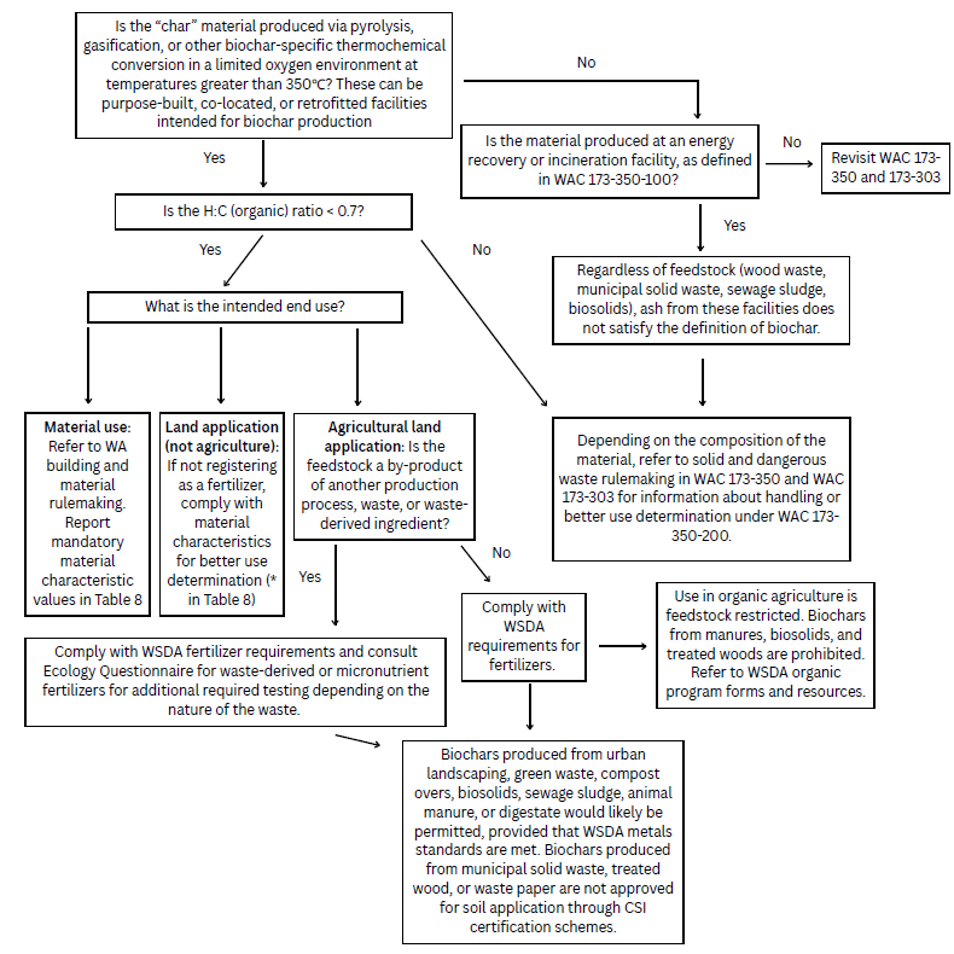
Figure 1. Flow chart for biochar from various feedstocks and potential regulatory pathways.
This flowchart describes how to determine whether a “char” material meets the definition of biochar and what regulatory pathway may apply.
- First, determine how the char material was produced. If the material was produced through pyrolysis, gasification, or another biochar-specific thermochemical conversion process in a limited-oxygen environment at temperatures greater than 350°C, continue to the H:C organic ratio question. These production systems may include purpose-built, co-located, or retrofitted facilities intended for biochar production.
- If the material was not produced through one of those biochar-specific processes, determine whether it was produced at an energy recovery or incineration facility as defined in WAC 173-350-100.
- If no, revisit WAC 173-350 and WAC 173-303.
- If yes, the resulting ash does not satisfy the definition of biochar, regardless of feedstock. This includes ash from wood waste, municipal solid waste, sewage sludge, or biosolids. Depending on the composition of the material, refer to solid and dangerous waste rulemaking in WAC 173-350 and WAC 173-303 for information about handling or better use determination under WAC 173-350-200.
- For materials produced through a biochar-specific process, determine whether the H:C organic ratio is less than 0.7.
- If no, depending on the composition of the material, refer to solid and dangerous waste rulemaking in WAC 173-350 and WAC 173-303 for information about handling or better use determination under WAC 173-350-200.
- If yes, continue to the intended end use question.
- Determine the intended end use.
- Material use: Refer to Washington building and material rulemaking. Report mandatory material characteristic values listed in Table 8.
- Land application, not agriculture: If the material is not being registered as a fertilizer, comply with material characteristics for better use determination, marked with an asterisk in Table 8.
- Agricultural land application: Determine whether the feedstock is a by-product of another production process, waste, or a waste-derived ingredient.
- For agricultural land application, determine whether the feedstock is a by-product, waste, or waste-derived ingredient.
- If yes, comply with WSDA fertilizer requirements and consult the Ecology questionnaire for waste-derived or micronutrient fertilizers for additional required testing, depending on the nature of the waste.
- If no, comply with WSDA requirements for fertilizers.
- Additional notes for soil application and organic agriculture:
- Biochars produced from urban landscaping, green waste, compost overs, biosolids, sewage sludge, animal manure, or digestate would likely be permitted, provided that WSDA metals standards are met.
- Biochars produced from municipal solid waste, treated wood, or waste paper are not approved for soil application through CSI certification schemes.
- Use in organic agriculture is feedstock restricted. Biochars from manures, biosolids, and treated woods are prohibited. Refer to WSDA organic program forms and resources.
Sampling and testing frequency
Regular testing of biochar material properties and potential toxicants is important for public trust, transparency, and is consistent with WSDA fertilizer testing regulations. Biochar is a heterogenous material, like soil or compost, therefore collection of representative samples for testing is critical. WAC 173-303-110 specifies sampling procedures to ensure representative sample collection of solid waste for testing. Biochar could fall into a few categories included in this rule, for which the following methods should be used:
- ASTM Standard D346-04e1 (for crushed or powdered material)
- ASTM Standard D2234/D223M-03e1 (for fly ash-like material)
- ASTM Standards D1452-80 (2000)/D420-98 (2003) (for soil or rock-like material)
Representative samples should be collected and stored monthly based on IBI standards, deferring to WAC 173-303 to ensure compliance with solid waste regulations in Washington. Sampling, inspection, and testing frequency requirements would remain at the discretion of WSDA or Ecology as it pertains to the size of a biochar facility or amount of biochar produced (i.e., a small portable kiln to process forest slash vs. a larger facility) and feedstock used. For example, WBC suggests that biochar producers less than 100 tons of biochar per year may be exempted from an annual facility inspection if material and process quality requirements are satisfied.19
Part 3: Design of a Certified Biochar Laboratory
The biochar market is rapidly expanding in the PNW and there is a lack of local laboratories that offer the full suite of tests required for biochar certification according to IBI or CSI standards. Many biochar producers use Control Laboratories in Watsonville, California for IBI material testing (excluding PAH, PCDD/Fs, PCBs), but some may also work with universities or other labs to conduct specific tests. Furthermore, these labs specialize in other types of testing, offering biochar testing as one of their services. These labs have been integral in biochar market development so far, but a lab designed specifically for biochar would help facilitate further growth of the biochar market, establish quality material standards, and strengthen trust in biochar products.
The proposed certified biochar laboratory will help biochar producing companies comply with regulatory standards in the State of Washington, international biochar quality standards, such as those discussed in Part 1, and could serve as a research hub working in collaboration with regulators to oversee more field trials and advise biochar legislative efforts. The cost of instrumentation for mandatory Washington test methods and best methods for tests that do not have required methods are included in this section, as well as an estimate of total capital expenses, operating expenses, and a brief assessment of the current market for these types of services in the rapidly growing biochar industry in the PNW and United States.
Analytical methods and instrumentation
Analytical methods from IBI, CSI schemes, CAR, Singh et al. (2024), and requirements by WSDA and Ecology were considered. The methods required by WSDA and Ecology take precedent over IBI or CSI approved methods for the same parameter; however, there is significant overlap. For waste derived fertilizers, Ecology requires different sample prep/test methods for leachable heavy metals, which are also noted below, but may be substituted for the standard WSDA approved methods if the material is organic in nature and additional tests for barium, chromium, and silver are added to the total metals test panel. Testing for these 12 metals regulated in Washington must be performed via methods outlined in WAC 16-200-7062 and additional approved methods can be referenced in the WSDA Heavy Metals Test Requirements document. Other parameters are also tested according to these methods, as well as those prescribed by other biochar testing schemes, WAC 173-303-110, and other Ecology approved methods (primarily U.S. EPA SW-846) where applicable.
Although the IBI standards were retired in April of 2024, the most current draft of the CAR biochar protocol states to follow IBI methods, therefore the IBI scheme methods take precedence over CSI schemes. While Ecology states that sampling and analyses must be done by an Ecology approved method at an Ecology approved lab, standard methods or procedures such as those of American Society for Testing and Materials (ASTM) are appropriate if there are not any approved applicable methods. This table is not exhaustive and more approved methods by Ecology can be seen here for parameters without mandated methods: Approved sampling and analysis procedures. For all methods, samples are prepared in accordance with the method listed. For PAH in particular, methods used for analysis of soils may not be suitable for biochar due to its high adsorption capacity, therefore biochar-specific methods from certification schemes and literature are also included here, although there is overlap between the approved method in Washington and those suitable for biochar.19
| Parameter | Analytical method(s)13,14,19,56 | Instrument | Item No. |
|---|---|---|---|
|
Corg (% total mass, db)*
Calculated by difference: Ctot − Ci | Total carbon (Ctot) by dry combustion elemental analysis, ASTM D5373-21.14,61 | Elemental analyzer for C, H, N | 1 |
| Inorganic carbon (Ci): CO2-C content with 1N HCl, ASTM D4373-21.14,58
Corg = Ctot − Ci | Rapid carbonate analyzer | 2 | |
| H:Corg (molar ratio)* | Total H by dry combustion elemental analysis, ASTM D5373-21.14,57 | Elemental analyzer for C, H, N | 1 |
| Total N (% total mass, db)* | Dry combustion elemental analysis, ASTM D5373-21.14,57 | Elemental analyzer for C, H, N | 1 |
| Mineral (available) N — ammonium & nitrate* | IBI method: 2M KCl extraction with spectrophotometry, per Rayment & Higginson (1992).14 | UV-Vis spectrophotometer | 3 |
| Singh et al. (2024): hydrolyzable N with 6M HCl, modified from Pansu & Gautheyrou (2006).13
See also: TMECC (2001) 04.02-B and -C — nitrate and ammonium nitrogen determination.59 | Elemental analyzer for C, H, N | 1 | |
| Total O (% total mass, db)* | Calculated by difference, using dry combustion elemental C/H/N analysis together with TGA data. | — | 1, 5, 6, 7 |
| Total P & K (% total mass, db)* | Modified dry ash method with ICP analysis, as described by Enders & Lehmann (2012), for total P, K, S, Mg, and Ca.14,60
See also: TMECC (2001) 04.12, 04.13, 04.14 for sample digestion and analysis (ICP and atomic absorption spectroscopy). | Inductively coupled plasma – optical emission spectrometer (ICP-OES) | 4 |
| Moisture / water content (% total mass)* | IBI method: ASTM D1762-84, Standard Test Method for Chemical Analysis of Wood Charcoal.61
See also: modified ASTM D1762-84 proximate analysis using thermogravimetric analysis (TGA) to limit O2 exposure — one of several modified proximate-analysis procedures for moisture, volatile matter, fixed carbon, and ash content in biochar.62 | Muffle furnace | 5 |
| Furnace with N2 purge | 6 | ||
| Thermogravimetric analyzer (furnace with N2 purge, sample robot) | 7 | ||
| Total ash (% total mass, db)* | — | Thermogravimetric analyzer (furnace with N2 purge, sample robot) | 7 |
| Total volatile content (% total mass, db)* | — | Thermogravimetric analyzer (furnace with N2 purge, sample robot) | 7 |
| pH* & liming potential / equivalence (% CaCO3, db) |
| pH meter | 8 |
| Titration manager | 9 | ||
| Electrical conductivity (dS/m)* | IBI method: EC of leachate per modified TMECC (2001) 04.10-A (1:5 slurry method, mass basis), using a 1:20 biochar:DIW (w:v) dilution equilibrated 90 minutes on a shaker table, per Rajkovich et al. (2011).14,66 | Electrical conductivity meter | 10 |
| Arsenic (As)* | Ecology: EPA SW-846 Method 1311, toxicity characteristic leaching procedure, for 8 leachable metals (underlined in source), unless fertilizer is derived from organic materials.55,67 WSDA: for all 12 metals (As–Zn): EPA Method 200.8, ICP-MS.68 Also accepted:
Note: EPA SW-846 atomic absorption spectroscopy and associated prep methods are also accepted by WSDA for all regulated heavy metals. Two additional atomic spectroscopy methods are WSDA-approved for total Hg. See WSDA heavy-metals test requirements for the full list. | Inductively coupled plasma mass spectrometer (ICP-MS) | 11 |
| Barium (Ba)* | |||
| Cadmium (Cd)* | |||
| Chromium (Cr)* | |||
| Cobalt (Co)* | |||
| Mercury (Hg)* | |||
| Molybdenum (Mo)* | |||
| Nickel (Ni)* | |||
| Lead (Pb)* | (see Ecology/WSDA methods above) | Atomic absorption spectrophotometer or equivalent | 12 |
| Selenium (Se)* | (see Ecology/WSDA methods above) | Inductively coupled plasma mass spectrometer (ICP-MS) | 11 |
| Silver (Ag)* | |||
| Zinc (Zn)* | |||
| EPA PAH 16** (EFSA PAH 8**) |
Ecology:
| Gas chromatograph mass spectrometer (GC/MS) | 13 |
| Rotary vacuum evaporator | 14 | ||
| Dioxins/Furans (PCDD/Fs)** |
Ecology and IBI accepted:
| High-resolution GC/MS (different column than PAH and PCB) | 13/14 |
| Polychlorinated Biphenyls (PCBs)** |
Ecology:
| GC/MS with electron capture detector (ECD) or electrolytic conductivity detectors (ELCD), 2 columns single injection | 13/15 |
| Copper (Cu) |
IBI: TMECC (2001) Methods 04.05 — secondary and micronutrient content (Mg, Ca, S, Na, B, Cl, Co, Cu, Fe, Mn, Mo, Zn), referring to Sections 04.12–04.14 for sample prep and ICP/AAS analysis.
Also see: EPA 3050B/6010 or 6020. | ICP-OES, ICP-MS
Separate run than heavy metals; additional dilutions, lab work | 4, 11 |
| Boron (B) | |||
| Chlorine (Cl) | |||
| Sodium (Na) | |||
| Dry matter and bulk density (as delivered) | CSI: Dried sample (> 300 ml) poured into a graduated cylinder and weighed. The volume of the sample is read after 10 compressions (falling). Bulk density is reported in kg/m3.15 These methods are similar to those for compost and soil bulk density described in TMECC (2001). | — | — |
| Water holding capacity | CSI: The < 2mm fraction of a biochar sample is soaked in water for 24 hours, covered with filter paper, and placed upside down on a dry sand bed for 2 hours to remove free water. The saturated material is weighed, dried, and weighed again. Other methods involving measurements of water potential have also been used, but this method is faster and more practical.15 | — | — |
| Particle size distribution | IBI: Progressive dry sieving (50mm, 25mm, 16mm, 8mm, 4mm, 2mm, 1mm, 0.5mm).
Also see: ASTM D2862-16.81 | Mechanical sieve shaker, U.S. standard sieves | 14 |
| Germination inhibition assay | IBI: Methods of Van Zwieten et al. (2010), 22-day greenhouse study of two soil types and three test species (radish, soybean, wheat).82 | Climate-controlled chamber/greenhouse, germination trays, soils, and test species | 15 |
| Available phosphorus | IBI and Singh et al.: 2% formic acid extraction, centrifugation, filtration, and vanadomolybdate colorimetric spectrophotometry (Wang et al., 2012), AOAC 2005.83 | UV-Vis spectrophotometer | 3 |
| Total calcium, magnesium, and sulfur | See methods for total P, K, and micronutrients (above). | ICP-OES/ICP-MS | 4, 11 |
| Total iron | |||
| Available calcium, magnesium, and sulfate-S | IBI: 1M HCl extraction (Camps Arbestain et al., 2015). Elements in digest determined by common analytical techniques.14,84 | ICP-OES | 4 |
| Total and external surface area, specific surface area |
IBI and Singh et al.: ASTM D6556-21, Standard Test Method for Carbon Black — Total and External Surface Area by Nitrogen Adsorption, BET procedure.
CSI: DIN ISO 9277 (BET) and DIN 66137 (density). | Surface area and porosity analyzer | 16 |
| Pore size distribution | IBI, CSI: Methods not stated explicitly; however, it is common to use the Dubinin–Radushkevich isotherm, with the same instrument and gases as the specific surface area estimates. | Surface area and porosity analyzer | 16 |
Accreditation
The biochar certification schemes discussed in Part 1 and the State of Washington require that testing be performed in an accredited laboratory. There are several reputable accreditation bodies that ensure standardized laboratory procedures and quality assurance and control are followed, including (but not limited to) the National Environmental Laboratory Accreditation Program, the American Association for Laboratory Accreditation, and the International Organization for Standardization’s “General Requirements for the Competence of Testing and Calibration Laboratories” (ISO/IEC 17025:2005).14 According to NRCS CPS-336, testing laboratories must meet STA performance standards, IBI standards, or state approved certification programs using land grant university approved methods.18 The WBC and EBC refer to “CSI-accredited” laboratories and samplers, all of which are located in Europe and participate in interlaboratory trials organized by Delta Coal Control.85
For the biochar certification scheme we have proposed for Ecology, procedures and fees associated with accreditation in the State of Washington must be considered. Rulemaking on the accreditation of environmental laboratories by Ecology can be found in WAC 173-50.86 Ecology offers a Lab Search tool, as well as a published Procedural Manual for the Environmental Laboratory Accreditation Program. Updated information pertaining to the calculation of accreditation fees is outlined in WAC 173-50-190. These materials should be referenced for achieving and maintaining accreditation of a certified biochar lab in Washington.
Potential market and demand for biochar certification services
In 2023, the self-reported production of biochar by North American producers was greater than 169,000 metric tons/year, accounting for over 48% of global biochar production reported.53 Members across all sectors of the biochar industry see great potential in biochar-based fertilizer development and the need for the development of end-use markets, standards, and specifications.53 The landscape for biochar analytical testing is similar to that of the biochar certification/standards: disjointed. Existing biochar standardization schemes and labs currently offering biochar analytical services are integral to the rapidly growing biochar market, but a centralized and dedicated biochar analytical laboratory could serve as a hub for the development of user-friendly material standards, product development, legislative efforts, and much more. Washington State’s dedication to climate change mitigation and waste valorization research, as well as the number of biochar producers and ample feedstock in the PNW make Washington an excellent potential home for this certified biochar laboratory. Table 10 lists current and future biochar producers in and around the PNW.
Financial logistics and feasibility
Despite its potential utility, a new biochar lab must be financially justifiable. In this section we outline major capital expenses associated with required instrumentation and facilities, as well as some operational costs to consider in assessing the feasibility of constructing a certified biochar laboratory in Washington.
Capital and operating expenses
Capital expenses for instrumentation based on the required test methods are the starting point for considering the financial feasibility of the proposed biochar lab. In Table 11, we have compiled the equipment deemed necessary based on the test methods in Table 9, taking efficiency and best practices into account. For example, while atomic adsorption spectroscopy (AAS) is an accepted WSDA method, it requires multiple sample preparations and assesses fewer elements at once when compared to inductively coupled plasma (ICP) mass spectrometry (MS) and ICP optical emission spectroscopy (OES) methods, therefore the cost of an Atomic Adsorption Spectrophotometer (item 12 in Table 9) is omitted from the estimated capital expenses, but ICP instrumentation is included.
| Name | Location |
|---|---|
| Preterra BioCarbon Solutions | British Columbia |
| Bioforcetech | California |
| Blue Sky Biochar | California |
| Carbo Culture | California |
| Earth Foundries, Inc. | California |
| Ganrock | California |
| Genesee Farm and Retreat | California |
| Pacific Biochar Benefit Corporation | California |
| Pheonix Energy | California |
| Rick Wilson Ventures, Inc | California |
| Sitos Group | California |
| Vgrid Energy Systems – Persist | California |
| Genesis Biochar | Montana |
| XLII BioChar Inc. | Montana |
| Oregon Biochar Solutions | Oregon |
| Wilson Biochar Associates | Oregon |
| Myno Carbon | Washington |
| Qualterra | Washington |
The base price of instrumentation in USD ($) does not include installation costs. Base prices have been estimated from prices listed on manufacturer websites, quotes from manufacturers, and purchases of instrumentation by the Analytical Chemistry Service Center (ACSC) in the Washington State University Department of Biological Systems Engineering.
For small instruments, such as a pH meter or benchtop spectrophotometer, installation costs are considered simply to be standard taxes and shipping. For more complex instruments requiring a dedicated computer, software, installation service, and initial training from an instrument manufacturer, these installation costs are significant expenses. Both are factored into the estimated capital expenses in Table 11. Sources for estimated installation costs include quotes, service visits, and purchasing information pertaining to similar instruments provided by ACSC. If a current quote could not be obtained from the company directly, an estimate was made using previous purchase records and the Producer Price Index for Laboratory and Analytical Instruments from the U.S. Bureau of Labor and Statistics (Index 1985 = 100, Index 2013 = 140, Index 2025 = 191). 87 Current prices of used instruments were adjusted to account for the purchase of new instruments and an estimated site installation, ancillary equipment, and training cost relative to the base price of the instrument was calculated (8.2%) from ACSC quotes and cross referenced with current service quotes. the current price of used instrumentation (markup for purchasing brand-new). An estimation for the cost of ancillary equipment has been made based on the total estimated instrument costs. Washington sales and use tax is not included, as it would be a state of university lab. Shipping of many instruments is free or included in site installation estimates. Land and physical facility costs were estimated from land and property values of local laboratories accessed via local Assessor parcel data and costs associated with ventilation, water purification, etc. for basic lab operations.
Assuming the construction of a stand-alone facility, the installed cost of instrumentation could be used to estimate development costs. This estimation is based on the methods of Humbird et al. (2011), which assessed the costs of design and construction of a facility to produce ethanol from corn stover, therefore these costs should be revisited when the total required number of tests and subsequent sample price has been determined by Ecology.88
| (Item no. from Table 9) Equipment, vendor | Cost (USD) |
| LECO Corporation CHN628 Elemental Analyzer with Sulfur Add-On Module, includes site installation, ancillary equipment, and training ($2013) Estimated total ( x 1.51)87 | $69,360 $104,733 |
| Gibson Company Inc. Rapid carbonate content analyzer | $472 |
| Hach DR1900 (Portable) or DR3900 (Laboratory) Spectrophotometer | $7,206 |
| Agilent 5110 ICP-OES (used) Adjusted (new, x 1.4) Estimated total, including site installation and training (8.2%) | $46,000 $64,400 $69,681 |
| Thermo Scientific™ BF51848C Lindberg/Blue M™ Moldatherm™ Box Furnace | $5,090 |
| Mettler Toledo STARe System TGA/DSC 2 SF/1100, includes ancillary equipment (2013 USD) Site installation and training (2013 USD, approximately 8.2% of Instrument/equipment cost) Estimated Total ( x 1.51),87 including site installation and training | $82,486 $6,764 $134,767 |
| Mettler Toledo SevenExcellence pH meter S400 | $2,840 |
| Hach AT1000 Potentiometric titrator | $5,572 |
| Accumet™ Basic AB330 Benchtop Laboratory Conductivity Meter (Fisherbrand) | $1,012 |
| Agilent 7700 ICP MS (used) Adjusted (new, x 1.4) Estimated total, including site installation and training (8.2%) | $45,000 $63,000 $68,166 |
| 13.1-3: Agilent 7000 Series GC/MS/MS, 7890A GC, 7001B, 7693 Autosampler, MassHunter x 3 (configured for PAH, PCB, PCDD/F) (used) Adjusted (new, x 1.4) Estimated total, including site installation and training (8.2%) | $67,900 x 3 $285,180 $290,748 |
| Buchi R-300 Rotavapor Electronic Lift Cold Trap | $9,531 |
| W.S. TYLER® RO-TAP® RX-29-10 Sieve Shaker and ASTM Standard Sieves (8 @ approximately $50/sieve) | $4,074 |
| 3940 Forma Environmental Chamber (or greenhouse with climate control) (Thermo Fisher Scientific) | $10,000 |
| Micromeritics TriStar II Plus Automatic Physisorption Analyzer, includes site installation, ancillary equipment, and training (2013 USD) Estimated total ( x 1.51)87 | $40,827 $61,649 |
| Estimated Total Instrument Cost | $775,541 |
| Estimated additional direct costs (ancillary equipment and site development =. 17.5% of total instrument cost) | $135,720 |
| Estimated indirect costs (70% of estimated direct costs) | $95,004 |
| Working Capital = 5% of (instrument +additional direct + indirect costs) | $50,313 |
| Land/facility construction (estimated building value) | $1,000,000 |
| Total Estimated Capital Investment | $2,056,578 |
Certain equipment, such as ICP instruments, gas chromatographs (GCs), TGA, and surface area analyzers will require regular service visits that contribute significantly to fixed operating costs. Maintenance and service contracts are estimated at 10% of the instrument base price based on ACSC records for past service. Variable operating costs will fluctuate based on sample volume and have not been itemized or included at this time. Salaries are based on values from the Washington State Office of Financial Management for a laboratory technician in Range 50 and a laboratory assistant in Range 38 and the fringe benefit rate is based on ACSC operational records. Depending on sample volume, an independent lab technician may be sufficient. Rates for laboratory assistants (Class code 510E/F, Range 38/42) can be found through the Washington State Office of Financial Management (OFM) compensation and job classes search tool. Salaries from OFM do not apply to colleges or universities. If the certified biochar lab were to be integrated into an existing university laboratory, salaries and overhead would likely differ, and capital expenses would likely decrease due to existing facilities and academic discounts (as much as 30% on record at ACSC). Accreditation fees are not factored into operating costs, as these will likely depend on the analyses performed and may differ for state or university run laboratories as opposed to private laboratories seeking certification through Ecology.
| Operating Expense | USD/Year |
| Laboratory Technician 3 – Science & Engineering (510I, Range 50)89 | Step A: $52,920 Step M: $71,148 |
| Fringe labor costs estimated at 35% | $18,522-$24,902 |
| Maintenance, service contracts/visits (10% of instrument base price) ICP-MS ICP-OES GC/MS Gas physisorption analyzer TGA | $6,300 $6,400 $6,790 $4,083 $8,249 |
| Accreditation/lab certification fees | – |
| Variable operating costs: reagents, gases, basic lab supplies, waste disposal | – |
| Estimated Total Operating Expenses | $103,264-$128,872 |
Sample volume and price of service
Sample volume will depend on the level of biochar regulation required by Ecology, but biochar producers in Washington will likely not be the sole customers for this lab. There are some labs offering biochar analysis services, but a “one-stop-shop” specializing in biochar analysis does not currently exist to our knowledge. While university laboratories or programs conducting biochar research may possess the capabilities to perform these tests, a designated lab with consistent methods and sample processing time would benefit the biochar market. Labs advertising biochar analytical services are discussed in more detail below. Because this proposed biochar lab will perform tests according to WSDA methods required for fertilizer registration, it could also serve a larger customer base, specifically for heavy metals testing. Additionally, including analytical pyrolysis services would be wise and support waste valorization efforts across the state; however, this is not included in financial calculations.
The price of service is most directly impacted by sample volume, as for many instruments, the cost per sample decreases as the number of samples increases, and increased sample volume increases both revenue and variable operating expenses. For these reasons, estimation of the price of service is challenging. Referencing prices from Control Laboratories in California for IBI Biochar Analysis (appx. $325) and EPA Analytical Service costs for prices for organic pollutant testing (PCB, PCDD/F), a reasonable price for a single sample would be around $2,000.90
Other labs advertising biochar services
A major barrier to utilization of biochar is the lack of public knowledge, compounded by the fact that regular testing to hold CSI or IBI certifications can be prohibitive. Services like the USDA Agriculture Research Service (ARS) Biochar Atlas are great tools for biochar producers and potential end-users, as they offer free testing for biochar materials for listing in their database. A single commercial lab that performs all these tests would be valuable, in addition to the potential for expanding to analytical pyrolysis and feedstock characterization to study the process from start to finish.
| Lab | Location | Services, Price (if available) |
| USDA-ARS Biochar Atlas Project | Corvallis, OR | Biochar chemical and physical properties, FREE (inclusion in Atlas database and not intended for optimization purposes or annual testing)* |
| Control Laboratories | Watsonville, CA | Biochar chemical, physical and activity, includes IBI test category A metals, and germination inhibition assay (not PCDD/Fs, PCBs, PAH) $325 |
| ALS Group USA | Houston, TX | PCDD/Fs, PCBs, PAH |
| Enthalpy Analytical LLC | Berkeley, CA | PCDD/Fs, PCBs, PAH |
| Vista Analytical Laboratory | El Dorado Hills, CA | PCDD/Fs, PCBs, PAH |
| TPS Lab | Edinburgh, TX | WSDA Protocol for soil, compost, and fertilizer |
Sample registration and data collection for research and application purposes
This lab would serve as a biochar research hub, therefore biochar data collected would contribute to the development of the biochar market and be available for research purposes, in addition to being listed through other regulatory bodies such as Ecology’s waste-derived and micronutrient ferilizer database, OMRI, of WSDA approved input materials.
Conclusions, Recommendations, and Potential Next Steps
Carbon Standards International expresses a need for an international biochar analytical laboratory network following consistent methods and standards.85 A biochar-specific analytical laboratory in the US would be instrumental in this effort, and biochar production and utilization aligns with Washington’s demonstrated commitment to sustainability and climate change mitigation. The proposed biochar certification scheme for Ecology regulatory purposes includes four end-use categories for ease of use and transparency about the material characteristics that must follow Washington WSDA and Ecology rulemaking. This scheme also considers the limited end-uses of biochars derived from certain feedstocks based on local regulation and recommendations of CSI and IBI biochar certification schemes .
There are several areas that need further development, including regulating the use of biochar in the built environment or materials in the State of Washington. This biochar end-use category is the least developed in existing standardization schemes, however research supports the validity of this method of carbon sequestration. Additionally, further research should be done to determine the tolerance of temperature or feedstock changes in biochar production that merit re-testing and of what parameters, as these are not consistent between existing schemes.
Finally, continued and consistent information and education about biochar will help increase public trust and grow end-use markets. One of the first tasks of this lab would be to sample biochar from PNW producers to assess the characteristics of biochar currently on the market as part of a larger market study of biochar in the area, similar to what has been done in California and building off of the Biomass to Biochar report published in 2022 and other biochar research supported by Ecology. This scheme and proposed laboratory would be integral to the advancement of biochar utilization in the PNW and North America and further demonstrate Washington’s commitment to carbon negative technologies and climate change mitigation.
Acronyms and Abbreviations
| Abbreviation | Definition |
|---|---|
| AAS | Atomic absorption spectroscopy |
| ACSC | Analytical Chemistry Service Center |
| ARS | Agricultural Research Service |
| ASTM | American Society for Testing and Materials |
| B2B | Biochar to businesses |
| B2C | Biochar to consumers |
| BUD | Beneficial use determination |
| CAR | Climate Action Reserve |
| CEC | Cation exchange capacity |
| CFR | Code of Federal Regulations |
| Corg | Organic carbon |
| CPS | Conservation Practice Standard |
| CSI | Carbon Standards International |
| Ctot | Total carbon |
| DM | Dry matter |
| EBC | European Biochar Certificate |
| EC | Electrical conductivity |
| Ecology | Washington State Department of Ecology |
| EFTA | European Free Trade Association |
| EU | European Union |
| GC | Gas chromatography |
| H:C | Hydrogen to carbon ratio |
| IBI | International Biochar Initiative |
| ICP | Inductively coupled plasma |
| MS | Mass spectroscopy |
| OES | Optical emission spectroscopy |
| OFM | Office of Financial Management |
| OMRI | Organic Materials Review Institute |
| NRCS | Natural Resources Conservation Service |
| NOP | National Organic Program |
| PAH | Polycyclic aromatic hydrocarbon |
| PCB | Polychlorinated biphenyl |
| PCDD/F | Polychlorinated dibenzo-p-dioxin and polychlorinated dibenzofuran |
| PNW | Pacific Northwest |
| PFAS | Per- and polyfluoroalkyl substances |
| RCW | Revised Code of Washington |
| SOC | Soil organic carbon |
| SOM | Soil organic matter |
| STA | Seal of Testing Assurance |
| TCLP | Toxicity Characteristic Leaching Procedure |
| TGA | Thermogravimetric analysis |
| USD | United States dollars |
| USDA | United States Department of Agriculture |
| USFS | United States Forest Service |
| WAC | Washington Administrative Code |
| WBC | World Biochar Certificate |
| WSDA | Washington State Department of Agriculture |
References
- Substitute Senate Bill 5961. State of Washington 67th Legislature, 2022 Regular Session; 2022. Accessed June 24, 2025.
- RCW 43.19A.140.; 2024. Accessed June 24, 2025.
- Archuleta J, Fuchs M, Hills K, et al. Biomass to Biochar: Maximizing the Carbon Value. Report by Center for Sustaining Agriculture and Natural Resources, Washington State University, Pullman, WA.; 2022. Accessed June 24, 2025.
- Haghighi Mood S, Pelaez-Samaniego MR, Garcia-Perez M. Perspectives of Engineered Biochar for Environmental Applications: A Review. Energy and Fuels. 2022;36(15):7940-7986.
- H.R. 1645. 118th Congress, 1st Session; 2023. Accessed June 24, 2025.
- H.R. 2581. 117th Congress, 1st Session; 2021. Accessed June 24, 2025.
- FAC 14513.5.; 2017. Accessed June 24, 2025.
- Colorado Revised Statutes Section 34-60-136.; 2023. Accessed June 24, 2025.
- Lehmann J, Joseph S. Biochar for environmental management: an introduction. In: Biochar for Environmental Management: Science, Technology, and Implementation. 2nd ed. Routledge; 2015:34-50. Accessed June 24, 2025.
- Wang J, Wang S. Preparation, modification and environmental application of biochar: A review. J Clean Prod. 2019;227:1002-1022.
- Safarian S. Performance analysis of sustainable technologies for biochar production: A comprehensive review. Energy Reports. 2023;9:4574-4593.
- Climate Action Reserve. U.S. and Canada Biochar Protocol, Version 1.0.; 2024.
- Singh B, Amonette JE, Camps-Arbestain M, Kookana RS. A biochar classification system and associated test methods. In: Lehmann J, Joseph S, eds. Biochar for Environmental Management. 3rd ed. Routledge; 2024:209-248.
- International Biochar Initiative. Standardized Product Definition and Product Testing Guidelines for Biochar That Is Used in Soil, Version 2.1.; 2015.
- EBC (2012-2023). European Biochar Certificate – Guidelines for a Sustainable Production of Biochar.; 2022. Accessed January 6, 2025.
- United States Department of Agriculture Natural Resources Conservation Service. Conservation Practice Standard, Woody Residue Treatment (Code 384).; 2017. Accessed June 24, 2025.
- United States Department of Agriculture Natural Resources Conservation Service Conservation Stewardship Program. Conservation Enhancement Activity, Biochar Production from Woody Residue (E384-A).; 2019. Accessed June 24, 2025.
- United States Department of Agriculture Natural Resources Conservation Service. Conservation Practice Standard, Soil Carbon Amendment (Code 336).; 2022. Accessed June 24, 2025.
- Carbon Standards International. World Biochar Certificate-Guidelines for a Sustainable Production of Biochar and Its Certification, Version 1.0.; 2023. Accessed June 24, 2025.
- Substitute Senate Bill 6121. State of Washington 68th Legislature, 2024 Regular Session; 2024. Accessed June 24, 2025.
- Colorado Revised Statutes Section 24-38.5-122.; 2024. Accessed June 24, 2025.
- PRC 4799.05.; 2022. Accessed June 24, 2025.
- PRC 717. Published online 2016. Accessed June 24, 2025.
- FAC 14601.; 2025. Accessed June 24, 2025.
- International Biochar Initiative. IBI Biochar Certification Program Manual: Requirements and Procedures for Biochar Certification, Version 2.1.; 2015. Accessed June 24, 2025.
- Tahery S, Parra MC, Munroe P, Mitchell DRG, Meale SJ, Joseph S. Developing an activated biochar-mineral supplement for reducing methane formation in anaerobic fermentation. Biochar. 2025;7(1).
- International Biochar Initiative. Driving Confidence in Biochar: IBI and CSI Merge Standards for Industry Growth. May 20, 2024. Accessed June 24, 2025.
- Thengane SK, Kung K, Hunt J, et al. Market prospects for biochar production and application in California. Biofuels, Bioproducts and Biorefining. 2021;15(6):1802-1819.
- Lehmann J, Cowie A, Masiello CA, et al. Biochar in climate change mitigation. Nat Geosci. 2021;14(12):883-892.
- Carbon Standards International. Positive List of Permissible Biomasses for the Production of Biochar.; 2023. Accessed June 24, 2025.
- Carbon Standards International. Positive List of Permissible Biomasses for the Production of Biochar.; 2023. Accessed June 24, 2025.
- Climate Action Reserve. Eligible Biochar Feedstocks List. Vol 15. John Wiley and Sons Inc; 2024.
- Washington State Department of Ecology. Rulemaking frequently asked questions.
- 7 CFR Part 205, 7 U. S. C. 6501-6524. Accessed June 24, 2025.
- Sørmo E, Krahn KM, Flatabø GØ, Hartnik T, Arp HPH, Cornelissen G. Distribution of PAHs, PCBs, and PCDD/Fs in products from full-scale relevant pyrolysis of diverse contaminated organic waste. J Hazard Mater. 2024;461.
- Buss W, Graham MC, MacKinnon G, Mašek O. Strategies for producing biochars with minimum PAH contamination. J Anal Appl Pyrolysis. 2016;119:24-30.
- Buss W, Hilber I, Graham MC, Masěk O. Composition of PAHs in Biochar and Implications for Biochar Production. ACS Sustain Chem Eng. 2022;10(20):6755-6765.
- Chapter 173-308 WAC. Accessed June 24, 2025.
- Chapter 16-200 WAC. Accessed June 24, 2025.
- Chapter 16-160 WAC. Accessed June 24, 2025.
- Organic Materials Review Institute. OMRI Generic Materials List.; 2025. Accessed June 24, 2025.
- Chapter 173-340 WAC. Accessed June 24, 2025.
- Chapter 173-303 WAC. Accessed June 24, 2025.
- United States Environmental Protection Agency. The SW-846 Compendium.
- Washington State Department of Ecology. Chemical Test Methods For Designating Dangerous Waste.; 2014. Accessed June 24, 2025.
- Chapter 173-350 WAC. Accessed June 24, 2025.
- WAC 173-400-110. Accessed June 24, 2025.
- RCW 15.54.820. Accessed June 24, 2025.
- Washington State Department of Agriculture, Washington State Department of Ecology. Levels of Nonnutritive Substances in Fertilizers 2023: Annual Report to the Legislature.; 2023. Accessed June 24, 2025.
- Wallace JS, Edirisinghe D, Seyedi S, et al. Burning questions: Current practices and critical gaps in evaluating removal of per- and polyfluoroalkyl substances (PFAS) during pyrolysis treatments of biosolids. Journal of Hazardous Materials Letters. 2023;4.
- Krahn KM, Cornelissen G, Castro G, et al. Sewage sludge biochars as effective PFAS-sorbents. J Hazard Mater. 2023;445.
- Thoma ED, Wright RS, George I, et al. Pyrolysis processing of PFAS-impacted biosolids, a pilot study. J Air Waste Manage Assoc. 2022;72(4):309-318.
- International Biochar Initiative, US Biochar Initiative. GLOBAL BIOCHAR MARKET REPORT.; 2024. Accessed June 24, 2025.
- US Biochar Initiative. BIOCHAR GUIDELINES FOR AGRICULTURE APPLICATIONS Practical Insights for Applying Biochar to Annual and Perennial Crops. Accessed June 24, 2025.
- Washington State Department of Ecology. 2024 Waste-Derived or Micronutrient Fertilizer Product Questionnaire.; 2024. Accessed June 24, 2025.
- Washington State Department of Agriculture. Fertilizer Registration Guidance Document.; 2015. Accessed June 24, 2025.
- American Society for Testing and Materials (ASTM). Test Methods for Determination of Carbon, Hydrogen and Nitrogen in Analysis Samples of Coal and Carbon in Analysis Samples of Coal and Coke. Published online April 1, 2021.
- American Society for Testing and Materials (ASTM). Test Method for Rapid Determination of Carbonate Content of Soils. Published online June 15, 2021.
- Test Methods for the Evaluation of Composting and Compost (TMECC). 04.02 Nitrogen. Published online 2001.
- Enders A, Lehmann J. Comparison of Wet-Digestion and Dry-Ashing Methods for Total Elemental Analysis of Biochar. Commun Soil Sci Plant Anal. 2012;43(7):1042-1052.
- Test Method for Chemical Analysis of Wood Charcoal. Published online April 1, 2021.
- Aller D, Bakshi S, Laird DA. Modified method for proximate analysis of biochars. J Anal Appl Pyrolysis. 2017;124:335-342.
- Test Methods for the Evaluation of Composting and Compost (TMECC). 04.11 Electrometric pH Determinations for Compost. Published online 2001.
- American Society for Testing and Materials (ASTM). Test Method for Rapid Determination of Carbonate Content of Soils. Published online June 15, 2021.
- Test Methods for the Evaluation of Composting and Compost (TMECC). 04.08 Inorganic Carbon. Published online 2001.
- Test Methods for the Evaluation of Composting and Compost. 04.10 Electrical Conductivity for Compost. Published online 2001.
- United States Environmental Protection Agency. EPA Method 1311. Accessed June 24, 2025.
- United States Environmental Protection Agency. EPA Method 200.8. Accessed June 24, 2025.
- Washington State Department of Agriculture. Heavy Metals Test Requirements.; 2024. Accessed June 24, 2025.
- United States Environmental Protection Agency. EPA Method 6010D (SW-846).; 2018. Accessed June 24, 2025.
- United States Environmental Protection Agency. EPA Method 3050B (SW-846).; 1996. Accessed June 24, 2025.
- United States Environmental Protection Agency. EPA Method 6020B (SW-846).; 2014. Accessed June 24, 2025.
- United States Environmental Protection Agency. EPA Method 7471B (SW-846).; 2007. Accessed June 24, 2025.
- United States Environmental Protection Agency. EPA Method 8275A (SW-846).; 1996. Accessed June 24, 2025.
- United States Environmental Protection Agency. EPA Method 8270E (SW-846).; 2018. Accessed June 24, 2025.
- Fabbri D, Rombolà AG, Torri C, Spokas KA. Determination of polycyclic aromatic hydrocarbons in biochar and biochar amended soil. In: Journal of Analytical and Applied Pyrolysis. Vol 103. Elsevier B.V.; 2013:60-67.
- United States Environmental Protection Agency. EPA Method 1613.; 1994. Accessed June 24, 2025.
- United States Environmental Protection Agency. EPA Method 8290A (SW-846).; 2007. Accessed June 24, 2025.
- United States Environmental Protection Agency. EPA Method 8082A (SW-846). Published online 2007. Accessed June 24, 2025.
- United States Environmental Protection Agency. EPA Method 1668C.; 2010. Accessed June 24, 2025.
- American Society for Testing and Materials (ASTM). Test Method for Particle Size Distribution of Granular Activated Carbon. Published online September 1, 2022.
- van Zwieten L, Kimber S, Morris S, et al. Effects of biochar from slow pyrolysis of papermill waste on agronomic performance and soil fertility. Plant Soil. 2010;327(1):235-246.
- Wang T, Camps-Arbestain M, Hedley M, Bishop P. Predicting phosphorus bioavailability from high-ash biochars. Plant Soil. 2012;357(1):173-187.
- Camps-Arbestain M, Amonette JE, Singh B, Wang T, Schmidt HP. A biochar classification system and associated test methods. In: Biochar for Environmental Management: Science, Technology, and Implementation. 2nd ed. ; 2015.
- Carbon Standards International. EBC/WBC ACCREDITED LABORATORIES.
- Chapter 173-50 WAC. Accessed June 24, 2025.
- U.S. Bureau of Labor Statistics retrieved from FRB of StL. Producer Price Index by Commodity: Machinery and Equipment: Laboratory Analytical Instruments.
- Humbird D, Davis R, Tao L, et al. Process Design and Economics for Biochemical Conversion of Lignocellulosic Biomass to Ethanol: Dilute-Acid Pretreatment and Enzymatic Hydrolysis of Corn Stover.; 2002. Accessed June 24, 2025.
- Washington State Office of Financial Management. Compensation & job classes.
- US EPA. Dioxins, Furans, PCBs, and Congeners Analytical Service Costs.