Picking the Right Bird for the Job: Disease Resilience in Heritage Breeds
By Jeb Owen, Department of Entomology, WSU
With support from a CSANR BIOAg grant, Jeb Owen tested whether heritage chicken breeds carry built-in resistance to the parasites and pathogens that plague open-environment farms.
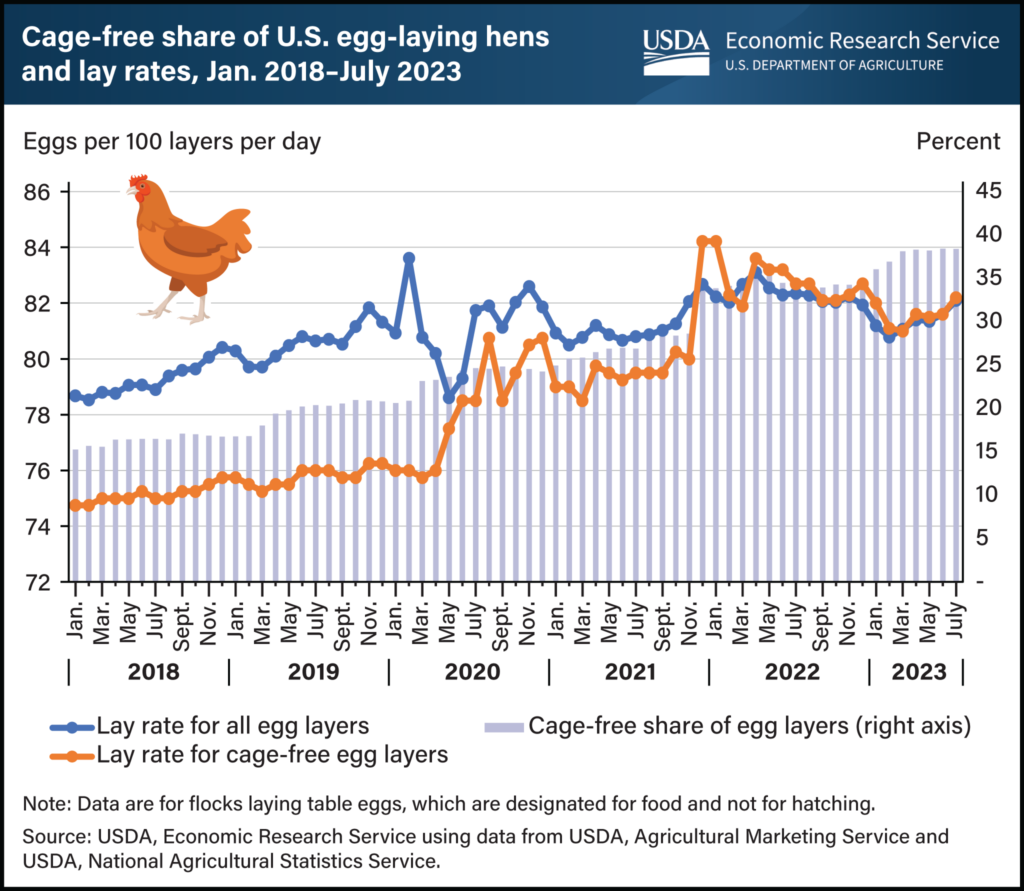
Open-environment poultry production (cage-free, free-range, and pasture systems) has grown dramatically in recent years.1,2 Today, roughly 42% of U.S. eggs come from these systems,3 and market demand suggests that number should be 76% by 2026.4 But chickens that roam and forage are also more likely to encounter parasites and pathogens because they come into direct contact with feces, contaminated soil, and wildlife.1 5, 6
Surveys of open-environment farms have found that 80 to 100% of birds carry at least one external parasite species, and 100% are infected with at least one internal parasite.7
The parasites found in open-environment systems are harmful to chicken health and costly to production. For example, Eimeria sp. is a protozoan parasite that infects the lining of the gut and can cause significant tissue damage. Campylobacter jejuni is a gut bacterium detected on 85% of these farms.1 Campylobacter rarely harms the birds themselves but poses a food safety risk for people who consume contaminated eggs or meat.
Unlike conventional producers, organic farmers cannot rely on parasiticides and antibiotics. Organic certification standards restrict the use of these treatments, leaving farmers with limited options for disease control.
Breeds as a disease-management tool
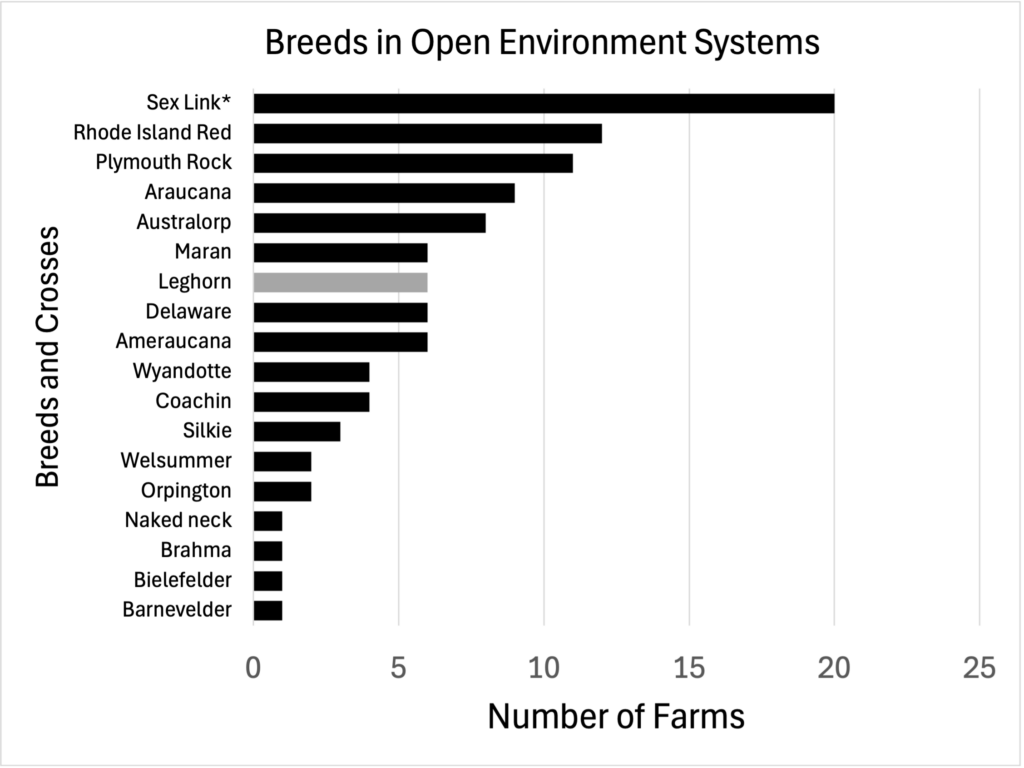
Heritage and non-conventional chicken breeds commonly used on open-environment farms are more genetically diverse than the White Leghorn, which is used in roughly 90% of caged production.1 That diversity includes variation in immune systems that might translate into real differences in how individual breeds respond to infection.
Working with PhD student Kendra Weston and collaborator Dr. Michael Konkel (WSU Department of Molecular Biosciences), we obtained day-old chicks from seven non-conventional breeds: Rhode Island Red, White Rock, Barred Rock, Black Star, Ameraucana, Silver-Laced Wyandotte, and Black Australorp. The chicks were raised in controlled environmental chambers and then each inoculated separately with Emeria and Campylobacter—two organisms common on open-environment farms.
After one week of infection, we examined gut tissue for lesions caused by Eimeria and tested for Campylobacter. Each experiment was run twice to confirm the results.
What we found
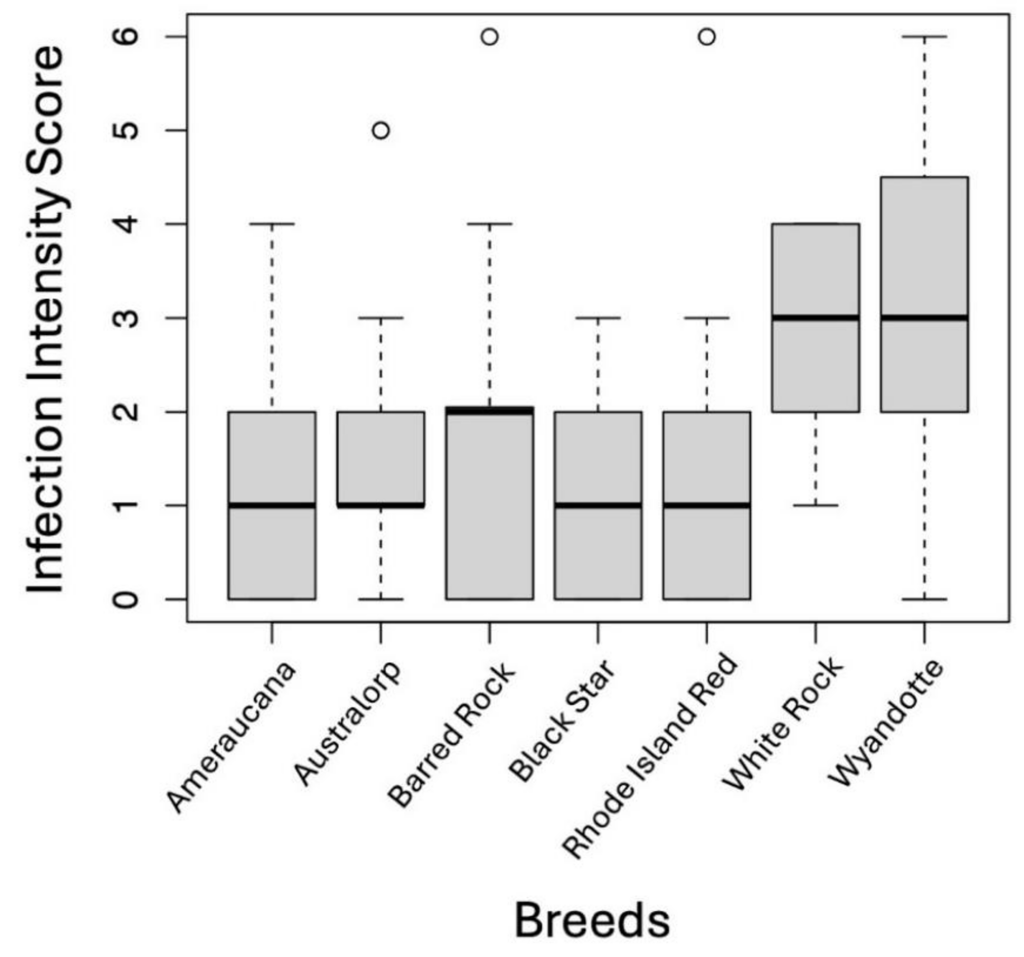
Every bird exposed to Eimeria became infected; no breed was immune. But what varied significantly was how much damage the parasite caused: some breeds showed relatively low lesion scores.
The picture was different for Campylobacter. Here, infection rates varied sharply by breed. Silver-Laced Wyandotte chicks were colonized at a rate of 57%, while Ameraucana and Black Australorp chicks showed only 6% infection rates. Barred Rock, Black Star, Rhode Island Red, and White Rock birds showed no colonization at all.
The Silver-Laced Wyandotte showed relatively low lesion scores for Eimeria but was the breed most susceptible to Campylobacter colonization. These results suggest possible trade-offs in the defenses effective against these two organisms and underscore the need for continued research before breed selection can be recommended as a management strategy.
Implications for farmers
The practical implication is that farmers may be able to select breeds that are naturally more resistant to the specific disease pressures on their operation. Farmers might reduce the number of infected birds in a flock, or reduce the damage infections cause, without relying on the parasiticides and antibiotics that organic certification restricts.
References
- Cornell, K.A., Smith, O.M., Crespo, R., Jones, M.S., Snyder, W.E., Owen, J.P. (2021). Prevalence patterns for enteric parasites of chickens managed in open environments of the Western United States. Avian Diseases.
- Blatchford, R. (2024). Alternative housing for laying hens: Access to outside. Poultry Extension Collaboration. Aug 2024, Vol. 53. Accessed 3 November 2025.
- United Egg Producers. (2017). 2025 Animal husbandry guidelines for U.S. egg laying flocks. Accessed 3 August 2025.
- Oberholtzer, L., Greene, C. & Lopez, E. (2006). Organic poultry and eggs capture high price premiums and growing share of specialty markets. US Department of Agriculture, Economic Research Service.
- Lay Jr, D. C., R. M. Fulton, P. Y. Hester, D. M. Karcher, J. B. Kjaer, Joy Ann Mench, B. A. Mullens et al. (2011). Hen welfare in different housing systems. Poultry Science. 90: 278-294.
- Chambless KN, Cornell KA, Crespo R, Snyder WE, and JP Owen. (2022). Diversity and Prevalence of Ectoparasites on Poultry from Open Environment Farms in the Western-United States of Washington, Idaho, Oregon, and California. Trout Fryxell R, editor. Journal of Medical Entomology. 59(5):1837–1841.
- Murillo AC, Mullens BA. 2016. Diversity and Prevalence of Ectoparasites on Backyard Chicken Flocks in California. Journal of Medical Entomology. 53(3):707–711.