By Margaret Griset, CSANR
A long-term WSU research vineyard is identifying which soil-health indicators matter for productive, resilient Washington vineyards.
Eastern Washington’s long, dry summer days help produce some of the nation’s leading wine grapes. But in a vineyard, healthy soil does not necessarily mean dark, rich, fertile soil.
Grapevines can grow under difficult conditions, and growers often manage water and nutrients carefully to limit vigorous growth. Too much vine vigor can mean more pruning without necessarily producing grapes that meet a winemaker’s goals.
That makes soil health less straightforward than it may be for other crops. At the WSU Prosser Irrigated Agriculture Research and Extension Center, researchers are asking which physical, chemical, and biological characteristics actually support vine health, fruit and wine quality, and vineyard resilience under eastern Washington conditions.
“You’re trying to preserve your land and the soil so you can continue to grow crops throughout the generations,” said Liz Gillispie, a WSU research soil scientist and project manager for the vineyard.
A long-term site for Washington wine grapes
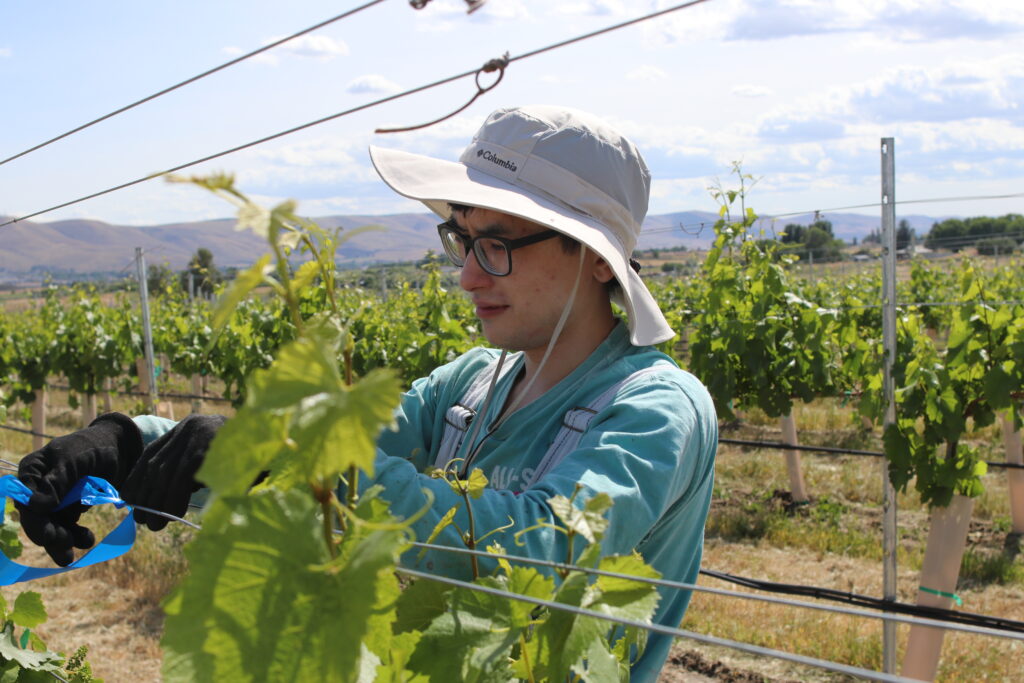
The Prosser Long-Term Agroecological Research and Extension site, or LTARE, was established in 2023 through the Washington Soil Health Initiative. WaSHI is a partnership between WSU, the Washington State Department of Agriculture, and the Washington State Conservation Commission. CSANR plays a leading role in the initiative.
WaSHI established six LTARE locations to study soil-health management in major Washington agricultural systems. The Prosser site focuses on Cabernet Sauvignon and Chardonnay wine grapes.
Defining soil health for vineyards
Grapevines can thrive in tough conditions, but soil conditions can still create challenges for growers. Wind erosion and high salinity, sodicity, and pH are the primary soil-health challenges the Prosser site was built to address. Julie Tarara, research program manager for the Washington State Wine Commission, said one challenge in the wine grape industry is soil pH.
“It’s just higher pH soil naturally,” Tarara said, adding that high pH interferes with nutrient availability. Growers then have to diagnose nutrient deficiencies, which is not always straightforward because there are interactions between nutrients.
Salinity and sodicity create different problems. Some irrigation water naturally contains high levels of salt or sodium. High salinity can cause water stress in grapevines, while sodicity can slow the rate at which water infiltrates the soil. Growers may irrigate more to manage salinity or apply gypsum and irrigate more to manage sodicity.
Researchers at the Prosser LTARE are studying how vineyard management practices affect these regional soil-health challenges by comparing five management systems side by side. Each system combines different approaches to fertility and organic matter, vegetation between vineyard rows, and vegetation management beneath the vines.
The time and money spent managing each treatment are measured, along with soil pH, carbon, moisture, and information about microbial communities. Vine health, vine productivity, fruit quality, and wine quality are closely tracked. More than 120 soil moisture sensors keep irrigation consistent across the site so that treatment differences, rather than watering differences, drive the results.
Because chemistry doesn’t describe aggregates and pore space, researchers are also using X-ray computed tomography, similar to a medical CT scan, to look inside soil samples in fine detail. These images help researchers understand how the soil physically functions.
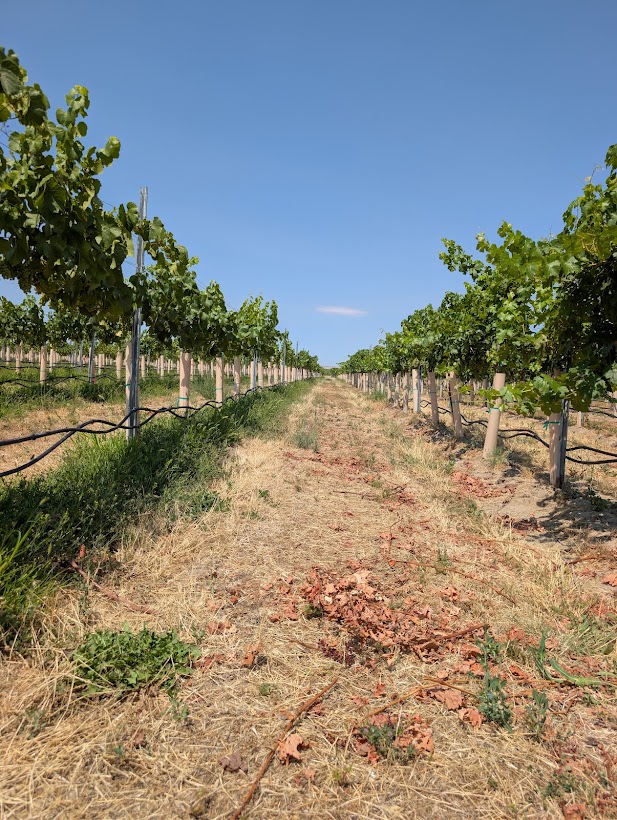
What treatments are being tested?
| Treatment | Fertility and organic matter | Alleyway vegetation | Under-vine management |
|---|---|---|---|
| Industry standard | Fertigation | Resident vegetation | Herbicide |
| Managed resident vegetation | Fertigation | Resident vegetation | Mowing |
| Under-vine cover crop | Fertigation | Resident vegetation | Mowing and cover crop |
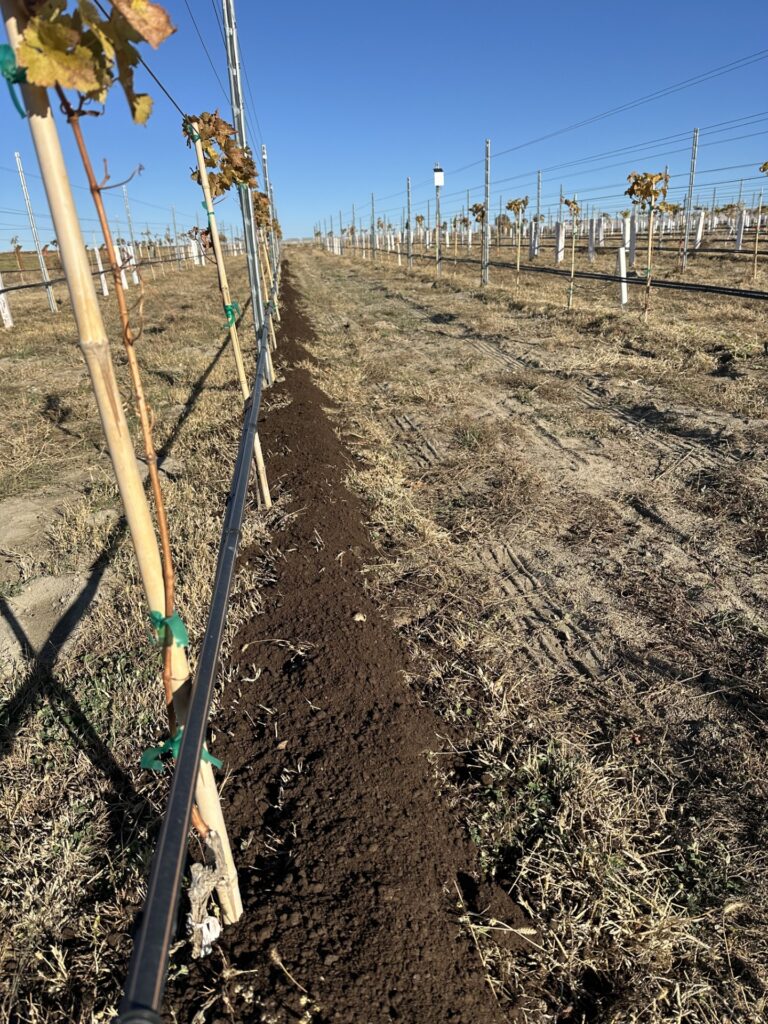
| Organic matter additions | Composted manure | Resident vegetation | Mowing |
| Integrated management | Composted manure | Planted cover crop | Mowing and cover crop |
Benefits, tradeoffs, and timing
Soil-health practices can bring both benefits and tradeoffs, especially while a vineyard is becoming established.
Washington wine grape growers often use deficit irrigation to limit vine vigor and support fruit quality. Researchers are interested in whether under-vine cover crops could eventually help manage vigor in a similar way by creating controlled competition for water and nutrients.
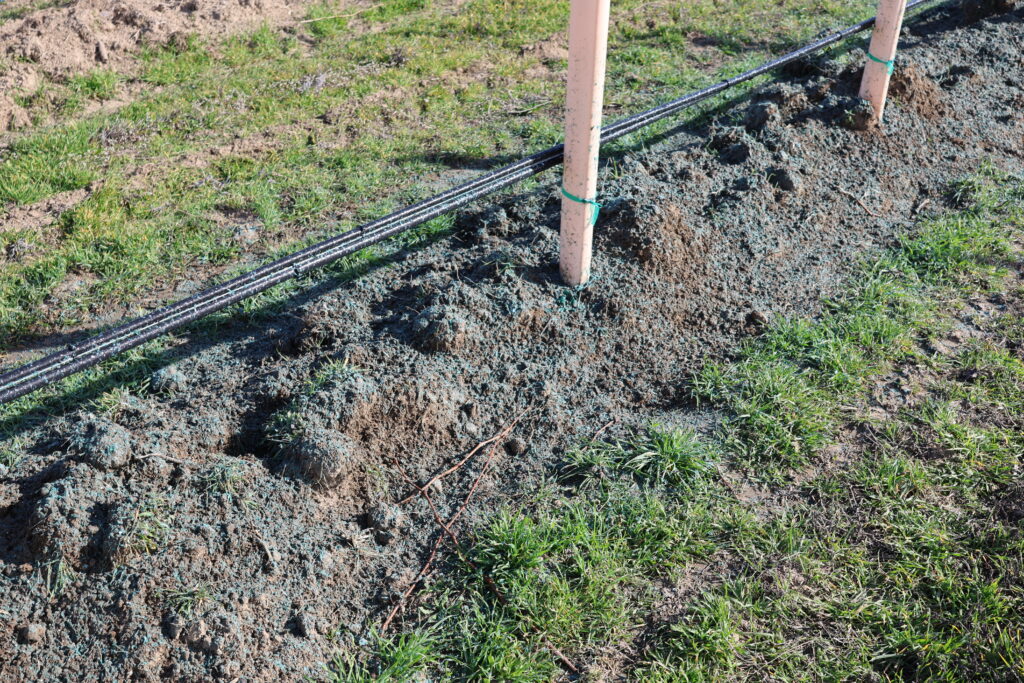
Early observations suggests that timing matters. Competition from under-vine cover crops appears to be slowing the establishment of some young vines, which could delay the time it takes a vineyard to reach full production. Once vines are established, however, that same competition may become useful for managing vigor.
Researchers are also seeing possible differences in soil carbon, but Gillispie said it is too early to determine whether they represent treatment effects. Vineyards take years to establish, and meaningful differences may emerge slowly or change as the vines mature.
The Prosser LTARE vineyard is now in its fourth growing season. Researchers expect to wait approximately two more years before making wine from the treatments. Following the site across many growing seasons will allow them to see whether early tradeoffs lead to longer-term improvements in soil function, vineyard resilience, grape quality, or wine quality.
Sustainability in a changing market
Long-term research is especially valuable when growers have little room to absorb the cost of an unsuccessful management change. Washington harvested 108,000 tons of wine grapes in 2025, a 28% decline from the previous year amid a broader downturn in the global wine industry, according to the Washington State Wine Commission’s 2025 production report.
That downturn reflects pressure from several directions at once. The industry grew up alongside the baby boom generation, Tarara said, whose tastes helped move the market from sweeter wines to dry wines and then reds. That generation is now aging out of alcohol consumption, and younger drinkers drink less and have more competing options like cannabis, as well as a variety of microbrews and other popular alcoholic drinks. Rising labor costs and overtime rules that limit how growers schedule field crews add further pressure to Washington vineyards.
At the same time, sustainability may offer the industry a way to appeal to emerging customers. “General market trends show that younger consumers react positively to the concept of sustainability,” said Tarara.
Tarara sits on the technical committee for Sustainable WA, a statewide, third-party certification program owned by the Washington Winegrowers Association, a separate organization from both the Wine Commission and WSU. Its science-based standards address environmental, social, and economic sustainability, including soil management, erosion control, vineyard-floor vegetation, compost, and water management.
The Prosser LTARE is not affiliated with Sustainable WA and was not designed to evaluate vineyards for certification. However, the two efforts share a broader goal of supporting long-term sustainability of Washington vineyards. Several LTARE treatments incorporate approaches addressed in the Sustainable WA standard, including cover cropping, compost additions, and managing vegetation beneath and between vine rows. Because some of the practices overlap, LTARE findings could help growers understand the long-term benefits, tradeoffs, and costs of approaches relevant to this certification.
Research growers can use
Research has long helped Washington grape growers and winemakers improve crop quality and use resources more efficiently, Tarara said. That role becomes particularly important when growers face rising costs and uncertain markets.
A long-term site can reveal effects that would be difficult to detect during a single growing season. It can also show whether a promising practice remains manageable and affordable across the lifespan of a vineyard.
Comments