Projects
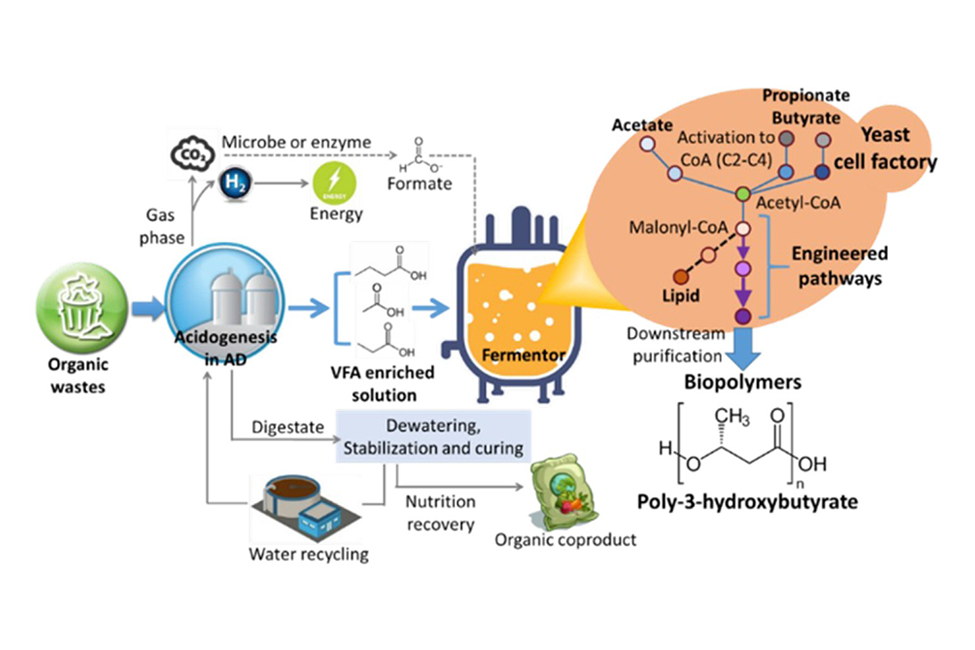
Wastes to Fuels Technology Partnership (2023–2025)
State partnership advancing technologies that convert organics and waste into fuels and value-added products.
SHERI for Washington Dairy Farms Sustainability
Developing low-cost sensing networks to monitor dairy farm greenhouse gas emissions and support data-driven management decisions.
Enhancing Capacity for Airborne Fungal Spore Monitoring in Horticultural Nurseries of Washington State
Develops spore-trapping methods to detect airborne fungal pathogens threatening horticultural nurseries and maple production in Washington.
Evaluation of Biomass-Derived Pyrolysis Oils as a Source of Pesticides for Insect Vectors of Plant Pathogens
Evaluating biomass-derived pyrolysis oils as sustainable pesticide alternatives for major Washington crop pest vectors.
Scalable Assessment of Soil Organic Carbon for Carbon Incentive Programs
Develops machine learning to predict soil organic carbon using satellite imagery for improved carbon incentive accounting.

Technology for Trade: New Tools and New Rules for Water Use Efficiency in Agriculture and Beyond
Integrating forecasting, remote sensing, and smart markets to improve water allocation and drought resilience in western agriculture.
Improving Soil Health in Diversified Agroforestry and Silvopasture Systems of NE Washington
Develops machine learning to predict soil organic carbon using satellite imagery for improved carbon incentive accounting.
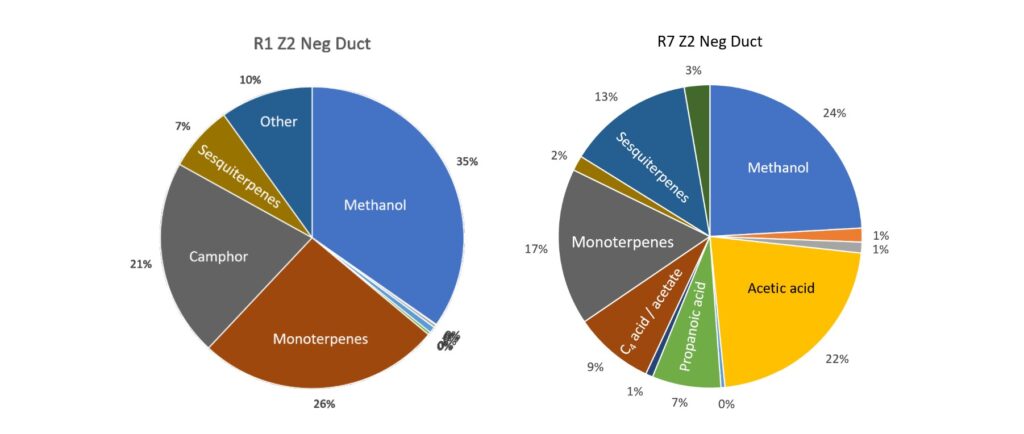
Wastes to Fuels Technology Partnership (2021–2023)
State partnership advancing composting, anaerobic digestion, and waste-to-fuels technologies across Washington.
Products
Scalable Assessment of Soil Organic Carbon for Carbon Incentive Programs: Final Report
Machine learning and satellite data enable scalable, uncertainty-aware soil carbon measurement to support outcome-based agricultural incentive program
AI Literacy Toolbox
Eleven-video series equips agricultural professionals to understand, assess, and communicate AI in sustainable agriculture.
Scalable Assessment of Soil Organic Carbon for Carbon Incentive Programs: Progress Report
Progress report advances small-data machine learning to predict soil organic carbon using satellite, management, and environment data.
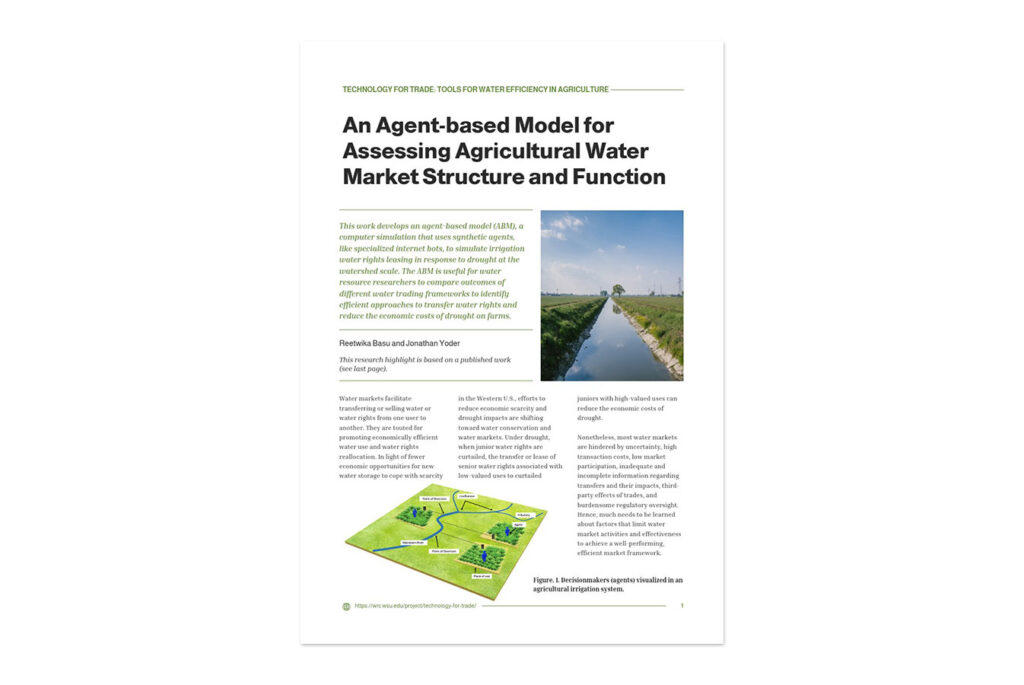
An Agent-Based Model for Assessing Agricultural Water Market Structure and Function
Agent-based modeling simulates irrigation water trading under drought to evaluate efficient agricultural water market designs.
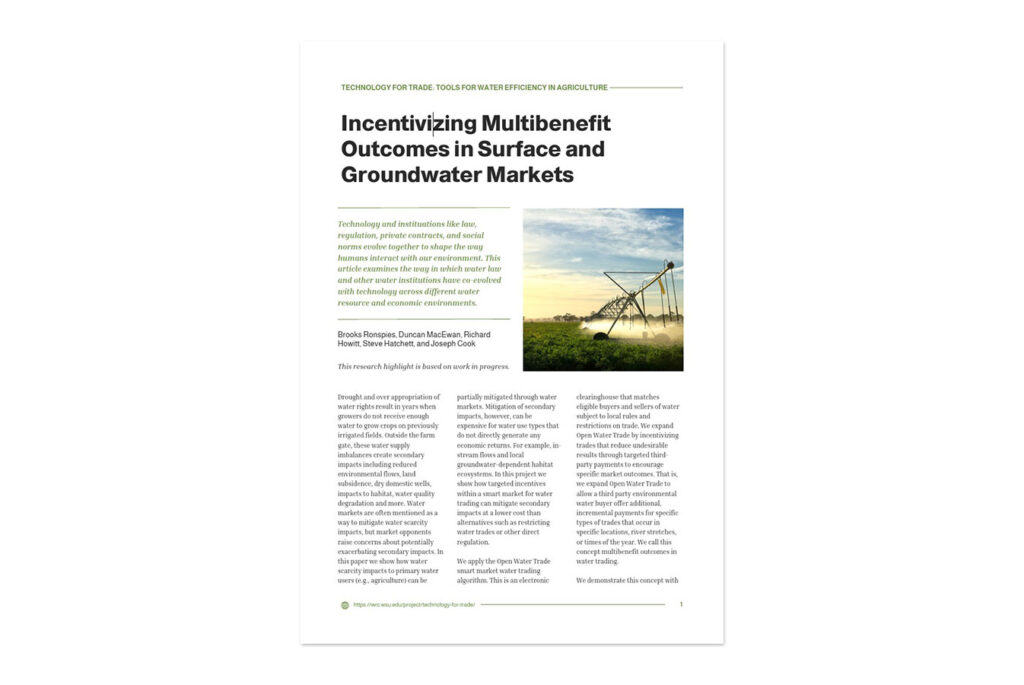
Incentivizing Multibenefit Outcomes in Surface and Groundwater Markets
Smart market incentives can encourage water trades that reduce environmental impacts while maintaining efficient water allocation.
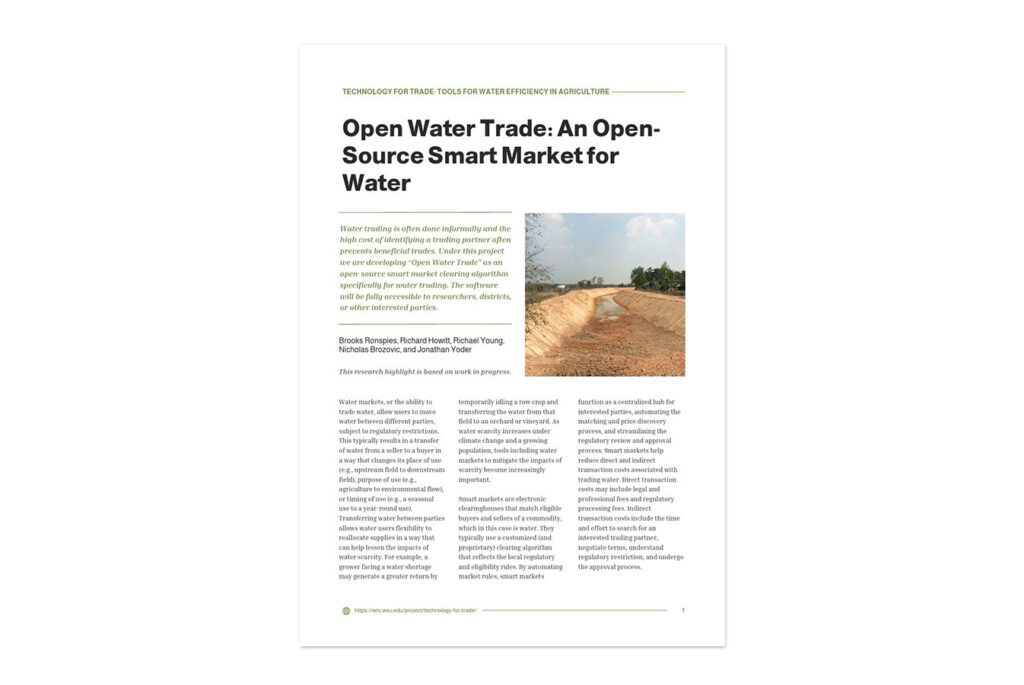
Open Water Trade: An Open-Source Smart Market for Water
Open-source smart market algorithm reduces water trading costs and improves allocation under regulatory constraints.
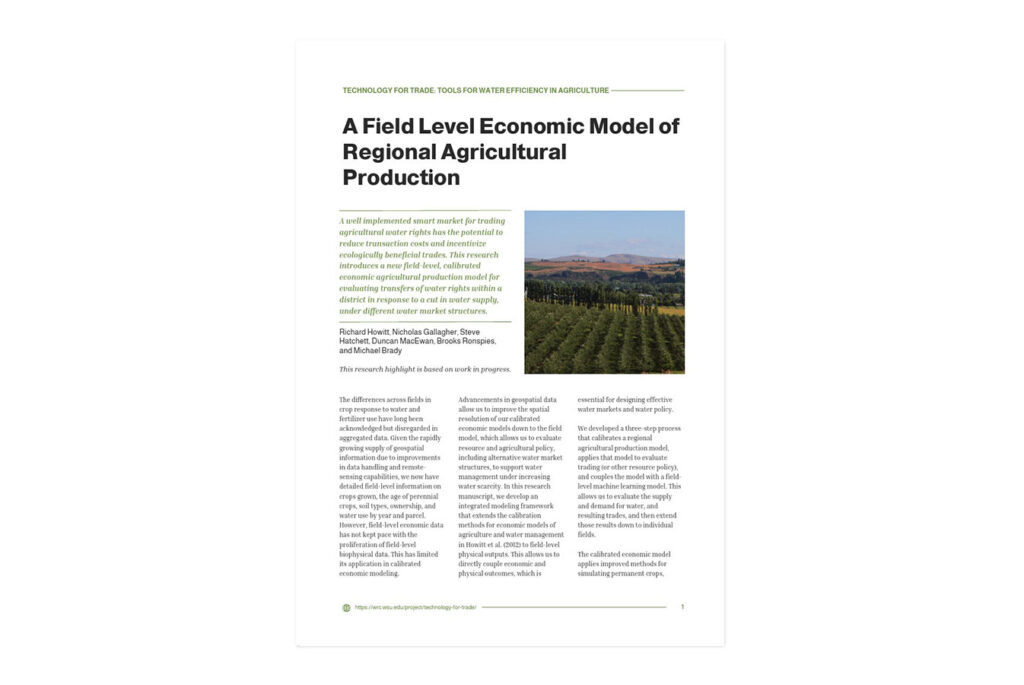
A Field Level Economic Model of Regional Agricultural Production
Field-level economic modeling framework evaluates water trading policies and environmental outcomes under water scarcity.
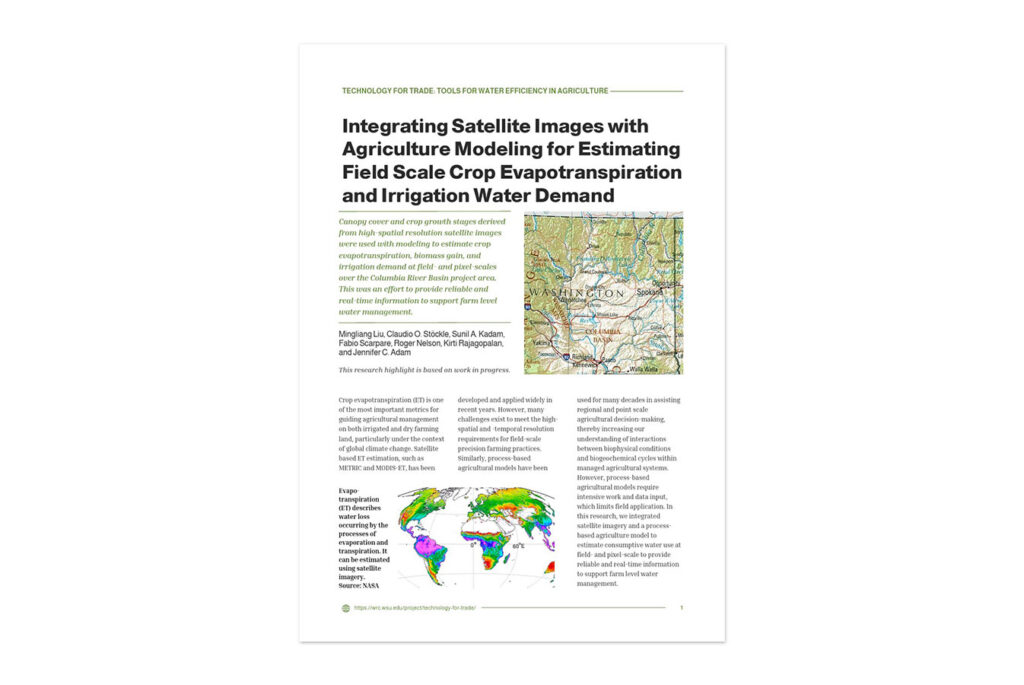
Integrating Satellite Images with Agriculture Modeling for Estimating Field Scale Crop Evapotranspiration and Irrigation Water Demand
Satellite-integrated crop modeling improves field-scale evapotranspiration and irrigation demand estimates in Washington.
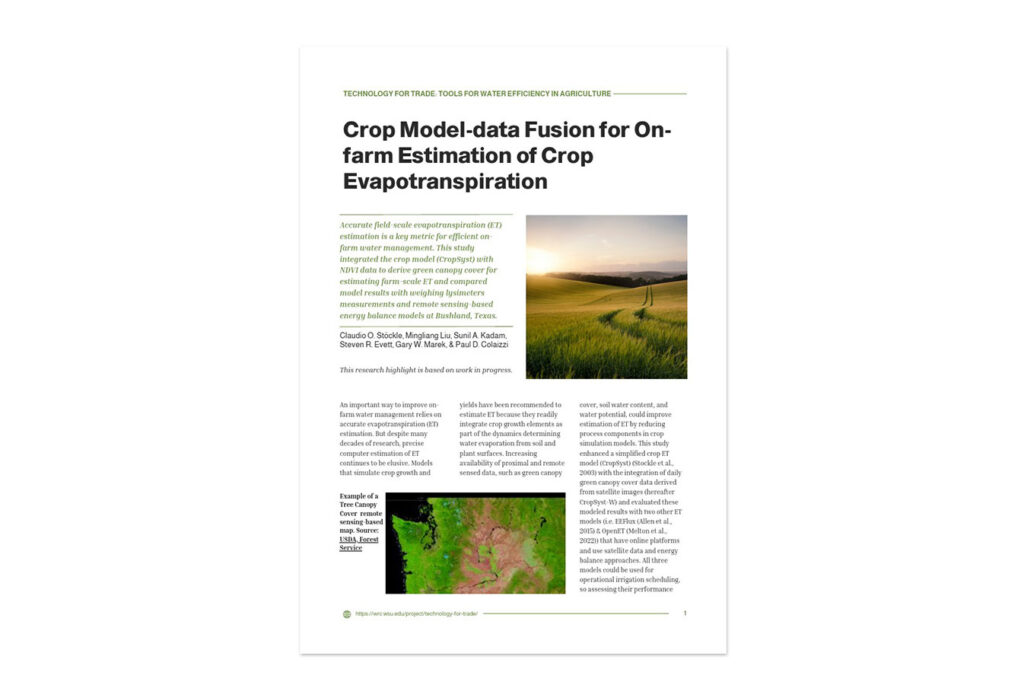
Crop Model-Data Fusion for On-Farm Estimation of Crop Evapotranspiration
Integrating crop models and NDVI improves field-scale evapotranspiration estimates for irrigation management.
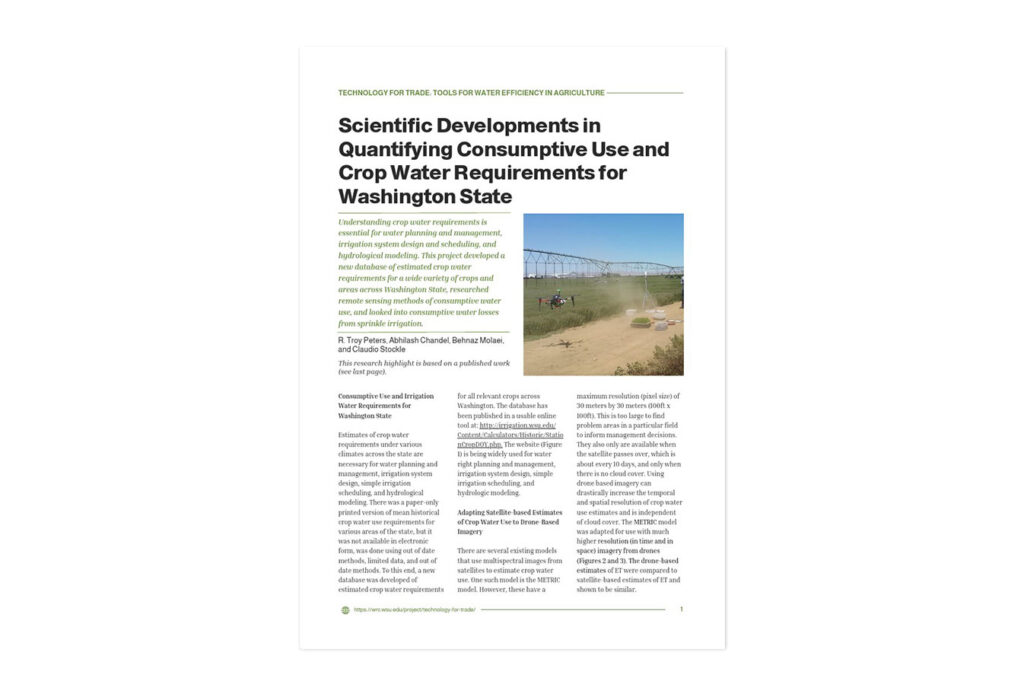
Scientific Developments in Quantifying Consumptive Use and Crop Water Requirements for Washington State
New tools improve crop water requirement estimates, drone ET mapping, and irrigation efficiency analysis statewide.
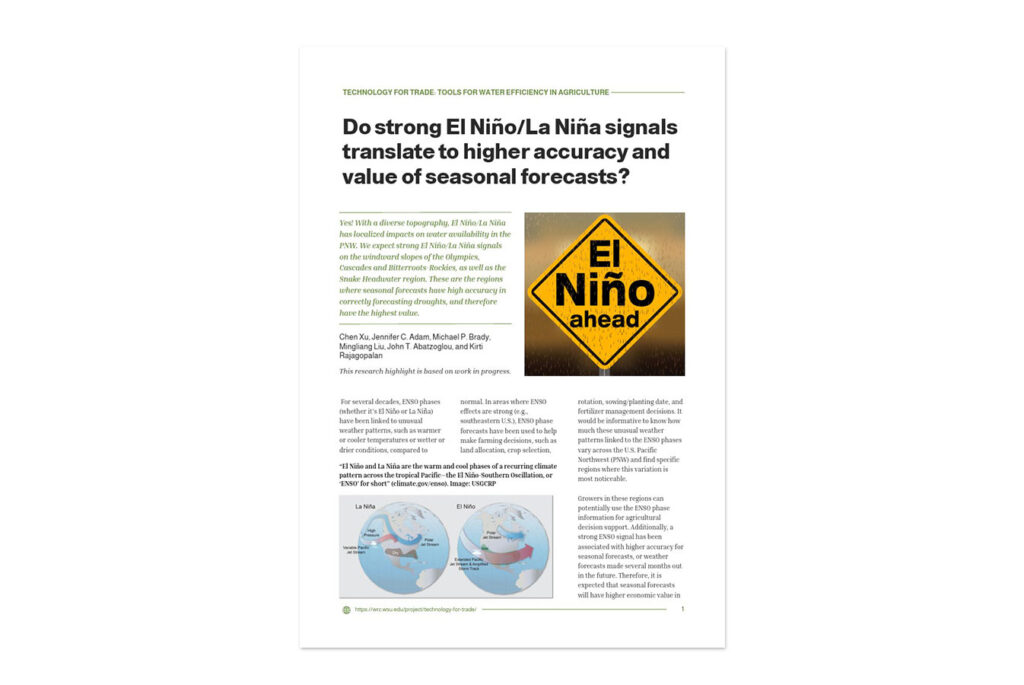
Do Strong El Niño/La Niña Signals Translate to Higher Accuracy and Value of Seasonal Forecasts?
Strong ENSO signals in select basins increase seasonal drought forecast accuracy and economic value.
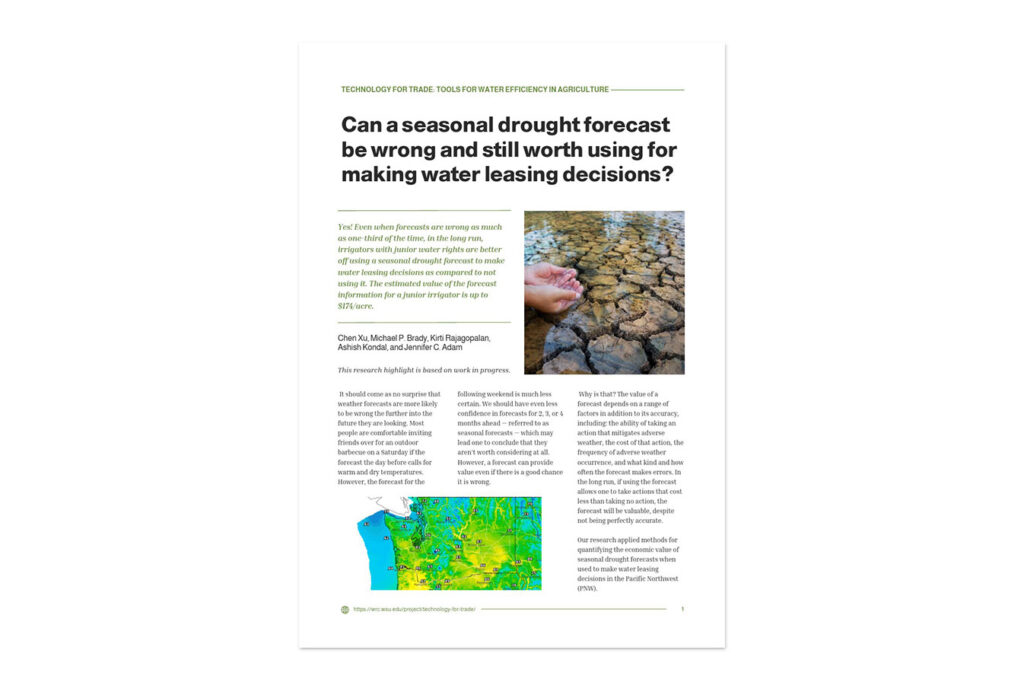
Can a Seasonal Drought Forecast Be Wrong and Still Worth Using for Making Water Leasing Decisions?
Research highlight summarizing innovations in forecasting, remote sensing, and smart water markets in the Columbia River Basin.
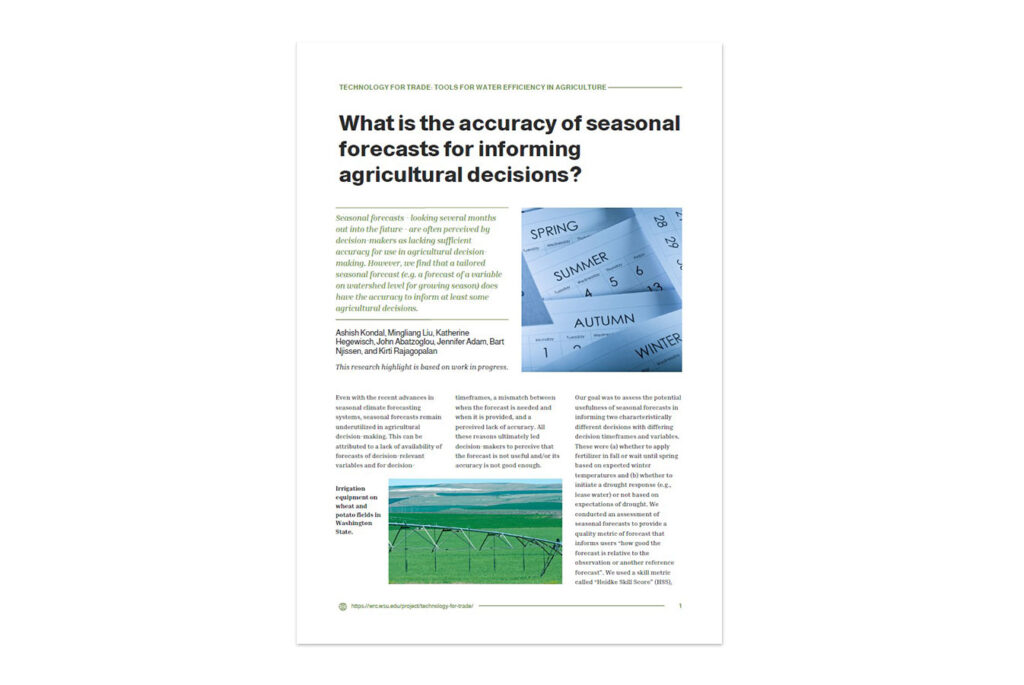
What Is the Accuracy of Seasonal Forecasts for Informing Agricultural Decisions?
Assessment of seasonal forecast accuracy for fertilizer and drought management decisions in the Pacific Northwest.
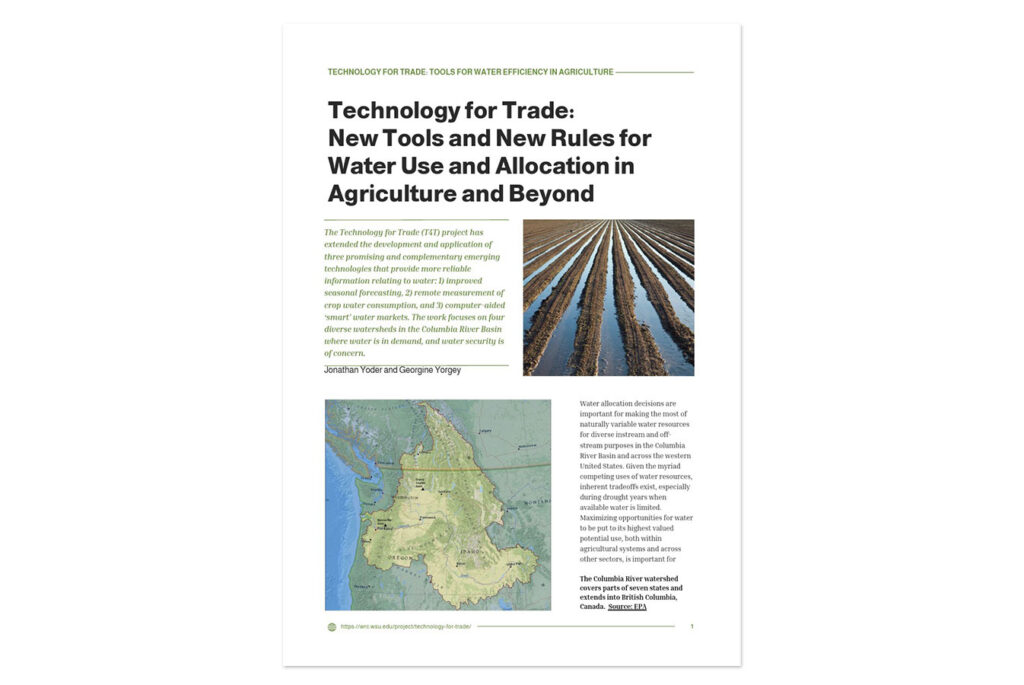
Technology for Trade: New Tools and New Rules for Water Use and Allocation in Agriculture and Beyond
Research highlight summarizing innovations in forecasting, remote sensing, and smart water markets in the Columbia River Basin.
Technical Assessment of Potential Climate Impact and Economic Viability of Biochar Technologies for Small-Scale Agriculture in the Pacific Northwest
Technical assessment evaluating climate benefits and economic feasibility of small-scale biochar systems in Pacific Northwest agriculture.
Evaluation of Emerging Plastics: Recycling Technologies and Management Strategies
Literature review assesses emerging plastics recycling technologies and strategies to improve Washington waste management outcomes.
Implementing Method 25.3 to Measure VOC Emissions from Composting in Washington State
Developing Method 25.3 capability to measure VOC emissions from Washington composting systems.
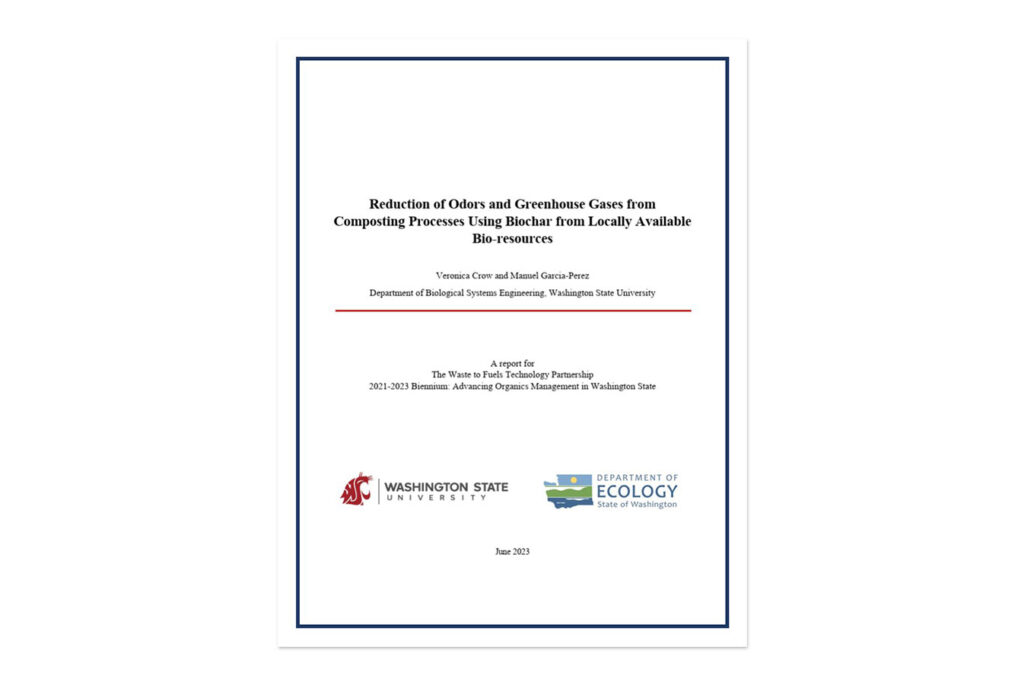
Reduction of Odors and Greenhouse Gases from Composting Processes Using Biochar from Locally Available Bio-resources
Biochar applications reduce ammonia, methane, and hydrogen sulfide emissions from composting systems.
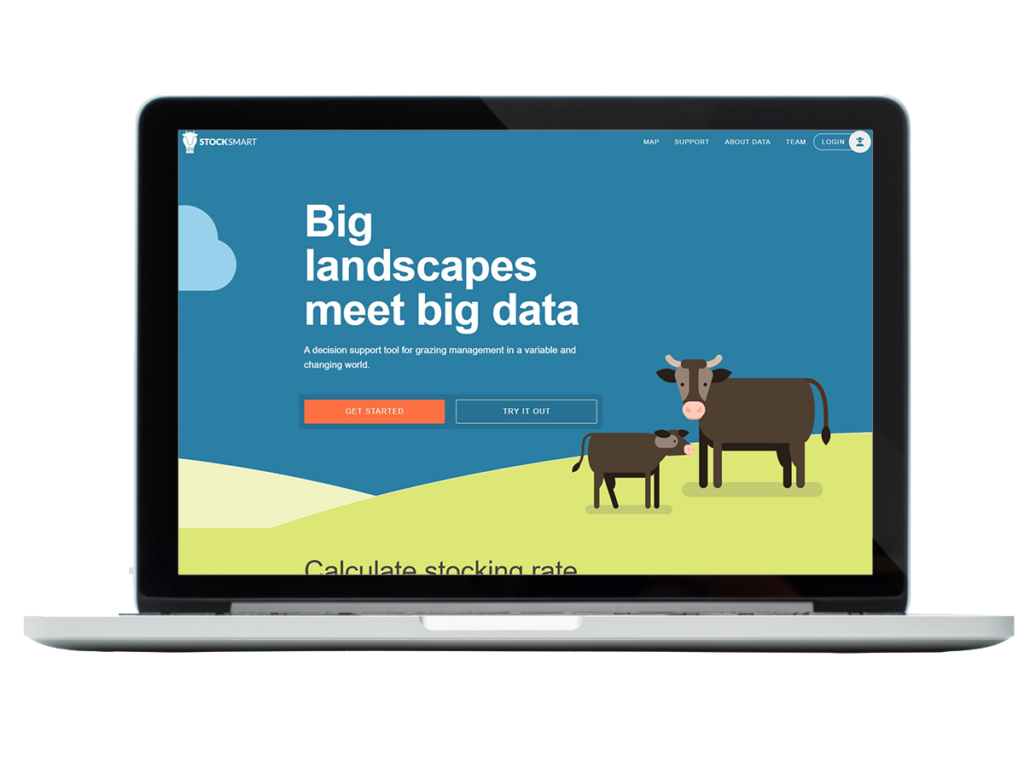
StockSmart Tool
Decision-support tool helps rangeland managers evaluate forage availability, address grazing patterns, and explore climate-informed scenarios.
Evaluating Cellulose Nanofibers for Managing Potato Diseases: Progress Report
Testing biodegradable cellulose nanofibers as non-toxic protectants against potato foliar and tuber diseases.