BIOAg Program
BIOAg is CSANR’s flagship grant program, providing WSU faculty with seed funding to advance biologically intensive, organic, and sustainable agriculture in Washington.
Current BIOAg Projects
2026
- Glutathione as an Alternative for Mitigating Postpartum Inflammation in Organic Dairy Cows Evaluating glutathione to reduce postpartum inflammation and oxidative stress in dairy cows without antimicrobial treatments.
- Casting a Wide Net: High Throughput Screening for Competitive Rhizobia Inoculants to Enhance Nitrogen Fixation and Yield in Peas and Lentils Screening barcoded rhizobia strains to improve nitrogen fixation and yields in peas and lentils across conditions.
- Identification of Codling Moth Pupation Sites to Improve Management Identifying codling moth pupation and overwintering sites to improve resistance management and control strategies in modern orchards.
- Exploring the Effect of Nitrogen Fertilization on Perennial Wheat Performance Evaluates nitrogen fertilization effects on perennial wheat survival and multi-year agronomic performance in western Washington cropping systems.
- SHERI for Washington Dairy Farms Sustainability Developing low-cost sensing networks to monitor dairy farm greenhouse gas emissions and support data-driven management decisions.
- Enhancing Capacity for Airborne Fungal Spore Monitoring in Horticultural Nurseries of Washington State Develops spore-trapping methods to detect airborne fungal pathogens threatening horticultural nurseries and maple production in Washington.
- Targeting Early Methanogenesis to Improve Environmental and Economic Sustainability in Dairy Production Systems Evaluates a novel compound that inhibits early methanogenesis to reduce methane emissions and improve dairy feed efficiency.
2025
- New Codling Moth Pathogens Identifies and develops fungal pathogens from codling moth larvae as potential biopesticides for tree fruit production.
- Evaluating Highly Polymerized Tannin as a Sustainable Biopesticide for the Management of Major Potato Diseases Tests persimmon-derived Kaki-tannin as a biopesticide to reduce potato diseases while protecting yield and soil health.
- Who Is Applying? Understanding the Motivations and Challenges of Participants in Incentive Programs for Compost Application Study compares compost incentive program participants and non-participants to identify barriers, equity gaps, and adoption drivers.
- Evaluation of Biomass-Derived Pyrolysis Oils as a Source of Pesticides for Insect Vectors of Plant Pathogens Evaluating biomass-derived pyrolysis oils as sustainable pesticide alternatives for major Washington crop pest vectors.
- Identifying Delia Root Maggots to Aid Vegetable Seed Growers in the PNW Validation of Delia phenology models to improve insecticide timing in Washington vegetable seed systems.
- Investigating the Effects of Microbial Biopesticides as Biocontrol for Honey Bee Varroa Mite Tests Metarhizium brunneum biopesticides to control varroa mites and support honey bee colony health.
- Scalable Assessment of Soil Organic Carbon for Carbon Incentive Programs Develops machine learning to predict soil organic carbon using satellite imagery for improved carbon incentive accounting.
Recent BIOAg Products
Quantifying Erosion Reduction Benefits Resulting From the Adoption of Conservation Tillage Practices: Final Report
Final report summarizes modeling framework evaluating erosion reduction from targeted conservation practices in eastern Washington cropping systems.
At-School Youth Farmers Markets: Can Hands-on Experience Purchasing Fruit and Vegetables Grown on BIOAg Farms Influence Valuation of Local Farming and Family Shopping Habits? Final Report
Final report summarizes a youth farmers market project connecting students and families with local BIOAg produce.
Comparison of Disease Resistance Among Heritage Chicken Breeds: Final Report
Final report for project evaluating disease resistance among heritage chicken breeds in organic poultry systems.
Compost Teas for Enhanced Nutrient Cycling: Final Report
Research evaluates compost teas to improve nutrient cycling, residue breakdown, and soil microbial function in Washington systems.
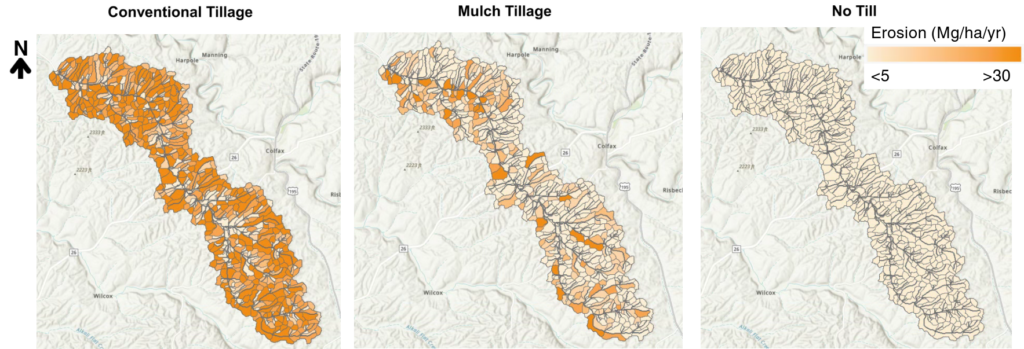
Focusing Agricultural Conservation Where the Land Needs It Most
BIOAg-funded research uses erosion modeling to map hotspots and target conservation practices where they deliver greatest benefit.
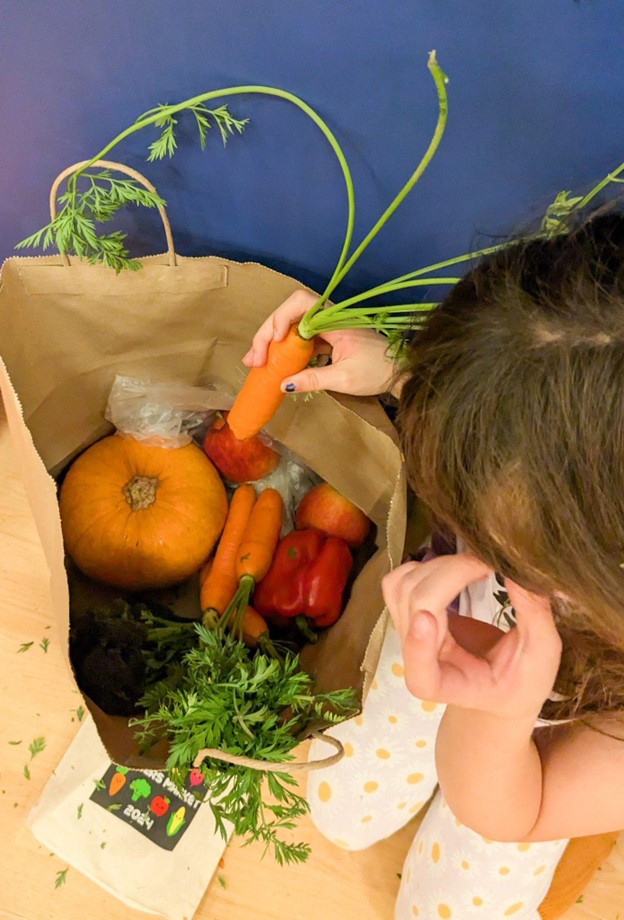
Students Shop Local at Youth Farmers Market
Youth farmers market helps elementary students shop independently, try local produce, and build healthier food preferences.
Investigating the Effects of Microbial Biopesticides as Biocontrol for Honey Bee Varroa Mite: Progress Report
Documents progress of trials testing fungal biopesticide efficacy for controlling Varroa mites in honey bee colonies.
Integrating Drones into Weed Management on the Palouse: Final Report
Final results demonstrate drone-based protocols for mapping weeds in Palouse dryland cropping systems.
Building a Spatially-Explicit Phenology Model for Colorado Potato Beetle: Final Report
Decision support models predict Colorado potato beetle timing and abundance to guide targeted management.
Scalable Assessment of Soil Organic Carbon for Carbon Incentive Programs: Progress Report
Progress report advances small-data machine learning to predict soil organic carbon using satellite, management, and environment data.
Quantifying Erosion Reduction Benefits Resulting From the Adoption of Conservation Tillage Practices: Progress Report
Progress report outlines WEPP modeling to estimate watershed-scale erosion reductions from targeted conservation practice adoption.
At-School Youth Farmers Markets: Can Hands-on Experience Purchasing Fruit and Vegetables Grown on BIOAg Farms Influence Valuation of Local Farming and Family Shopping Habits? Progress Report
Progress report documents a school-based youth farmers market and follow-up visits to build local produce habits.